
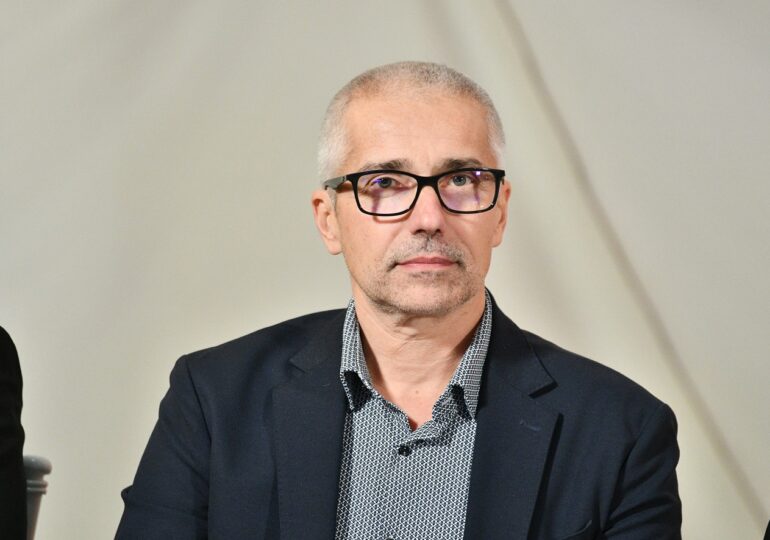
The Minister of Justice, Radu Marinescu, aligns with the message conveyed by President Nicușor Dan after the documentary „Justice Captured” by Recorder, stating that the major corrections in the system must come from within the judiciary.
He invokes the fact that judges and prosecutors choose the Superior Council of Magistracy, apply the law, and solve specific cases, so they bear direct responsibility for the way the judiciary functions, including in the context of debates on special pensions and the independence of the system.
Nicușor Dan announced that he watched the Recorder documentary in full, is working on a report regarding the issues in the system, and invites magistrates to write directly to him about the dysfunctions they face. He emphasizes that he does not absolve the political class of blame – from reducing the fight against corruption to the political appointments of chief prosecutors – but insists that the solution and sanctioning of the cases presented must come from within the judiciary, based on evidence.
Meanwhile, the minister responds to political pressures coming from USR, which has demanded the dismissal of the DNA chief, reminding that he is not the one responsible for disciplinary action and that the responsibility regarding magistrates belongs to the Judicial Inspection, CSM, and courts. Marinescu states that he can request investigations into cases with suspicions of corruption or intentional misapplication of the law, but the revocation of a chief prosecutor must be strictly based on the criteria in the Laws of Justice.
Regarding the reaction of the Bucharest Court of Appeal to the Recorder documentary, the minister considers the press conference "an appropriate step" and insists that the issues raised publicly must be promptly investigated and clarified.
Today's Main Statements by Radu Marinescu:
- I have read with great attention the position of the President. I believe the President has expressed a great truth, namely that the most important corrections regarding the functionality of the judicial system must come from within, they must come from the magistrates, because the magistrates choose the CSM, the magistrates establish the representatives, the members of the CSM, the magistrates are the ones who apply the law, the magistrates are the ones who solve a specific case. So it is natural for magistrates to find the solution within this system that proclaims and supports its independence. And now we are discussing the reform of special pensions. And we are talking about the independence of Justice. Responsibility comes with the status of independence that society has given you.
- President Nicușor Dan referred to a historicity of the problems in Justice, saying that in his opinion, the ministry has not always responded to society's expectations during these stages in the evolution of Justice.
- The Ministry of Justice is currently involved in a considerable effort to reform the pension system. Let's also ask ourselves who decided in the past to lower the retirement age from 65 to 50. So now we are making so many efforts to rebalance things.
- Regarding the disciplinary responsibility of magistrates, the responsibility lies with an independent body, called the Judicial Inspection, then it is about the CSM and, ultimately, by the courts that rule on disciplinary responsibility. The laws of justice establish that the Minister of Justice is not the holder of disciplinary action. In other words, the Minister of Justice cannot take disciplinary action against a prosecutor or judge.
- When we started, in the presence of the coalition, together with colleagues from USR, we designed a Justice governance program that we are currently implementing, so all the solutions we use from the beginning of the government are agreed upon by all of us together.
- If a change in the governance program is desired, the Minister of Justice cannot do this. It is a matter between the coalition leaders if they wish to modify something delegated by the governance program.
- Regarding the dismissal of a chief prosecutor, this procedure involves an evaluation and a justification based on the criteria strictly provided by laws, which refer to managerial duties or hypotheses of malicious violation, with serious negligence of duties. I admit that the press plays this very important role, and it is very good that it does so, to bring to attention issues from any area of society. They must be analyzed very rigorously and must receive the appropriate response. If USR has concrete elements regarding a defective overall management of the National Anticorruption Directorate, they must present them as such, if they have concrete elements.
- I can definitely request judicial authorities to investigate situations where potential corruption hypotheses are reported, where the law is intentionally misapplied, and those responsible should be held accountable. (…) Any kind of situation brought to the attention of the public must be treated with responsibility, analyzed, not avoided, and the correct answers must be given to society and the law must be applied.
- When a journalistic investigation, regardless of who conducts it, highlights certain potential problems in a system of society, including Justice, it is correct for these problems to be addressed directly, correctly, investigated, assessed, and if there are responsibilities, they must, of course, be involved.
- As long as the Recorder investigation invoked specific cases of alleged manipulation of Justice for certain judicial purposes (...) it is the responsibility of the magistrate, through their specific tools, to analyze these issues and provide an answer to society.
- I note that at the Bucharest Court of Appeal, such an approach is being made, and some answers are given on specific issues raised in that report.
- As long as certain problems are put up for public debate, they must definitely be investigated.
- If a hypothesis related to a certain dual quality of that judge is invoked, then, of course, the law specifies who conducts these investigations and clarifies this issue.
- If certain personal motives of participants in this report are invoked and of a nature to animate them to highlight more of a personal agenda than reality, again these things must be transparent, presented, analyzed, and established. The law dictates who does these things.
- In 2022, we adopted the Laws of Justice, when we adopted them, they were considered to be a progress in terms of the independence of Justice, they were evaluated as such by the European Commission. Moreover, those who designed the PNRR also told them as a milestone in the PNRR, which is why next week we will submit a payment request to receive European funds.
- My response is very clear, the responsibility to analyze concrete situations belongs to those who have the competencies, according to the law, to analyze them, and they must do this promptly.
- The media plays an important role, that in a democratic society, to investigate situations, present them, they must receive a response, based on evidence because truth in justice is established based on evidence.
Spotmedia reported the main reactions following the Recorder documentary "Justice Captured"
- CSM Accuses a Destabilization Campaign after the Recorder Documentary, Including Public Calls for Revolt by the President
- The Judge Who Testified in the Recorder Documentary Enters the System's Grinder. Verified by the Judicial Inspection, CSM, CSAT, and CNSAS
- Former Judge Cristi Dănileț Tells Nicușor Dan What to Do after the Recorder Documentary: "It's Enough"
- A Judge Confirms All the Mechanisms Presented by Recorder: I Don't Know if Anything Works Better in Romania than Corruption in Justice. Give Up Any Hope, It's a Controlled System (Video)