
North Korea closed its borders during the Covid-19 pandemic. Since then, they have only reopened for a few foreigners, including Russian and Western travelers and diplomats. These visitors describe a country unrecognizable.
Pyongyang, where Kim and the country’s elite reside, impressed them the most. The restaurants there serve brick oven pizza and chicken wings. Customers can pay through a mobile system with QR codes. Chinese electric vehicles whiz through the streets. Pyongyang has new stores for animal lovers, an Internet gaming café, and car dealers selling BMWs, as shown in an analysis published by Wall Street Journal (WSJ).
Kim Jong-un initiated a national construction boom. Last year, North Korea built 10,000 new homes in Pyongyang – more than Los Angeles or Chicago.
During the February Workers' Party congress, held once every five years, the 42-year-old dictator advocated for economic recovery, stating that it had occurred despite the "barbaric blockade" imposed by U.S.-led economic sanctions. This was while outside the building, seven rows of freshly manufactured missile launchers were on display.
Kim then urged North Koreans to focus on building an independent economy.
Signs of an accelerated change
The regime does not publish official economic data, strictly controls information, and orchestrates what visitors can see, the American newspaper mentions.
During a recent visit to Pyongyang, Rowan Beard, an Australian tour operator who had not visited the city before the pandemic, asked to have dinner at the best restaurant. He and four other visitors were taken to a suspended bridge connecting two residential skyscraper complexes.
The restaurant, over 30 meters above the streets of Pyongyang, had glass floors. Their meal consisted of traditional Korean cold noodles, sushi, pizza, and drinks. "The bill amounted to just $150," Beard recounted.
Foreign visitors say Pyongyang is crowded with high-rise blocks and skyscrapers among which luxurious electric cars swarm.
Chinese students coming here to study have posted on social media images of their life in Pyongyang, including photos of universal stores featuring Chanel-branded cosmetics and Ray-Ban sunglasses.
The city where you see another North Korea
WSJ also offers another example illustrating the economic growth of this country: domestic production of mobile phones reaches half a million devices per year, according to the Russian tourism agency Vostok Intur. Smartphones are now so widespread in North Korea, researchers say, that there are over 50 different brands.
Zoe Stephens, a British tour guide, has led several groups to North Korea. Before the pandemic, she recalls, all payments were made in cash. Visiting Pyongyang last year, she saw more locals shopping with their smartphones. There are apps to order food, essentials, even prescription medicines.
"They were using delivery services, cash payment apps where you can pay through your phone," she said.
However, outside the capital, North Korea remains poor, the American daily mentions. Almost half of its 26 million inhabitants suffer from malnutrition, according to a UN report. Its annual GDP is less than 1% of the total U.S. GDP. The country is renowned worldwide for human rights abuses, with distributing a South Korean film being punishable by death.
Reports from South Korean expert groups, with titles like "Sanctions are not visible in satellite images," indicate evidence that North Korea's alleged economic progress is not just propaganda. Naval activity has sharply increased at expanded oil storage facilities in North Korea. Many parking lots are crowded. North Korea now shines about three times brighter at night than five years ago, according to another report.
The contribution of foreign friends
North Korea did not revive its economy alone. The Kim regime bolstered its energy supply and access to construction materials by dispatching munitions and over 15,000 soldiers to the Russian front in the war in Ukraine.
About a third of these soldiers were killed or wounded. Arms sales brought billions of dollars to Pyongyang, according to estimates from the Institute for National Security Strategy, or INSS, a think tank based in Seoul affiliated with South Korea's intelligence agency.
Monthly trade with China has just reached an eight-year high, with a variety of Chinese consumer brands promoting business in North Korea, despite such sales violating sanctions.
The proliferation of technological gadgets, which has facilitated a North Korean digital economy, relies heavily on Chinese components.
Many of Kim's cyber thieves live in China, where they can connect more freely to the internet and operate without fear of arrest by foreign authorities. Attacks on cryptocurrency exchanges alone generated billions of dollars in funds for the regime, according to states and cybersecurity groups monitoring Pyongyang's activities.
North Korea's economy grew by 3.7% in 2024, the fastest rate in the past eight years, according to the latest figures from South Korea's central bank, which used data from intelligence agencies. South Korean expert groups estimate that the growth has continued.
Russia's war erases the pandemic disaster
North Korea is in the strongest economic position since Kim took power nearly 15 years ago and likely surpasses any point during the reign of his father, Kim Jong Il, who led from 1994 until his death in 2011, said Stephan Haggard from the University of California, San Diego, a researcher on the North Korean economy for decades. "This is an incredible achievement for such a poor country," Haggard said.
Just five years ago, North Korea and its leader seemed in peril. Fear of Covid prompted border closures, leading to a sharp decline in trade with China, North Korea's main supporter.
An energy deficit led to the stoppage of coal mine production. Basic food items, such as vegetable oil and sugar, became scarce on store shelves, Moscow's former ambassador to Pyongyang told Russian state media in 2021.
Kim then had a rare outburst when he admitted that the country's economic policies had failed, acknowledging widespread food shortages and shedding tears in public. "Almost all sectors have fallen far behind," he said at the beginning of 2021.
The economic trend began to reverse after Russia's invasion of Ukraine in February 2022, openly supported by North Korea.
Over a year after the start of the war, North Korea became a munitions supplier for Moscow, generating over $10 billion from the summer of 2023 until the end of last year, according to INSS - a significant boost for an economy with an estimated GDP of about $27 billion.
In 2023, Kim made his first trip abroad after Covid to Russia's Far East to meet Vladimir Putin. The following year, Putin visited Pyongyang, where the two leaders signed a mutual defense pact.
This set the legal framework for deploying North Korean troops to fight alongside Russia, bringing in over half a billion dollars, according to INSS.
Most payments come in the form of sensitive military technology, weapon parts, or other materials, the think tank estimates.
Moscow has already sent air defense systems to Pyongyang, according to South Korean officials.
A deeper relationship with Russia is the greatest gain North Korea could hope for, especially the "free publicity" offered to the regime's arms and fighters actively engaged on the Ukrainian front, said Jung H. Pak, a former senior official dealing with North Korean issues during the Biden administration. "The regime is richer than ever."
What is the 20×10 initiative
Military connections with Russia have allowed Kim to allocate more resources to the social sphere.
North Korea's economy, pre-Covid, had increasingly focused on black markets selling goods illegally imported from China or illegal local goods - and with this came a class of "donju" traders who were getting rich outside of state control.
Kim imposed a more centralized control during the recovery years, requiring state-manufactured goods to appear on shelves and expanding market surveillance.
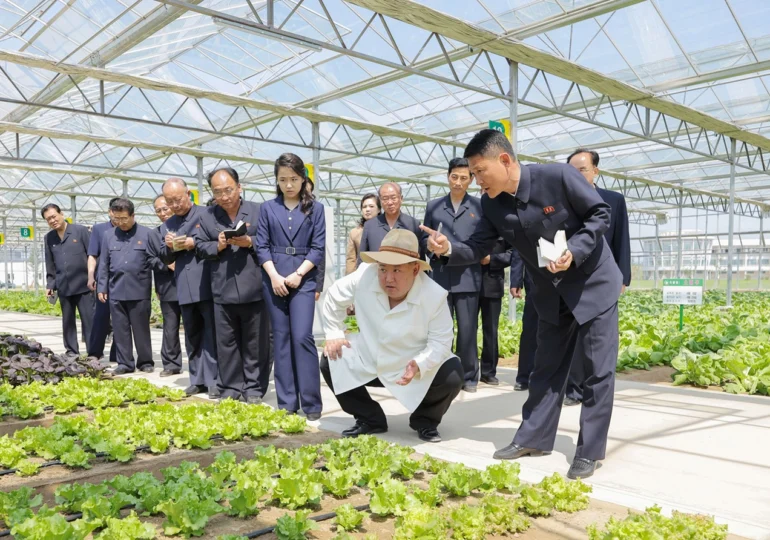
In the past year, North Korea has completed major construction projects that had been stagnant for years, including the largest hospital in Pyongyang, a greenhouse complex larger than Central Park in New York, and a new beachfront hotel complex. Its flagship initiative "20×10" - new factories in 20 cities and counties per year for 10 years - supports local economic revitalization.
The regime is expanding state-owned stores and pharmacies to replace black market activity, and the new factories in rural areas are providing state jobs for traders who previously engaged in smuggling, said Lee Sang-yong, a researcher with sources within Kim's regime.
"Some of the funds that the Kim regime obtains from selling weapons and cyberattacks reach the people," said Lee, who heads a data research center owned by DailyNK, an online publication.
T.D.