


Although the situation is still uncertain, after PNL’s official decision yesterday, June 11, not to vote for the investiture of the Tomac Government, the possibility of Romania heading towards early elections, which could take place in early October, is taking shape.
According to political sources, at this moment, PNL and USR have no problem reaching this point, and AUR, through its representatives, has repeatedly announced that the goal is to organize new parliamentary elections, hoping to capitalize on the population’s dissatisfaction and achieve a crushing victory at the polls.
Just as seen in the case of PSD, things don’t always go as planned.
According to the distribution of seats in Parliament, the parties that do not reject early elections or desire them, namely PNL and USR in the first category, and AUR in the second, total 225 votes, needing only 8 more votes to reach the majority of 233 required to validate the President's decision to dissolve Parliament.
Against early elections are PSD and UDMR, with 150 votes.
The remaining 90 seats in Parliament are currently occupied by national minorities - 17; the PACE group - 11; 62 MPs and senators are so-called "free electrons," SOS, POT, and unaffiliated. Most likely, here, many do not wish to go to early elections as there is a slim chance of getting a new mandate.
But there's also an area where liberals and members of USR can recruit at least 8 individuals promising them an eligible spot on the list in the upcoming legislature.
USR Doesn't Want Eugen Tomac
The USR leadership will soon announce that they will not vote for the investiture of the Tomac Government, just like the liberals did. According to sources within the party, on Wednesday and Thursday, a consultation process with members from the county branches took place, where the position USR should adopt was voted on.
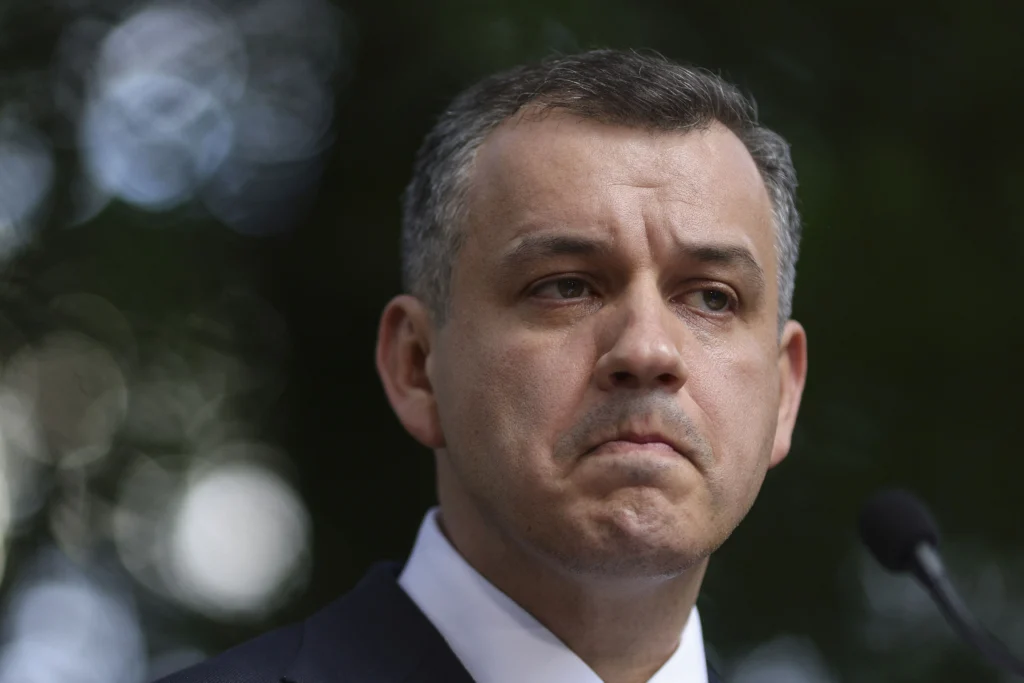
In over 90% of the branches where results came from, the vote was overwhelmingly against supporting the investiture of the Tomac Government.
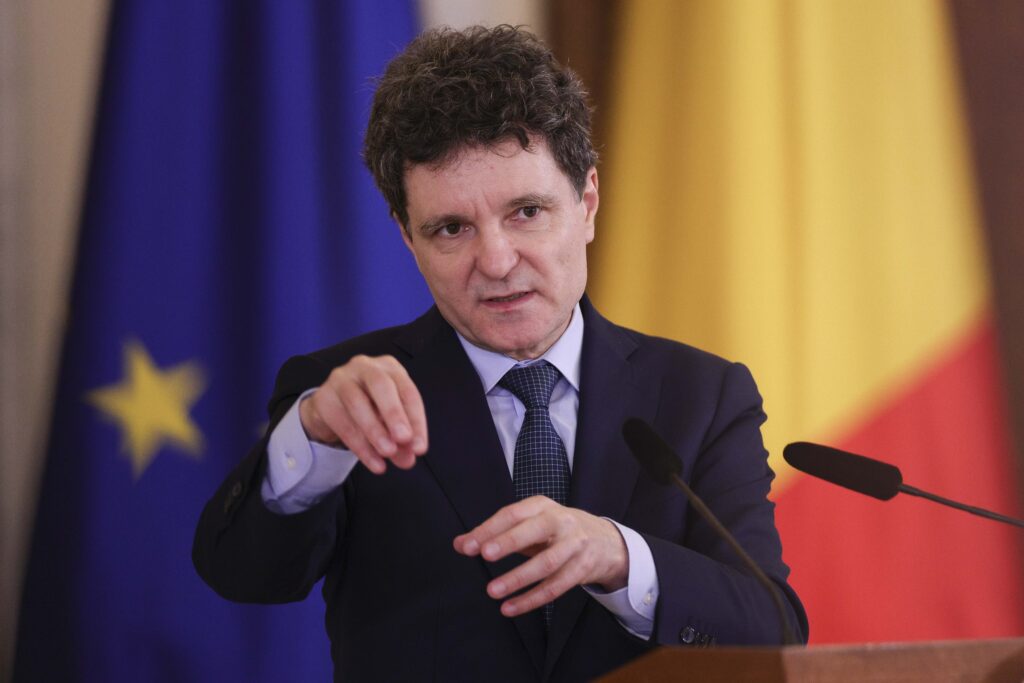
In this situation, it is highly likely that next week the "technical government" supported by President Nicușor Dan will not obtain the necessary votes in Parliament. In this case, a new designation from the head of state will be required.
From the moment Eugen Tomac's possible rejection occurs, the logic of early elections sets in, with a 60-day period in which Romania must have a government voted in Parliament.
During this time frame, the President, before requesting the dissolution of the Legislature, must designate at least one Prime Minister. Perhaps even more, but they must fit within the 60-day period.
There are high chances that Nicușor Dan's second designation will obtain the majority of votes in Parliament, but everything is at stake, and political calculations and negotiations, criticized by the President in his latest public message, will dominate the public agenda.
Two Political Blocs
If parliamentary elections were to take place tomorrow, the votes would be divided between two major political blocs. On one side, the extremist party AUR, and on the other, a pro-European and pro-Western bloc, PNL-USR.
According to sociological measurements conducted in party laboratories, the pro-European bloc is likely to win against AUR, with a difference ranging from 4 to 7 percent, considering the latest trends.
It is worth noting that, in such a political confrontation, PSD is expected to fall between the chairs, being rated at a maximum of 15%.
Early elections would calibrate Parliament based on the results of last year's presidential election, a confrontation that shaped these two political blocs.
Paradoxically, if parliamentary elections are held in October of this year, the following elections - presidential and legislative - will be held together in 2030.
Another important observation is that this way, parliamentary elections will move away from the turbulence caused by the US presidential elections.
But until then, there is a long way to go, and "many things will happen," as stated by Nicușor Dan, the President of Romania.
If next week Eugen Tomac, the designated Prime Minister, does not obtain the necessary votes in Parliament, at least 233, then a new story begins where events will accelerate, in one way or another. It will be a huge political confrontation, one that can last a maximum of 60 days. A hot summer awaits from all perspectives.
The Trap Grindeanu Fell Into
There is a possibility that Nicușor Dan, the President of Romania, will try to stop the slide towards early elections by designating Sorin Grindeanu, the leader of PSD, as a second attempt to form a government validated by Parliament.
The designation of the social-democratic leader will be a checkmate for PSD. In this situation, there are two possibilities:
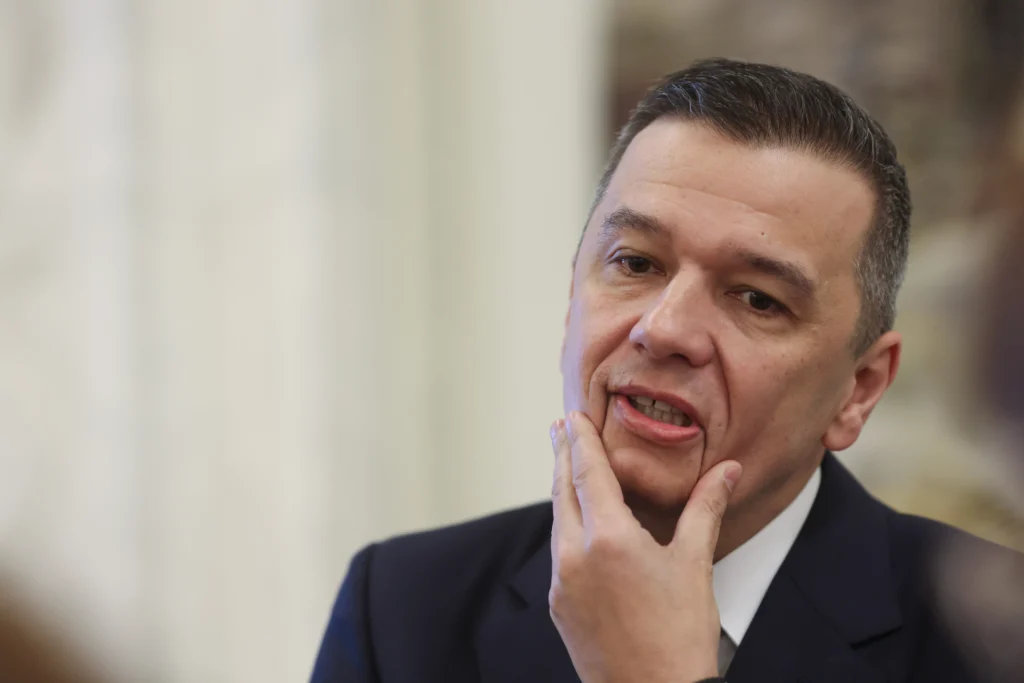
- Either AUR votes for the Grindeanu Government, and then the extremist party compromises in front of its own voters, whom it kept engaged with "Round 2, back!" and "We want early elections!". Voting for a PSD Executive by AUR parliamentarians means missing the extremist party's main objective - new elections.
- Or Sorin Grindeanu fails to obtain a majority in Parliament for a PSD government, and the path to early elections gains strong momentum.
The crisis created by PSD at the national level, due to the party-state's serious internal problems, has taken an unexpected and surprising turn for the social democrats, who no longer have public support or the means to obtain it.