

The war that began in February 2022 has been and continues to be an exam that our country, since then, gives every day and does not always pass.
Back then, in the first week of the Russian attack aimed at conquering Kiev, over a million Ukrainians left their country, mainly women, children, and the elderly, following the activation of martial law.
A humanitarian and social crisis was announced, but an unprecedented solidarity allowed those fleeing the war to find shelter in Poland, Hungary, Slovakia, or Romania.
It must be said that no one, no authority, no analyst, journalist, or military strategy expert understood the complexity of that military action to conquer Ukraine at the time, not even Vladimir Putin, who, in a criminal and despicable manner, initiated it.
The Russian leader relied on the element of surprise and the collapse of the Ukrainian military forces within a few days. Perhaps he overlooked, but the tank division officers who entered Ukraine from Belarus had their parade uniforms prepared for an event scheduled in Kiev.
Everyone saw what happened to that tank division, how it was dismantled and humiliated by the Ukrainian forces, who saved their capital and country.
But the war is not over. It is a cancer that has been plaguing Europe for four and a half years, with a major impact on the entire world.
Since no one knew what would happen after the invasion, I hope many still remember the "experts" who explained on all TV channels how Ukraine would fall in a few days. Even now, no one truly knows what will happen next, what the resolution of the war will be.
However, a few things are known:
- Ukraine resists, attacks Russia, and destroys its military and industrial infrastructure;
- Russia is bogged down on a front line stretching 1,000 kilometers. It advances sporadically, losing positions already conquered;
- Russia continues its campaign to destroy the morale of Ukrainians, hitting with rockets and targeting civilians, alongside energy and strategic systems;
- Although it has lost over a million people in this war, Vladimir Putin wants to continue it, preparing for a new mobilization of reservists and relying on Russia's endless human and energy resources;
- The Ukrainian forces have changed the war, taking it into an extremely technologized area where they have an advantage over Russia in this regard. It is unknown for how long;
War in Europe
Above, I listed some clear points, assumed by almost everyone, the conflict being, however, much more complex and full of unforeseen circumstances.
Slowly, a frustrated Kremlin that fails to achieve its military objectives and, especially, infuriated that the European Union massively helps the Ukrainians, tries to break this solidarity in every possible way.
Too little is said about the war that Putin is waging with Europe and even with a part of the USA, less so with Donald Trump, whom the Kremlin still sees as a strategic ally.
It is a war waged in a gray area, where Russia launches drones towards the eastern flank of NATO, continuously testing the reaction of military forces and aiming to provoke fear and uncertainty among civilians.
They also carry out complex sabotage operations. The latest example is an attack carried out by a drone loaded with explosives on a Ukrainian cargo plane at Leipzig Airport in Germany.
But there are also numerous actions of blowing up electrical transformers, mining railways, setting fire to warehouses, and a wide range of cyber attacks, aimed at causing material damage and generating tensions and uncertainty among the member countries of the European Union.
Romania has not been spared from Russia's hostile actions and will not be spared in the future. Our country, few know, fights on two complicated and harsh fronts: one to protect the Republic of Moldova, a former part of Romania, where most people have dual citizenship, and on the home front, where Russia attacks using the entire arsenal of hybrid warfare.
It must be said that no one in Bucharest was prepared for the complexity of such a conflict, not even at a conceptual level of discussion, what would happen if.
Moldova, a strategic target
Romania has had a dual policy towards Russia, started from the time of Ceaușescu, which continued even after 1990.
It can be said that after the fall of the communist regime, there was an approach towards the Soviet Union, then towards Russia after 1991, as the entire political elite that came to power in 1989 was a "product" of the Kremlin, led by Ion Iliescu.
The duality towards Moscow continued and continues today, through the Kremlin's networks of influence, which are active in Bucharest.
After Putin invaded Ukraine, an extensive and costly propaganda campaign aimed to change public opinion towards Russia and, partially, succeeded by cultivating extreme nationalism, religion, and exploiting any kind of dissatisfaction, heavily using social networks.
But for Vladimir Putin, an important and strategic target has been and remains Moldova. Here, he probably invested billions of euros to derail this small country's path towards the European Union.
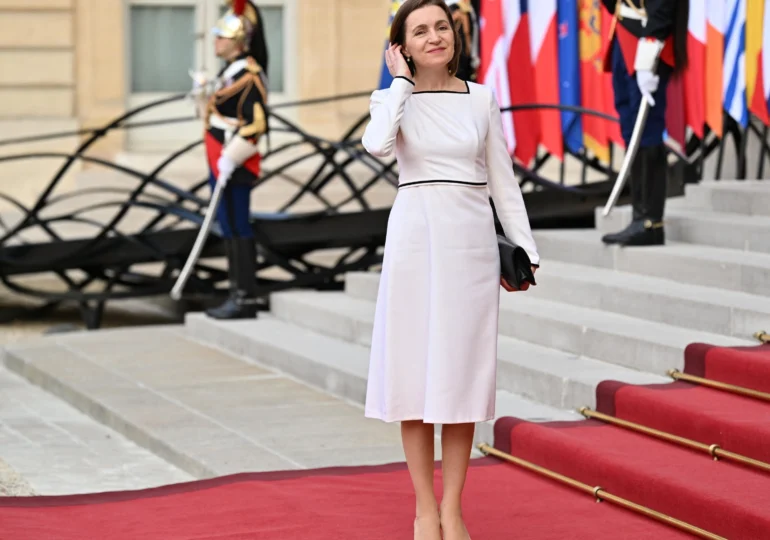
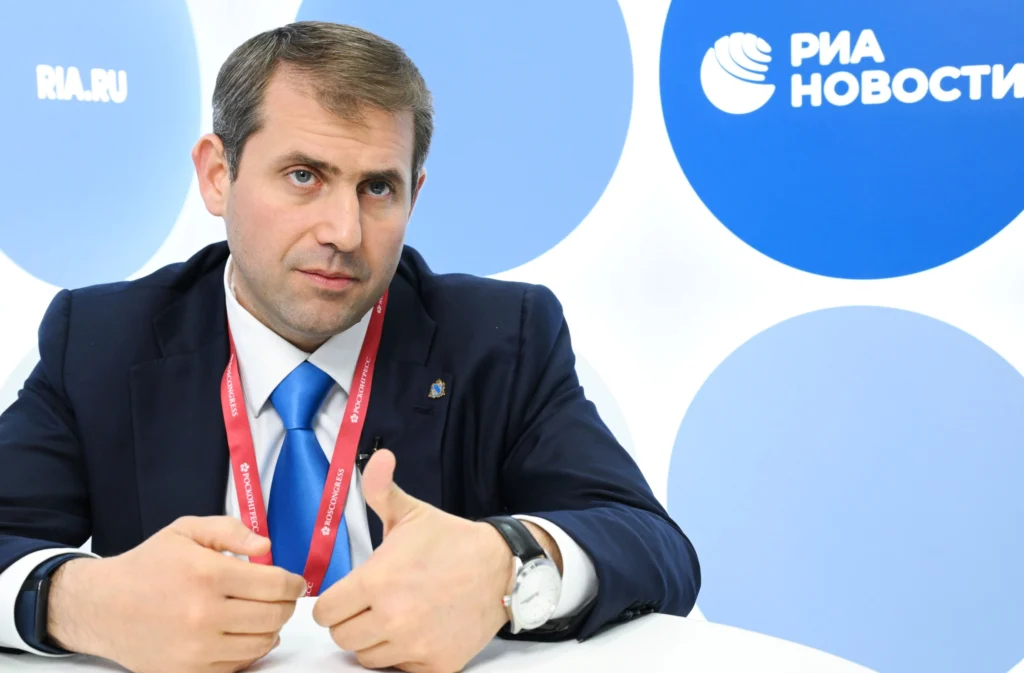
He created a political leader with unlimited resources, namely Ilan Șor, who financed networks for buying votes, protests, intimidation operations, and illegal payment systems to recruit people and turn them into activists against Maia Sandu, the president of the republic, and the democratic system.
Putin had two objectives in Moldova, to detach the country from the European Union and to bring to power a regime controlled by the Kremlin. So far, he has not succeeded, but that does not mean he will not continue to try.
Confirmation by Western Intelligence Agencies
"The Kremlin's campaign included methods known in other parts of the West, such as cyber attacks and disinformation. However, in Moldova, its intervention went further than probably anywhere else outside Ukraine and stands out as one of the most extensive and daring plots so far in Vladimir Putin's efforts to destabilize the West," state three officials from Western intelligence services, in a comprehensive article published by the New York Times last weekend, detailing the methods through which the Kremlin aims to conquer Moldova.
"In addition to training camps in Serbia, Russian agents organized training programs in Bosnia and in Moscow, aimed at turning pro-Russian Moldovans into foot soldiers. Moscow paid hundreds of Moldovan Orthodox priests to recruit voters and promote Russian narratives from the pulpit. It also spent hundreds of millions of dollars on a sophisticated system for buying votes, financed by a Moldovan billionaire (Ilan Șor) in exile and designed and coordinated from Skolkovo, the Kremlin's imitation of Silicon Valley located outside Moscow," the article published by the influential American newspaper further states.
"Moscow's campaign has not stopped. This spring, Russian missiles targeted the energy infrastructure serving Moldova, polluting waterways and interrupting the electricity supply," underline the New York Times journalists.
Most of what was described above has been written about by both the independent press in Moldova and Romania at the time, but what the American newspaper brings new is the confirmation from Western intelligence agencies that Vladimir Putin sees Moldova as an equally important target as Ukraine.
Odesa must resist
The Kremlin aims to reach the mouths of the Danube following the conquest of Odesa and, from there, to connect with Transnistria, slipping between Ukraine and Moldova, a strategic position that provides access to Eastern Europe and control over Kiev.
"Publicly, Russian officials have denied interfering in Moldova's affairs and have rejected accusations that Moscow is trying to undermine the West. Last December, Vladimir Putin, in a speech to military commanders, harshly criticized European leaders for 'fueling' hysteria about the threat posed by Russia," the New York Times article further states.
"Shortly after that, however, he convened leaders to a secret meeting to convey exactly the opposite message, according to officials from two countries familiar with the episode. Their goal for 2026, Putin told them, is the 'collapse of NATO and the EU from within,' sources said," emphasize the American journalists.
Thus, Romania is forced to continue defending itself on two fronts, but it is not clear to what extent it will succeed. Measures taken to limit the effects of hybrid warfare are not visible, and the political systems in Moldova and Romania are still constantly under Kremlin's assault.