
The failure of the coalition to timely adopt the new salary law not only means the loss of European funds. Moody’s warns that the deadlock raises questions about Romania’s ability to keep its expenses under control and may increase the costs at which the state borrows.
The law was supposed to be adopted by the end of August as part of the commitments made through the NRRP. However, the coalition parties did not reach an agreement, and President Nicușor Dan announced that Romania has accepted the loss of 770 million euros.
According to a comment published by the rating agency and cited by Profit.ro, the failure to adopt the law has negative consequences on Romania's credit profile.
The money can no longer be recovered
Moody's states that Romania will give up to 770 million euros, equivalent to 0.2% of the GDP recorded in 2025. However, the agency specifies that the actual amount lost will probably be lower, depending on the other milestones and targets that Romania has met.
Even if the law is adopted by the end of this year, the funds related to the missed milestone can no longer be requested.
Moreover, the agency believes that the chances of the reform being adopted and implemented in 2026 have significantly decreased, as the pressure exerted by the deadline and funding from the NRRP no longer exist.
The issue bigger than the loss of European funds
For Romania's rating, the signal sent by the political deadlock is more important than the amount lost, warns Moody's.
"In our view, the failure to adopt the public sector salary law is a signal that a political consensus in favor of implementing and maintaining a broad fiscal effort, which structurally controls expenditure growth, may no longer exist, despite the very substantial reduction in the deficit that we expect to see this year," the agency states.
Moody's estimates that the budget deficit will decrease to 5.8% of GDP in 2026, by over two percentage points in a single year. The result is expected to be achieved by limiting expenses and maintaining revenues in challenging economic conditions.
However, the question remains whether this correction can continue from 2027 in a fragmented political climate.
Salaries in the public sector represent over 20% of state expenses. In the absence of reform, Moody's believes that the probability of keeping these costs under control starting next year has decreased.
The deadlock can also affect Romania's financing costs, sensitive to fiscal and political developments. The agency estimates that the interest payments made by the state will reach 3.3% of GDP in 2028, compared to 2.8% in 2025.
Nazare: It's not just an issue related to the NRRP
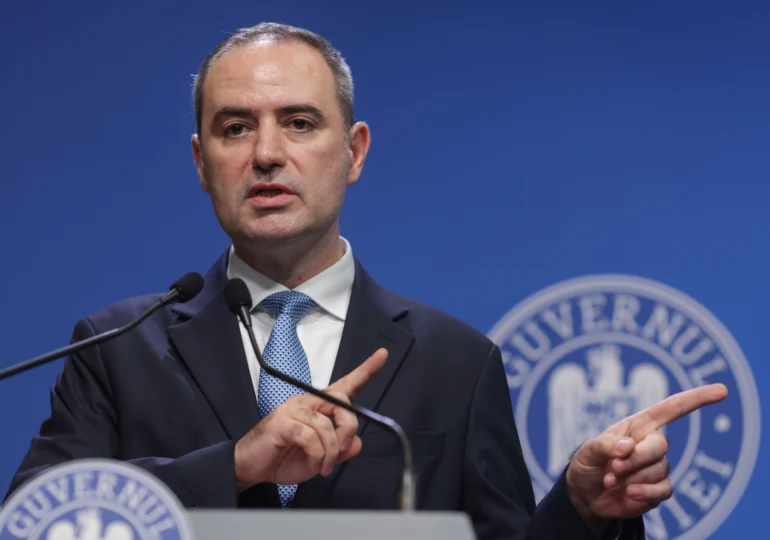
The interim Minister of Finance, Alexandru Nazare, says that Moody's warning shows that the failure of the reform raises questions about Romania's credibility in front of investors.
"The deadlock regarding the new salary law is not just an issue related to an NRRP milestone. It is a credibility issue for Romania," the minister conveyed.
Nazare emphasized that Moody's directly links the risk caused by the reform delay to the budget for 2027 and the costs at which Romania borrows. "This is exactly why I have insisted in recent weeks that a fair public salary law must also be sustainable," he stated.
According to the minister, Romania needs to finalize the reform by the end of the year without creating expenses that the budget will not be able to sustain in the following years.
Nazare points out that after two years in which personnel expenses increased by 20.3% and 17.1%, in the last 12 months, they have decreased nominally by 4.7%, approximately eight billion lei.
"A reform that creates obligations that the budget cannot sustain in the following years risks canceling out some of the progress made in the last year," the minister warned.
S&P evaluation is next
Romania recently maintained its Moody's rating at Baa3, the last step in the category recommended to investors, but the outlook remains negative.
The next important evaluation will be conducted by S&P in October. "We must use the upcoming period to demonstrate that the fiscal progress so far is sustainable and that Romania remains a reliable partner," Alexandru Nazare conveyed.