
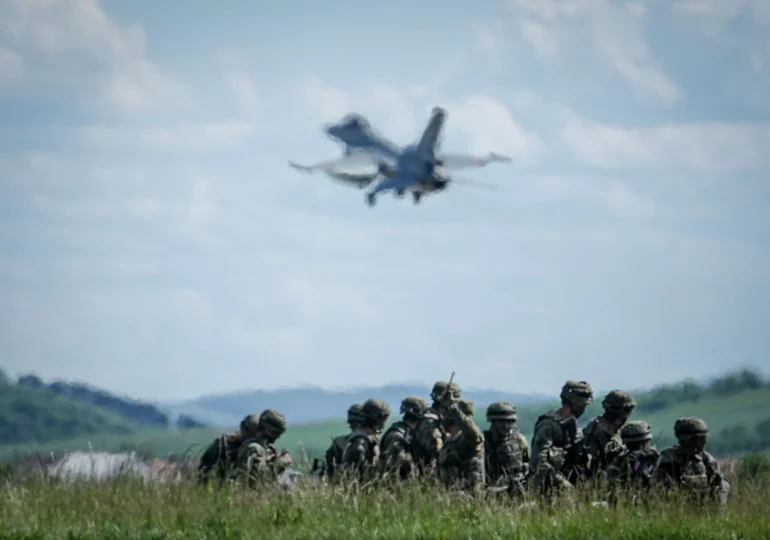
NATO is preparing a plan for the situation in which Russia would attack the eastern flank of the Alliance. The strategy combines classic military forces with inexpensive drones and artificial intelligence and aims to both stop an incursion and swiftly defeat Russian forces before they manage to establish themselves on the territory of a member state.
The document is called „Victory Theory” and is developed under the coordination of the Supreme Allied Commander Europe (SACEUR), U.S. General Alexus Grynkewich. It is set to be presented in Poland on October 12, according to Bloomberg, which consulted an unclassified version of the document.
The plan does not imply that NATO expects an imminent attack from Russia. The Alliance's Secretary-General, Mark Rutte, stated that there are currently no indications that Moscow is preparing a conventional military attack against NATO. However, allies are preparing for the continuation and potential escalation of Russia's hybrid actions.
How NATO Would Respond to an Attack
The first step would be to halt the Russian incursion. NATO would use ground forces along with new capabilities developed for defending the eastern flank: low-cost drones, systems requiring very small crews, and target identification technologies assisted by artificial intelligence. These would not replace tanks, artillery, or other conventional weapons but would be used in conjunction with them.
After stopping the attack and securing freedom of movement, allied forces would move to the next stage: disrupting and destroying the adversary's command and control systems.
The goal would be for Russian forces to be swiftly defeated before they could occupy and hold a portion of NATO territory.
"The theory of victory by the Supreme Allied Commander Europe is simple: maintaining NATO's advantage," said Colonel Martin O'Donnell, spokesperson for General Grynkewich, to Bloomberg. He emphasized that the Alliance must now create the necessary conditions for deterring aggression and, if attacked, be capable of winning.
At the same time, the document stresses the defensive nature of NATO and the need to avoid unintended provocations.
The idea is for the Alliance's level of military readiness to be convincing enough for an adversary to conclude that an attack cannot succeed.
Lessons from the War in Ukraine
An important part of the new strategy comes directly from the experience of the war in Ukraine. Inexpensive drones, electronic warfare, and rapidly modifiable software programs have profoundly changed the way war is waged. NATO is now trying to incorporate these lessons into its own defense.
The Alliance is already testing drones, unmanned ground vehicles, anti-drone systems, and new communication technologies within the Eastern Flank Deterrence Initiative.
One of the ideas being explored is the creation of an automated defensive zone along NATO's borders with Russia and Belarus. This could bring together sensors, drones, and interconnected weapon systems assisted by artificial intelligence. They would detect hostile movements and allow surveillance of vulnerable areas with fewer military personnel.
In July, NATO states agreed to invest over $40 billion in drone defense systems over the next five years. The Alliance also intends to train five times more drone operators by the end of 2027.
It's Not Just About a Military Attack
"Victory Theory" also considers threats that remain below the threshold of open war.
These include sabotage, cyberattacks, clandestine operations, or actions against critical infrastructure and communication systems. European states expect such actions to continue even if Russia is not currently preparing a conventional military attack on NATO.
The Alliance must therefore find a balance: to respond to hybrid actions without provoking unintended escalation, but also to demonstrate readiness to defend itself.
NATO intentionally keeps the exact threshold for activating Article 5, regarding collective defense, ambiguous. Mark Rutte explained that this ambiguity is deliberate: an adversary should not be able to calculate how far they can go without triggering a response from the entire Alliance.
G.P.