

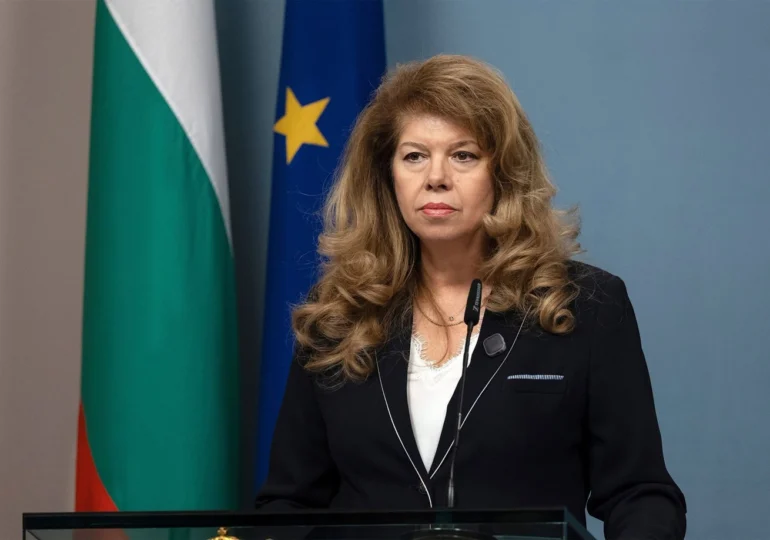
The current President of Bulgaria, Iliana Iotova, is credited with victory in the second round of the presidential elections held on Sunday, November 1. According to exit polls, she received between 50.7% and 52.5% of the votes, ahead of former interim Prime Minister Andrey Gyurov, supported by the pro-Western opposition.
The election was marked by differences between the two candidates regarding relations with Russia and support for Ukraine, at a time when the security of the Black Sea has become a major concern for Bulgaria.
According to The Sofia Globe, the Alpha Research exit poll places Iotova at 52.5%, compared to 43.4% for Gyurov. The Market Links agency indicates a closer result, 50.7% to 44%.
Other exit polls confirm the advantage of the current president. However, the results are preliminary, and official data will be published by the Central Electoral Commission.
If the results are confirmed, Iliana Iotova will become the first woman elected by popular vote to the office of President of Bulgaria.
A president supported by the party in government
Iliana Iotova, aged 61, has already been leading Bulgaria since January 2026, when she took office as vice president following the resignation of Rumen Radev. He stepped down from the presidency to enter parliamentary politics. He later won the early legislative elections in April, and his party, Progressive Bulgaria, came to power.
Iotova, who previously served as vice president for nine years, ran as an independent candidate, benefiting from the support of Prime Minister Radev’s party and the Bulgarian socialists.
In the first round held on October 25, she obtained 34.76% of the votes, compared to 31.95% for Gyurov. Voter turnout was only about 22%, a historic low for presidential elections in Bulgaria.
Russia and the war in Ukraine, main points of confrontation
The two candidates had different positions regarding Bulgaria’s relations with Moscow. Iotova supports maintaining the country’s European orientation but advocates improving relations with Russia, lifting sanctions, and ending the war in Ukraine through negotiations.
In a televised debate before the vote, she stated that peace can only be achieved through negotiations and warned that sending increasingly sophisticated weapons to Ukraine could cause new destruction and loss of human lives, according to Euronews.
Her opponent, Andrey Gyurov, aged 50, took a firmer stance towards the Kremlin and continued support for Ukraine. A former interim prime minister and former vice governor of the Bulgarian National Bank, Gyurov signed a security cooperation agreement with Kyiv during his time leading the government.
He was supported by pro-Western reformist parties as well as several right-wing political personalities, including former Prime Minister Boiko Borisov.
Elections amid the Black Sea attacks
The election took place at a time of tension in the Black Sea region, following a series of drone attacks on commercial vessels near the Bulgarian coast. The attacks caused casualties and led Sofia authorities to request allied support to strengthen maritime security.
Both candidates condemned the attacks but had different approaches regarding Russia’s responsibility and the necessary measures to stop the war.
Prime Minister Rumen Radev stated that the effects of these attacks serve the interests of the Russian Federation, without Bulgarian authorities presenting evidence directly attributing responsibility to Moscow.
According to Reuters, Bulgaria has requested allied assistance to protect commercial navigation after incidents affecting several ships in recent weeks.
Although the presidential office has limited executive powers, the head of state is the supreme commander of the armed forces, can send laws back to Parliament for reconsideration, and plays an important role during periods of political crisis.