

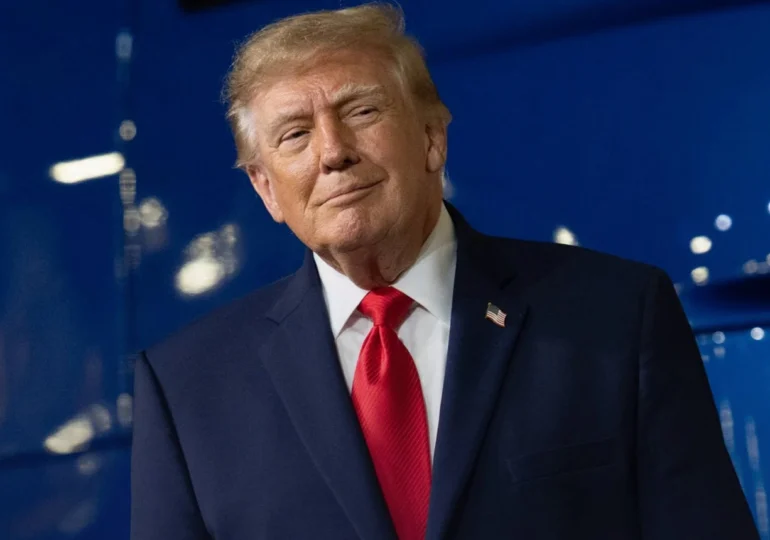
A federal judge in Florida has ruled that the defamation lawsuit filed by Donald Trump against the BBC can proceed, partially rejecting the British broadcaster’s request to dismiss the case.
The American president is seeking $10 billion in damages, claiming that the BBC damaged his reputation through the editing of a documentary that combined statements made nearly 55 minutes apart, creating the impression that he directly incited the violence at the Capitol on January 6, 2021, reports The Guardian.
BBC editing at the center of the trial
Federal judge Jeffrey T. Kuntz, appointed by Trump himself, determined that the president's allegations are sufficiently strong for the case to move forward.
The decision concerns the documentary Trump: A Second Chance, aired as part of the Panorama program, in which the BBC combined excerpts from a speech given by Trump before the Capitol attack.
The court considered that the editing could constitute evidence of intent to mislead, given the nearly 55-minute gap between the original statements.
"Accepting the allegations in the complaint as true, the Court finds that Trump has plausibly presented the existence of damages, claiming that a defamatory documentary, released close to the elections, harmed his reputation," the judge wrote.
He rejected the BBC's argument that the editing was a routine editorial operation necessary to condense a 70-minute speech into a 12-second segment.
"Editing is often necessary. However, given the time interval between the two statements, this gap leads to a plausible conclusion that the BBC knew or should have known that the sequence it created was not and could not be a faithful representation of the statements. It was not a simple removal of marginal fragments, but the creation of a message different from what was said in the speech," explained the judge.
He added that the editing itself could plausibly constitute evidence of bad faith.
Judge cites other BBC errors
In the reasoning behind the decision, the judge also referred to other errors in the BBC's coverage of Donald Trump, which he considers relevant to evaluating how the broadcaster handled information about the American president.
The judge further noted that the allegations regarding the BBC's departure from journalistic standards are sufficient to surpass the level of mere negligence.
In defamation lawsuits filed by public figures in the United States, plaintiffs must prove that the information was published with "actual malice," meaning the author knew the information was false or recklessly disregarded the possibility that it was false.
However, the judge's decision does not mean that Trump has won the case. The court only determined that his allegations are sufficiently well-pleaded to be further examined. The president will have to effectively prove these claims during the trial.
BBC contests the decision. Trump speaks of a "huge victory"
BBC announced that it is surprised by the court’s ruling but respects it and will continue to defend its position.
"We are surprised by this decision but respect the authority of the Court and acknowledge that the case will now move to the next stage. We remain confident in our position and will continue to respond through the appropriate legal procedures," the British broadcaster stated.
Donald Trump welcomed the decision on his platform, Truth Social, describing it as a "huge victory."
"We will continue to fight against all those who try to deceive the American people and defeat them!" the president wrote.
Which of Trump’s claims were rejected
The judge dismissed another part of the American president's lawsuit, namely the allegation that the BBC violated Florida's law on deceptive and unfair trade practices.
Also, Trump will have to prove that he suffered actual material damages as a result of the documentary’s broadcast, which was not aired in Florida.