
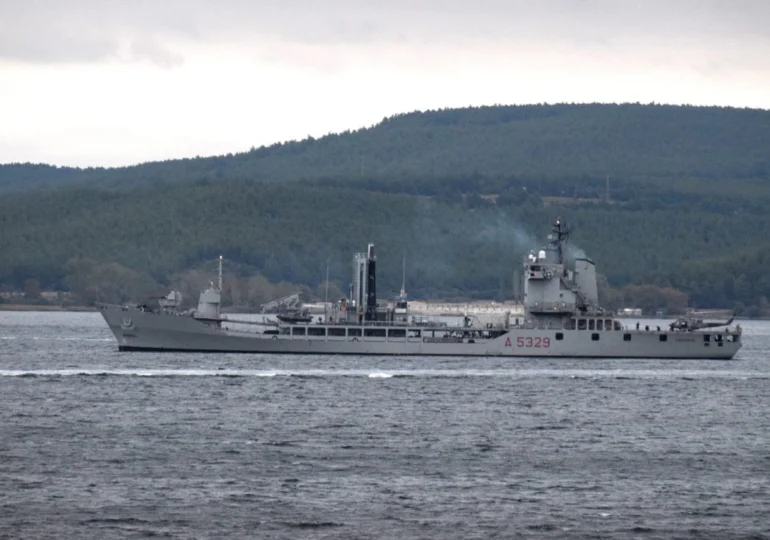
Incidents involving drones, mines, and commercial ships in the Black Sea have increased nearly tenfold in 2026, reaching 400-500 since the beginning of the year, compared to less than 50 throughout last year.
The escalation risks drawing NATO and the United States into the war between Russia and Ukraine, reports CBS News, which produced a report in Romania, reproduced below:
Off the coast of the Black Sea, the Romanian Navy is constantly on alert, searching for the deadly remnants of a war in which the country is not involved.
It is a front of the war between Russia and Ukraine that most people rarely see. It extends to the NATO border and sometimes even reaches Alliance waters, threatening to draw NATO and, by extension, the United States into the conflict.
Incidents involving drones, mines, and commercial ships are increasing in the Black Sea, Colonel Martin O'Donnell, NATO spokesperson, told CBS News.
“In 2025, for example, we recorded fewer than 50 incidents in the Black Sea. This year alone, we're talking about 400-500,” he said.
The roughly tenfold increase in the number of incidents threatens a major artery of global grain and fuel transportation and has made this waterway more dangerous than the Strait of Hormuz, a hotspot in the war between the US and Iran, where both sides try to impose blockades on this strategic point to exert economic pressure on the other.
According to the International Maritime Organization, 25 sailors have died in the Strait of Hormuz this year. During the same period, at least 40 people lost their lives in the Black Sea, according to the International Transport Workers' Federation.
“I would say the Black Sea is just as important and, depending on whom you speak with, some might argue it is even more important in terms of global trade,” O'Donnell said.
Any disruption in fuel and food flows “can have worldwide consequences that can affect America as much as any of the countries in this region,” he added.
How the war from Ukraine is spreading to Libya and Finland
And this maritime front extends beyond the Black Sea.
Over the weekend, Ukraine announced it struck a modern Russian military ship and a cargo vessel, which later drifted, engulfed in flames, into Finnish waters, a NATO member state.
On Sunday, Ukraine announced it sank a Russian military ship docked in Libya.
Three of the six Black Sea littoral states are NATO members: Romania, Bulgaria, and Turkey.
However, as explained by a Romanian Navy commander, Mihai Iordache, defending these borders is nothing like defending land borders.
“We don’t have a fence in the Black Sea showing where our border ends and where the other country’s border begins,” he said.
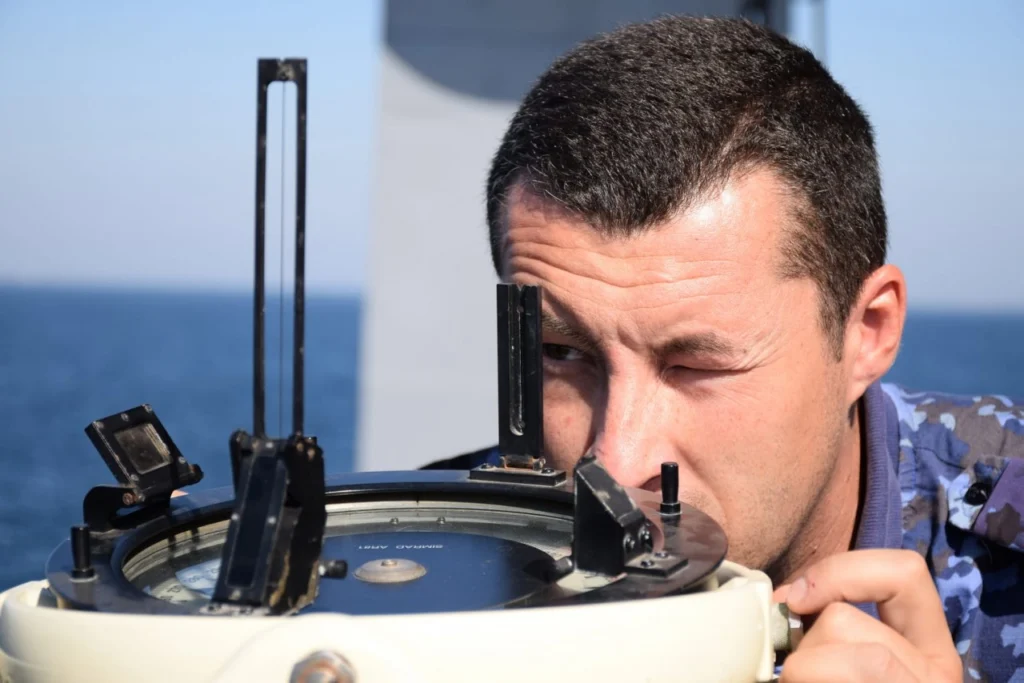
The Romanian Navy sends specialized divers and drones to investigate the depths and identify unexploded ordnance.
All this is happening while pressure on NATO is increasing. On Friday, Poland accused Russia of a “deliberate provocation” after Russian cruise missiles fell in the southeast of the country.
Since the launch of the large-scale invasion of Ukraine on February 24, 2022, drones have repeatedly entered the airspace of Poland and other NATO states, mainly near Ukraine, but not only there.
The collective defense clause in Article 5 of NATO’s founding Treaty stipulates that an attack against one member state is considered an attack against all 32 members of the Alliance.
When asked if NATO would defend itself if necessary, Colonel Martin O'Donnell said, “I would say there should be no doubt about NATO's willingness and capability to act.”
Romanian commander: Who knows what the future will bring? Let’s hope it will be peace
In the Black Sea, Commander Mihai Iordache warns that the Romanian Navy is already overstretched.
“We don’t have enough people, personnel, and equipment to handle all the commercial ships and all the drones we have,” he told CBS News during the journalists’ documentation aboard a ship.
“Four years ago, we were prepared to handle one drifting mine, and now we’re prepared to handle dozens of drifting drones. So I guess we’ll be prepared in the future as well. Who knows what the future will bring?” he said.
“The situation might become more tense or calmer, who knows. Let’s hope it will be peace.”
B.B.