
It has become clear to everyone that the new prime minister is the social-democrat deputy who, for over a decade, has had a mysterious role in the party: that of a fixer. That is, a negotiator called upon in difficult situations to obtain compromises from those involved.
Marian Neacșu is the successor of Octav Cozmâncă and Viorel Hrebenciuc, the PSD fixers from the ’90s, the first, and the 2000s, the second. With different personalities, the two were important actors for FSN – FDSN – PSDR – PSD through their knowledge regarding the Communist Party.
Cozmâncă and Hrebenciuc were also active in the PCR. They used the experience of the single party to promote people, to control and develop local organizations, but also to negotiate agreements in Parliament and beyond.
Marian Neacșu has followed the same path, becoming an influential PSD member due to his ability to make deals, as well as his expertise in central and local administration.
Marian Neacșu currently holds no leadership position in PSD, but because he is deputy prime minister, and Luca Niculescu has transferred all prime ministerial duties to him, he has also become the most powerful man in the party.
“At the Executive level, PSD ministers have formally received direction. Everything goes through Neacșu,” explained Cristian Hrituc, political analyst, former presidential adviser.
“That is, the de facto head is the deputy prime minister. He acts both as a filter and a reviewer. If Deputy Prime Minister Neacșu does not sign an approval, the normative act is blocked. Ministers can no longer invoke the ‘political factor’—the party demands it. Neacșu is PSD, he leads the Government—and the double game that happens in governments where the prime minister is not also the party leader is limited,” added Cristian Hrituc in an analysis published on Substack.
The Opposition Within PSD
The new political reality that emerged following the decision of the current prime minister Luca Niculescu created a power imbalance within PSD.
It is not clear at this moment what the discussion behind the decision was, who the actors involved were, what role Nicușor Dan or people from intelligence agencies had, but it is certain that Sorin Grindeanu’s influence in the party was further limited, and more importantly, that of the Lia Olguța Vasilescu - Claudiu Manda duo was also restricted.
It should be said that, between 2016 - 2018, Marcel Ciolacu, Sorin Grindeanu, and Marian Neacșu represented the opposition within PSD against Liviu Dragnea, the party leader at the time, who won the 2016 parliamentary elections.
On September 19, 2018, Marcel Ciolacu signed the anti-Dragnea letter, alongside other social-democratic leaders, provoking the isolation of the PSD leader, who was to enter prison for corruption six months later.
“These wrong decisions overlap with Liviu Dragnea’s desire for even more power. A PSD president who did good things, but who today, unfortunately, is no longer the man I knew a few years ago. Unfortunately, Liviu Dragnea has become a man blinded by power, pride, and imaginary fears,” Marcel Ciolacu publicly announced at that time, as president of PSD Buzău.
Following that letter, in November 2018, Marian Neacșu was excluded from PSD along with Adrian Țuțuianu, although the former had not signed the protest, but Liviu Dragnea suspected and accused him of “playing” on the side of the party’s coup plotters.
“I was not explained the reasons for the decision. The explanations were nonsensical, so it is very hard for me to comment,” Marian Neacșu declared at that time.
Who Saved Iohannis?
As for Sorin Grindeanu, he was prime minister for half a year during Liviu Dragnea’s era, essentially a compromise attempt between Klaus Iohannis, then President of Romania, and the PSD leader who could not lead Romania because he had been criminally convicted, with suspended sentence execution, for corruption offenses.
Sorin Grindeanu was dismissed by Liviu Dragnea, who controlled the Romanian Parliament, through a motion of no confidence in June 2017.
The nucleus of opposition to Dragnea within PSD somehow reached power after the former leader’s exit from politics.
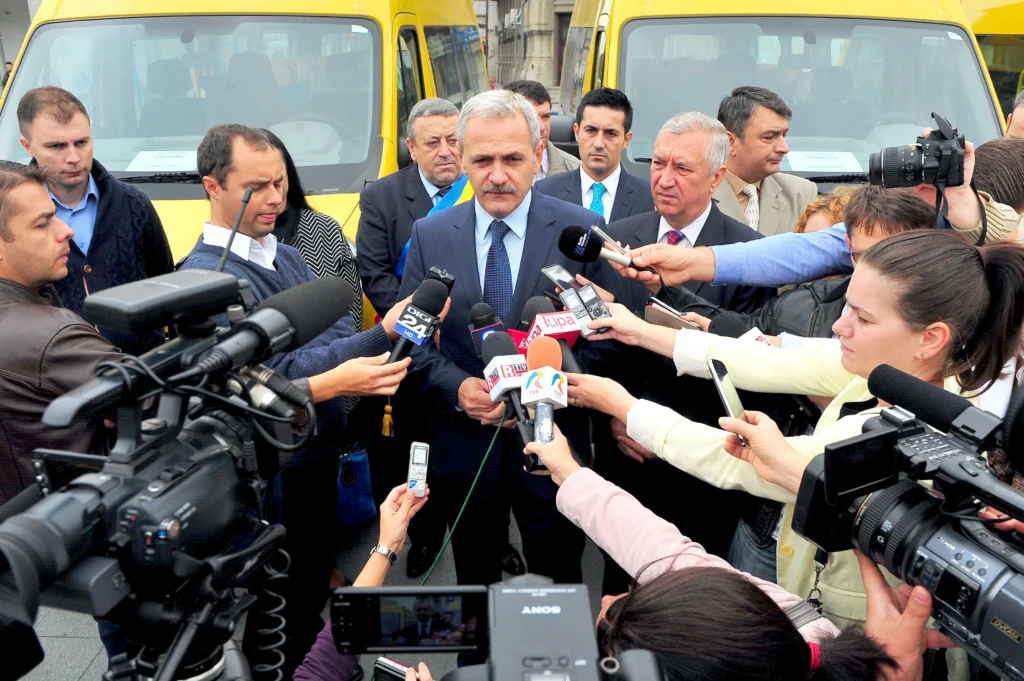
Marcel Ciolacu becomes prime minister and PSD president. Sorin Grindeanu, minister of Transport, also becomes the leader of the social-democrats after Marcel Ciolacu’s departure from the scene.
Marian Neacșu becomes deputy prime minister, among other roles, today leading the Government of Romania.
The evolution of the three after Dragnea’s removal is so spectacular that it is hard not to wonder if they were rewarded for having saved Klaus Iohannis’ presidency and the jobs of a number of generals eight years ago.
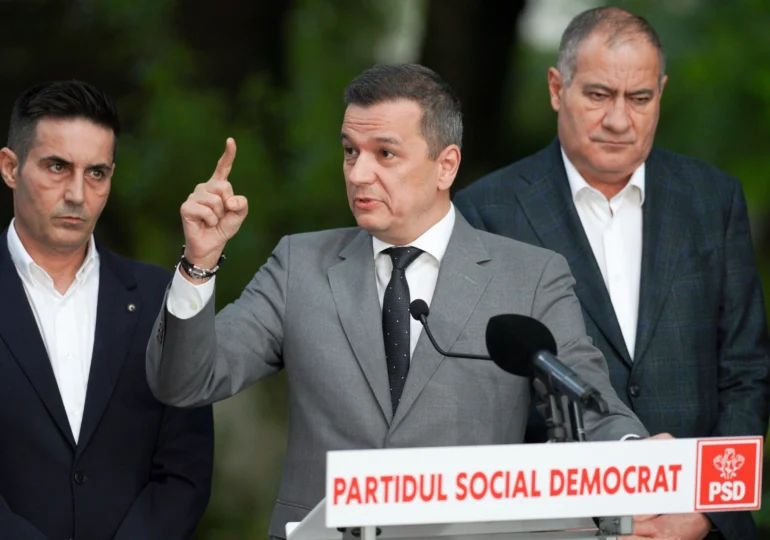
Marian Neacșu’s rise to a major decision-making position puts Lia Olguța Vasilescu in a great difficulty, seen as a continuer of Liviu Dragnea’s populist politics within PSD. And this change comes after Sorin Grindeanu, an unpopular leader weakened by the Iohannis - Ciucă - Ciolacu disaster, begins to be controlled by the “family from Craiova.” This is exactly the moment when Claudiu Manda appears in photos, flanking Sorin Grindeanu in important public appearances.
The Fear of 2028
Pushing Marian Neacșu into the informal prime minister position actually means that PSD no longer has access to the “honey jar,” that is, the country’s budget, and the distribution of funds will also be done with the agreement of Nicușor Dan, the “head of the system,” as he has self-styled.
It is hard to say in which direction the new government will go, which has just turned one month old and, apart from sterile discussions about administrative reform, it is unclear whether it will manage to reduce the deficit and relaunch the economy.
It can be observed, however, that Nicușor Dan believes he has greater influence over the Executive than he did during the Bolojan Government, and this has led him to launch a campaign to regain public trust through press conferences and answers to questions considered difficult.
Neither the President of Romania nor Marian Neacșu have the levers of power and credibility to resolve the deep trust crisis of citizens in authorities manifested after the cancellation of the 2024 elections.
This reality has caused AUR, an extremist, pro-Russian party, to reach public support around 40%, creating a complicated situation for Nicușor Dan and PSD from the perspective of the 2028 parliamentary elections.