
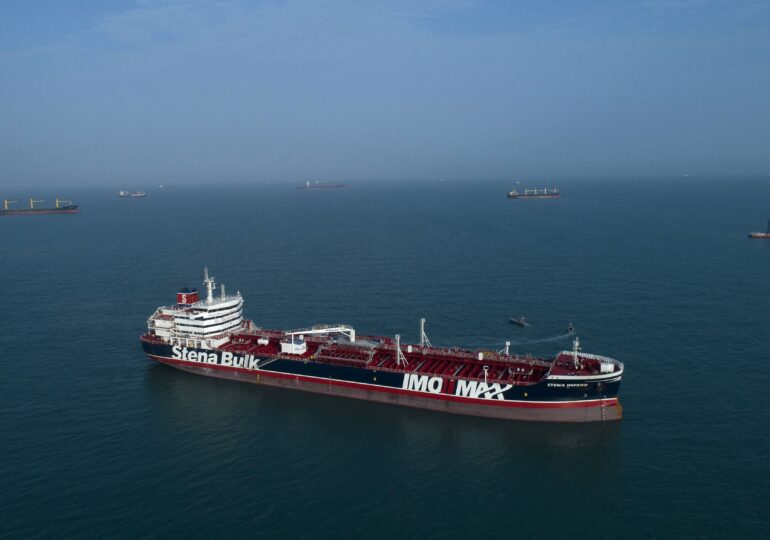
Attacks on commercial ships in the Strait of Hormuz and surrounding waters have reached the highest level since the start of the war with Iran. In just the past two days, three oil tankers have been hit by projectiles, and two caught fire.
However, the price of oil continues to fall as Gulf exports recover, and markets increasingly consider a resumption of a large-scale war unlikely.
The paradox puts pressure on Iran, which is trying to maintain its influence over one of the world's most important energy routes, while the American blockade strongly affects its oil revenues.
The number of reported attacks in the Strait of Hormuz, the Persian Gulf, and the Gulf of Oman exceeded 30 in October, for the first time since the outbreak of the war between the US and Iran at the end of February. Until then, about 10 attacks per month were reported on average.
The escalation continued in November as well. By Sunday, November 22, at least 22 attacks had been reported, the second highest monthly toll since the conflict began, according to a CNN analysis based on data from the UK Maritime Trade Operations Center (UKMTO).
Data from the International Maritime Organization also indicate October as the month with the most confirmed incidents this year, although the counts vary depending on the methodology used.
Three oil tankers hit in two days
The most recent incidents occurred on Friday and Saturday near the coast of Oman, at the exit of the Strait of Hormuz.
The tanker Captain Leon, under the flag of the Marshall Islands, was hit on the front on Friday, and a fire broke out on board. The crew escaped unharmed.
On Saturday morning, the tanker Torkel, under the flag of Hong Kong, was hit at the rear and caught fire. Less than an hour later, another tanker under the Hong Kong flag, Arina, was hit in the engine compartment.
The three attacks are confirmed by the Joint Maritime Information Center, which maintains the threat level for the region at "severe." The perpetrators of the attacks have not been officially identified. The maritime risk analysis company Marisks considers Iranian involvement likely, but this assessment does not represent confirmation.
Why oil prices are falling despite increasing attacks
The Strait of Hormuz is one of the most important routes for global energy supply. Before the war, about one-fifth of the oil consumed worldwide passed through this area. After the American-Israeli attacks that triggered the conflict, Iran tried to block maritime traffic. The US responded with a blockade of Iranian ports, and commercial shipping through the strait dropped sharply.
Meanwhile, Gulf producers have found ways to resume a significant portion of exports, including by using alternative routes and adapting maritime transport.
The International Energy Agency attributes the recent decline in oil prices in part to the recovery of exports from the region.
Adding to this development are investor expectations. After the US midterm elections, fears of a new American military intervention in the Middle East diminished, and markets began to factor in a gradual return of supply. "Markets increasingly seem to assume that a return to large-scale war is unlikely and that oil supply will gradually recover," explained Hamidreza Azizi, an Iran specialist analyst at the International Crisis Group, to CNN.
The expert warns, however, that this outlook can change quickly if Iran intensifies the confrontation.
Prices continued to fall on Monday as well. Brent crude dropped to about $92 per barrel after losing around 4% the previous week. US WTI crude also became cheaper amid concerns about the global economy, according to Reuters.
However, attacks on maritime transport limit the extent of the decline, as the risk of new supply disruptions remains high.
Iran loses revenues, Trump does not want a deal
For Tehran, the problem is twofold. On one hand, falling oil prices reduce the value of exports. On the other, the American blockade limits Iran's ability to sell its own crude oil.
The maritime transport monitoring company Kpler warned at the end of October that the last shipments of Iranian oil at sea, outside the blockade zone, had been unloaded in China. Under these conditions, Iran's oil export revenues could reach zero by mid-December, according to Kpler's estimate, cited by CNN.
The economic pressure reduces Tehran's ability to use control over the Strait of Hormuz as a bargaining tool. Analysts warn that Iran might try to compensate for this loss of influence by escalating the confrontation.
Donald Trump does not seem willing to resume negotiations, however. "We don't need a deal with Iran. Those times are long gone!" Trump wrote on the Truth Social platform in a message published this month. "We have their money, hundreds of billions of dollars, and we have the Strait!" added the American leader.
Trump later suggested that he would not hesitate to order new military strikes against Iran if he deemed it necessary.
G.P.