
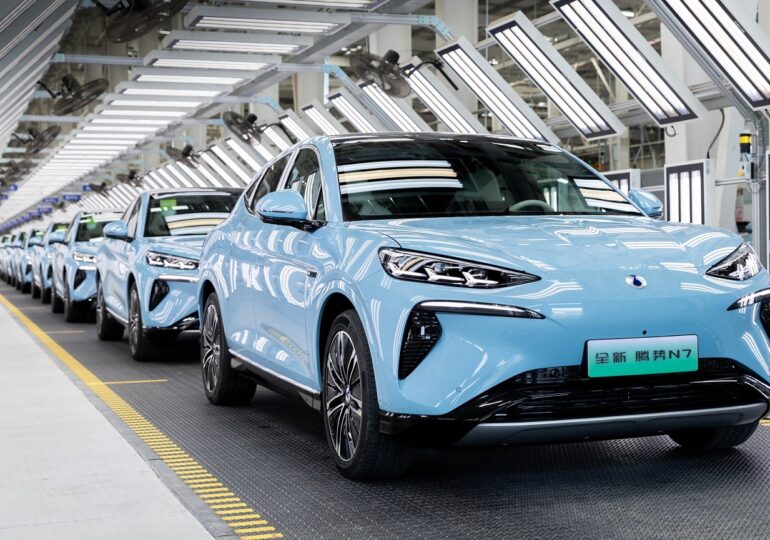
China and the European Union have reached an agreement that would allow for a reduction in exports of hybrid and plug-in hybrid vehicles from China to the EU by several million units over a period of four years.
It is a world premiere, stated European Commissioner for Trade, Maroš Šefčovič, to reporters following discussions in Beijing aimed at reducing the EU’s continuously growing trade deficit with China. The agreement „opens the prospect of reducing China’s (hybrid vehicle) exports by more than half,” the commissioner specified, as cited by Reuters.
"It is the first time that China has agreed to moderate its exports without going through prior commercial investigation procedures," Šefčovič emphasized at a press conference held in Beijing.
The agreement was reached following three months of discussions between Šefčovič and Chinese officials, including Minister of Commerce Wang Wentao, and comes after years of disputes between Beijing and Brussels regarding the massive increase in Chinese exports, such as automobiles, noted the cited agency.
What's Next
EU leaders will discuss this outcome at the beginning of the summit in Brussels next Thursday to determine if the agreement marks the beginning of a rebalancing of the bloc's trade deficit in its relationship with China. This deficit has reached over one billion euros (1.12 billion dollars) per day.
A third periodic meeting of their consultation mechanism will take place in March 2027, and the two parties have agreed to maintain communication, including through a ministerial-level video conference in January, the Chinese ministry specified.
Bernd Lange, President of the European Parliament's Committee on International Trade, stated that this hybrid agreement should be extended to other sectors and that the EU should also more effectively apply trade defense measures.
The two parties have also reached agreements on reducing Chinese customs duties for EU exports worth around four billion euros – including auto parts, olive oil, and footwear – as well as on facilitating the process by which China grants export licenses for rare earths and permanent magnets, Šefčovič specified.
EU Flooded with Cars from China
EU officials are concerned about the sudden increase in imports of vehicles from China. Imports of rechargeable hybrid vehicles (PHEVs) in the EU have grown by 86% from January to September, accompanied by a 20% price decrease. Over half of these vehicles now come from China, and by 2025, China's share of PHEV imports was 30% in terms of value.
The dispute between China and the EU over Chinese exports of electric vehicles at reduced prices dates back to 2024 and has affected bilateral relations. Since then, it has expanded to include other sectors such as cognac, pork, dairy products, as well as rare earths and critical minerals.
China needs foreign buyers to absorb the avalanche of cheap, state-subsidized goods that its own consumers cannot take, while the EU oscillates between accepting these imports to ease living costs and preventing their entry to rebuild its own factories.
T.D.