

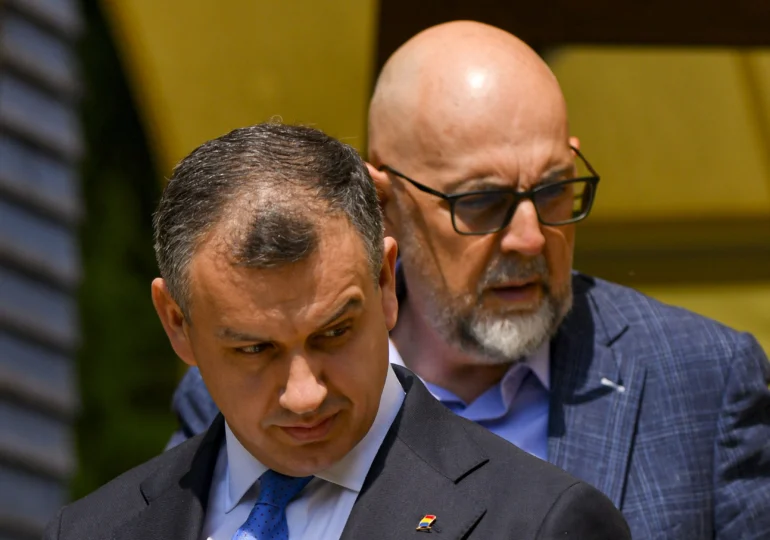
At the end of the second day of negotiations with the parties, Eugen Tomac, the prime minister designated by the head of state to form the government, has less political support than he had initially.
The list of proposed ministers, with some names announced by the nominated prime minister, has irritated everyone. One of the issues is that, from an executive team that was not supposed to have ties to the parties, it has turned into one where the strings of the Social Democratic Party (PSD) are noticeable.
"You told us today that you insisted on meeting with the National Liberal Party (PNL) first, then with the PSD. I don't believe this. I mean, I believe you had prior, hidden and unacknowledged meetings with the PSD," accused Ciprian Ciucu, the first vice president of the PNL and mayor of Bucharest, in an open letter addressed to the designated prime minister.
"Why do I say this? I can't help but notice that the ministries assumed so far by the PSD reflect proposals directly from the PSD: Mr. Nicolae Istudor for Agriculture, Mr. Ionuț Mașala for Transport... But my jaw dropped when you mentioned Mr. Vladimir Ionaș for the Ministry of Development," continued the mayor of Bucharest.
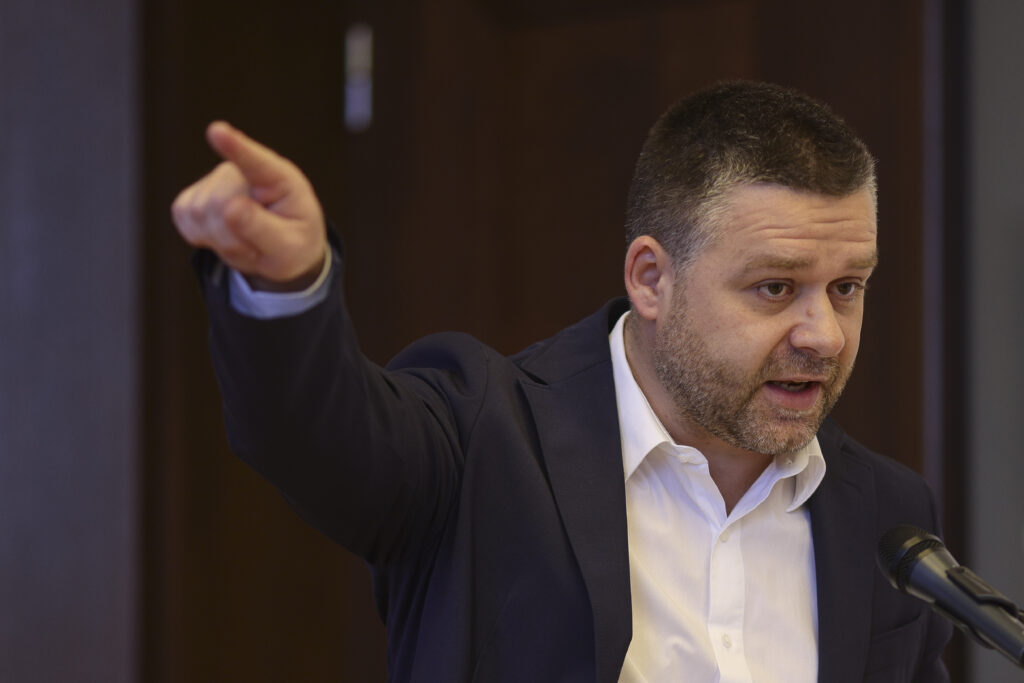
"You can't explain to me by what decision-making process you arrived at Mr. Vladimir Ionaș, other than that PSD handed him to you. You can't! It seems like you are protecting their interests and have put the ministries they want out of reach," emphasized Ciprian Ciucu.
Vladimir Ionaș, a sociologist, and Marius Pieleanu are the founders of a sociological center, Avangarde, frequently suspected of orbiting around the PSD.
Independence from parties
Eugen Tomac reacted to Ciprian Ciucu's letter, stating that, "as the designated prime minister, I have the freedom to choose the team I form and support, and obviously, I want to promote it in the relationship with the parties from whom I request the vote to invest in a functional government."
The issue with the designated prime minister is that, despite numerous informal discussions and messages from the PNL and USR without the PSD, not even at the level of secretaries of state, when the official negotiations began, something else emerged.
"On the list you presented to us, there are also members of the PNL. Without major positions, but with a long history in the PNL. Without our support, they are there at your initiative. Now it's about the two ladies, but there will be others. And I told you today what will happen: as PSD has money and pays the press a lot, they will push the narrative that your government is the PNL and USR government. They will use two, three, four names with a history in the PNL and put your government in our arms, without us being part of the process through which you were designated to form the government. Exactly the Cioloș scenario!"
Ciprian Ciucu, first vice president of the PNL, message to Eugen Tomac
Eugen Tomac entered the arena with a weak strategy, lacking political direction, attempting to propose ministers with an aura of independence but with connections to parties.
Another upsetting sensation, generated by the attempt to form a government "outside the parties," as expressed by the president, is that of improvisation.
How will a Tomac Government be stronger, with a prime minister who, for every decision, must go through the parties and the Cotroceni Palace, than the dismissed Bolojan Government? One difference: it has the possibility to legislate, but in reality, due to the political deadlock, it will do so rarely or not at all.
UDMR, the final blow
"...we have no arguments to vote for a government, but we also have not seen, have not found arguments to vote against...," stated Kelemen Hunor, the leader of UDMR, after the meeting with Eugen Tomac, the designated prime minister.
"...there is a third way and a fourth way. The third way is not to enter the room. And the other option is to be in the room and say: present, I do not vote...," emphasized Kelemen Hunor.
The lack of enthusiasm from the Hungarian party represented the final point of the negotiations that matter, making it clear that Eugen Tomac has little chance of assembling a majority in Parliament to validate his government team.
"...when failure is extremely predictable, after the official decisions of the parties, Tomac would do well to resign and not go to ask for the Parliament's vote...," wrote Cristian Hrituc, political analyst, former presidential advisor, in an article titled "The Tomac Government won't pass. What Eugen Tomac needs to do."
Cristian Hrituc suggests that the designated prime minister should go to the Cotroceni Palace as soon as possible and resign, to avoid putting additional pressure on the president.
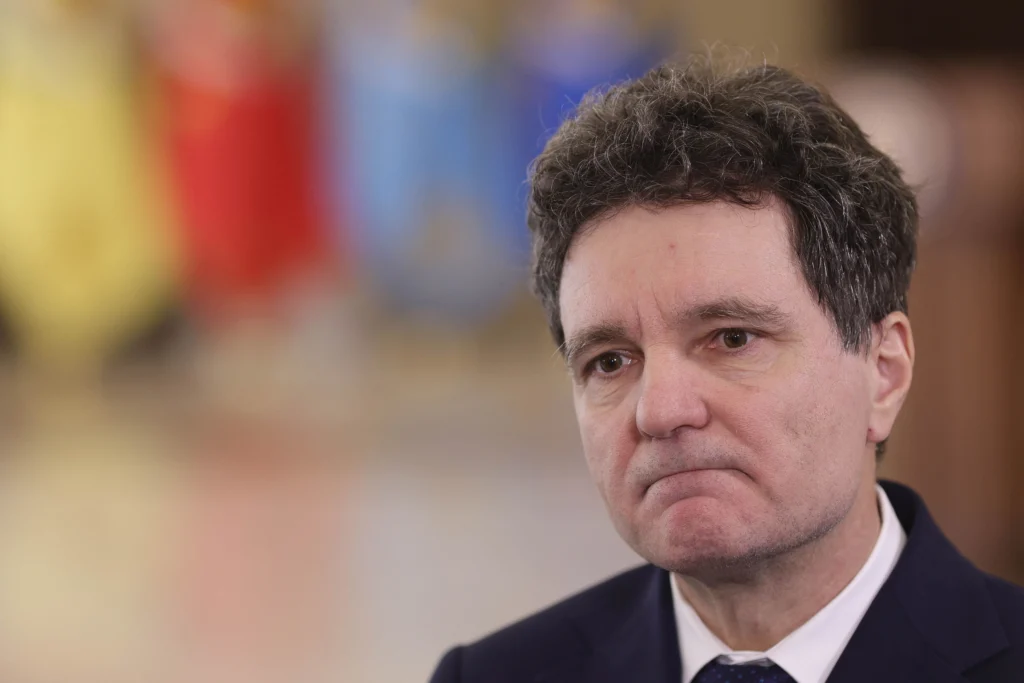
If he goes to Parliament and does not obtain the votes, it will lead to the logic of early elections, with the 60-day term starting to run, thus obliging the president to resolve the political crisis within the period provided by law.
Eugen Tomac announced that, regardless of the support he receives from parties, he will ask for Parliament's vote.
The only solution if the president doesn't want early elections
Nicușor Dan has repeatedly stated that he rules out early elections, but he also said that the PSD, PNL, USR, and UDMR "are doomed to govern together." We see where we have ended up.
The fundamental error of President Nicușor Dan, one that jeopardizes the remainder of his term, is that he does not take into account the political reality.
It does not consider complicated formulas, strategies, chess moves, intrigues, or underground influences; it considers the distribution of seats in Parliament, resulting from the vote.
If he is dissatisfied with the Legislative, he has the opportunity and the necessary tools to attempt to organize new elections.
If he does not want early elections, then the only solution is to call Sorin Grindeanu, while he is still president of the PSD, and, from the perspective of the party with the most seats in Parliament (133), ask him to form the government.
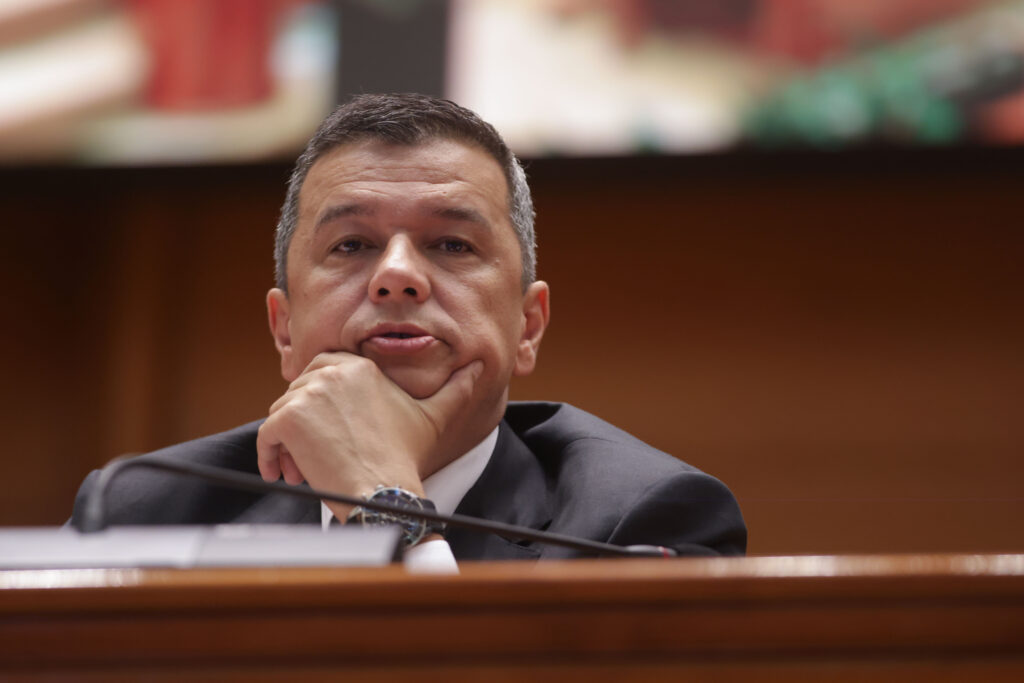
There is no other way out of the crisis. The PSD left the governing coalition, supported and voted for the motion of censure against the Executive, leading to its dismissal.
The victory in Parliament consequently leads to taking over the governance. That Sorin Grindeanu avoids the position of prime minister is another story and is related to the crisis within the PSD, but regardless of any maneuvers, it will always come back to this point, where the party that caused the crisis must take responsibility for resolving it.
The other option is to call the people to the polls.
Since the pandemic, Romania has become a controlled democracy, with intelligence services creating political leaders, parties, with huge manipulation on social networks.
We have election campaigns without rules, with blocked institutions and leaders avoiding responsibility, endemic corruption, and a huge national security crisis.
The only ones who can solve these problems are political leaders, transparently elected by citizens. The assumption of relaunching and rebuilding Romania's democratic system must start somewhere.