
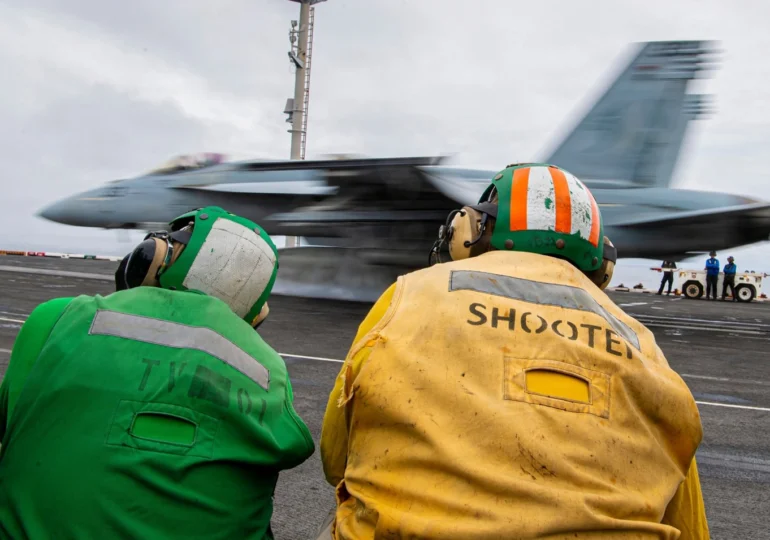
The United States intends to significantly reduce the number of aircraft and warships it provides for NATO operations in Europe. The decision would limit the Alliance’s ability to launch long-range attacks and conduct surveillance missions.
The U.S. plan was presented on Friday by New York Times, citing two senior European officials, as reported by Reuters.
It targets:
- reducing the number of F-16 and F-15E fighter jets from around 150 to 100;
- reducing the number of maritime reconnaissance aircraft from 26 to 15;
- withdrawing all eight aerial refueling tankers previously available in Europe;
- reallocating a missile-launching submarine and an aircraft carrier, along with several warships and dozens of aircraft joining carrier missions.
The U.S. also intends to reallocate several warships and dozens of aircraft joining the mentioned carrier missions. Additionally, one of the two bomber groups previously allocated to the defense of Europe could be reallocated, as reported by the newspaper.
"Historically, there has been an excessive reliance on U.S. forces and capabilities," said NATO spokesperson Allison Hart to Reuters, adding that as Europe and Canada invest more in defense and develop greater capabilities, the balance of responsibility could shift.
This would strengthen NATO's defense by reducing dependence on a single ally and would reflect a broader shift occurring within the alliance, Hart stated in a press release.
The U.S. Department of Defense did not immediately respond to Reuters' requests for comments on this matter.
The U.S. European Command announced in a statement last week that it will "resize" its contributions to the NATO Force Structure without providing further details.
Reuters reported in May that the U.S. intends to reduce its military capabilities available to its allies during a major crisis.
The administration of U.S. President Donald Trump has repeatedly accused European governments of investing too little in their militaries and relying too much on U.S. protection, urging both Europe and Asian allies to increase defense spending to 3.5% of GDP.
T.D.