

Located 250 kilometers from Bucharest and 20 kilometers from Galați, the southernmost locality in the Republic of Moldova has become a strategic point of interest in the context of the military conflict in Ukraine.
In Giurgiulești, a commune situated on the left bank of the Danube, around 3,000 inhabitants live, half of them working in the port, while the rest are engaged in agriculture and fishing.
In April of this year, the Romanian Government purchased the company ICS Danube Logistics SRL for the sum of 62 million dollars, in other words, our country acquired Port Giurgiulești, meaning its entire economic infrastructure, excluding the land.
Officials in Bucharest, through the signed contract, committed to quickly invest another 28 million dollars for the port's development.
The transaction is extremely important for Romania, a member of the European Union, which is creating an economic bridge with Moldova, and for Chișinău, which is thus developing its only fluvial and maritime connection with its neighboring country.
But Giurgiulești also holds great strategic importance. It is just 10 kilometers from Reni Port in Ukraine, heavily used for the transfer of cereals, as well as a way through which Kyiv is connected to the European Union and the transfer of fuels and goods necessary to support the economy against Russia's invasion.
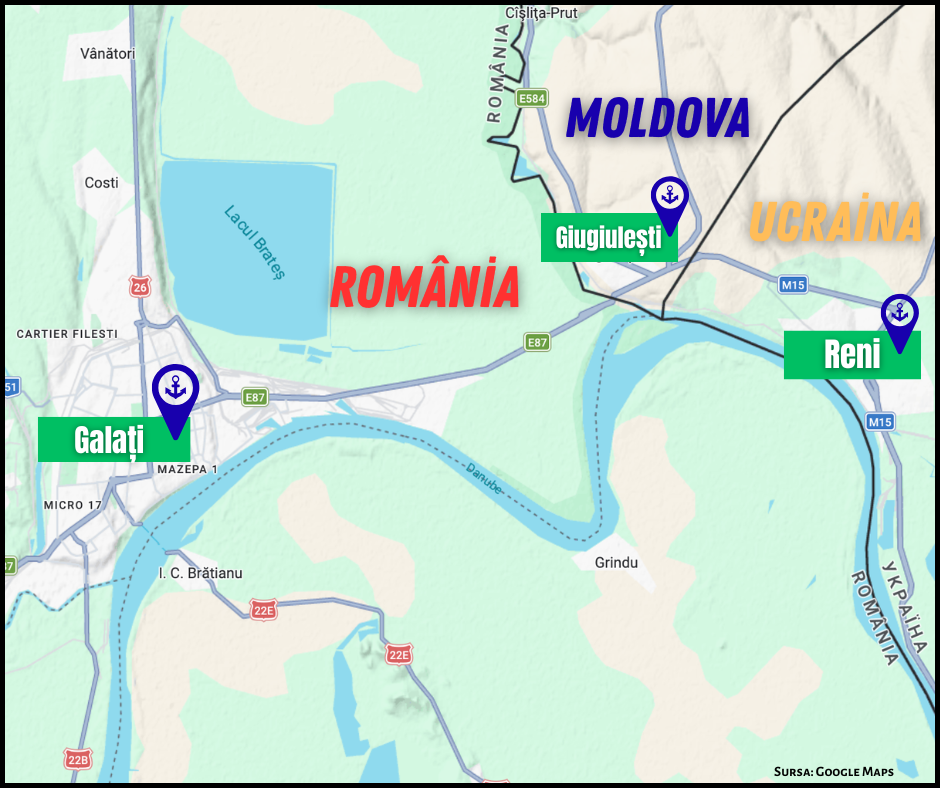
Reni is frequently targeted by Russia's drones to disrupt commercial operations at the Ukrainian port. The establishment of logistics infrastructure on the Danube greatly disturbs Russia.
An uncertain future
"The acquisition of the operator of Giurgiulești International Free Port, through which over 70% of the Republic of Moldova's imports and exports are carried out by waterway, was presented in Bucharest as a step towards 'economic reunification,' also announcing the use of this transport node 'in the process of Ukraine's reconstruction.' However, the implementation of such ambitious plans is subject to an uncertain future…," said Iuri Pilipson, director of the Second European Department of the Russian Ministry of Foreign Affairs, in an interview with the TASS agency, quoted by the Russian Embassy in Bucharest.
"Romania is already involved in providing direct military and logistical support to the Kiev regime," the Russian official further stated, adding that "this circumstance raises questions about the true purposes of using Giurgiulești Port in the near future. Especially considering that the port has long been transformed into a transit hub for delivering various categories of goods to Ukraine, including those intended for the needs of the Ukrainian armed forces," Pilipson added in the interview.
The Russian diplomat's position is a new confirmation that Vladimir Putin is trying to somehow expand the conflict.
He seeks to provoke a major crisis in one or more NATO countries, especially on the eastern flank.
The fact that there have been dozens of provocations in Romania so far, of all kinds, from sabotage, operations under false flags, violation of airspace, and even a drone attack on a residential building in Galați, indicates that Vladimir Putin has considered Romania a weak link in NATO, perhaps still does, but the downing, three days in a row, of Russian drones that entered Romanian airspace by the Romanian Air Force has given him pause for thought.
In search of a crisis
Romania's 180-degree shift in its response to Kremlin's provocations has disconcerted Vladimir Putin. The Russian president does not want to open a new front and, especially, to start a war with NATO or its member states. And he already has major problems in Ukraine. His goal is to provoke a series of crises to slow down and even halt European support for Ukraine.
In this light, the Russian diplomat's interview must be deciphered, as it is a rather direct threat that there is a possibility that Giurgiulești Port will be targeted by Russian drones.
It remains to be seen whether the Romanian Air Force will defend the investment made by our country in the Republic of Moldova or not. Moscow probably poses the same question since it has brought the issue to public attention.
A response in kind
On Saturday, August 8, a Ukrainian-made drone crashed in Bulgaria, causing no casualties or material damage. Officials in Sofia announced that the drone came from Romania. According to a statement issued by the Ministry of National Defense, the unmanned aerial vehicle was not detected on radars, a claim also supported by Bulgarian military personnel.
The mysterious drone, loaded with explosives, which passed through two NATO countries, was not intentionally launched by Ukrainians towards Bulgaria, as stated by Kiev officials.
The fact that it was not detected on radar may indicate a new false flag operation by Russia, which somehow recovered a Ukrainian drone from the front and then relaunched it to provoke a new tense situation on the alliance's eastern flank - a political conflict between NATO member countries and Ukraine.
There is a real danger of the conflict escalating and more and more provocative operations by Russia.
The statements by the Russian official regarding Giurgiulești Port are threatening and concerning. All hopes of deterring such actions lie in the response of the Romanian military forces, as well as those of other NATO member states.
The only thing that makes Putin back down is a substantial, rapid, and decisive response indicating that aggression from Russia will be met with an equal response.
The difference between a surprised and a prepared army
"In times of crisis for a nation, it is essential to have capable leaders who can rise to the level of the historical mission, capable of making decisions quickly, based on evaluations and recommendations of professionals. A state cannot defend itself starting from the moment when the first attack has already been launched," wrote General Dorin Toma, former NATO commander, in a Facebook post.
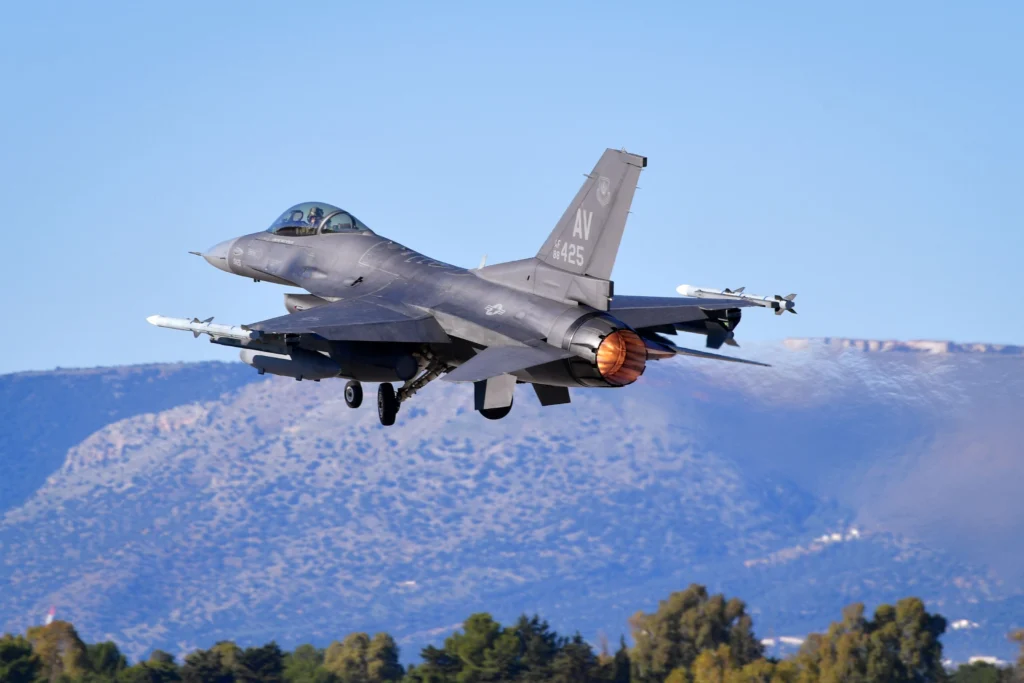
"The army needs time for mobilization, redeployment, dispersion, logistics preparation, establishment of command chains, and defense infrastructure preparation. Furthermore, we must understand the complexity of decision-making processes at the political level, both nationally and within NATO. Too often we hear in the public space that decision-making is a given, a certainty, and the army will always have the time and resources necessary for preparing the response and national defense…," the military further wrote.
"The war in Ukraine shows us that the difference between a surprised army and a prepared one can be made in a few weeks, a few days, or even a few hours. And sometimes a state's survival can depend on the existence of professionals who understand this before all others…," emphasized General Dorin Toma.