

If 100 days ago, when the Bolojan government was dismissed by a motion of no confidence voted in Parliament by PSD and AUR, someone had said that the interim would be extended for four months or more, few would have believed.
Only after the unsuccessful attempts to designate Eugen Tomac and Adrian Veștea by the President of Romania, it became clearer that the political deadlock would keep the leader of the PNL in the Victoria Palace until autumn.
Although Nicușor Dan believed and declared at that time that he would quickly resolve the political crisis triggered by the internal struggles of the social democrats, it was not the case, destroying a large part of his political support in an attempt to destroy the PNL by appointing a liberal to form the government without consulting the party leadership.
The unprecedentedly long period during which Romania functioned without a fully empowered government also indicates another fact that has been less talked about - how weak politicians are in terms of analyzing reality.
Sorin Grindeanu expected and counted on the fact that the PNL coup plotters would quickly replace Ilie Bolojan after the motion of no confidence was voted, and the path to a new USL would be swift. Nothing happened as planned and promoted by the PSD leader.
Nicușor Dan also expected to get rid of Ilie Bolojan and have a prime minister come to the Victoria Palace who would be grateful to him and whom he could control, in order to impose his political vision, whatever it may be.
There are signs that even the President of Romania, "the best informed person in the country," did not expect to go down in history as the first one after 1990 to remain without a government for over 100 days.
Even the judiciary coalition, formed around judge Lia Savonea, which is carrying out a revenge action against Ilie Bolojan due to the special pensions reform, did not expect the PNL leader to resist for so long, and for the plan to go so badly.
Technocrats cannot save Grindeanu
"...my feeling is that, once all these milestones from the PNRR are completed, forming the government will become a priority and I believe that, in a few weeks, at the beginning of autumn, we will see a solution..." stated Radu Burnete, advisor to President Nicușor Dan, for Digi 24.
But once again, we are in the realm of speculation or "wishful thinking," as the British say. Nicușor Dan's trusted man is actually saying what the head of state would like to happen after Romania passes the PNRR test, although even this obstacle cannot be said to have been overcome.
Two laws are at the Constitutional Court, one has not even reached Parliament. It concerns the unified salary law, and ultimately, all the remaining milestones of the PNRR must also pass through the analysis of the European Commission, which will compare Romania's initial promises made in the financing contract with what has been delivered.
However, beyond the problems of the last tranche of the PNRR, estimated at around 8 billion euros, a complicated situation arises, which has not been resolved at the Cotroceni Palace, despite the "flexibilization" of Ilie Bolojan's position, announced by the PNL leader a few days ago.
In the negotiations for the formation of the new government, the deadlock persists even after Tuesday's meeting organized by Nicușor Dan. While the current Prime Minister also joined the President in forming a technocratic executive, Sorin Grindeanu positioned himself against this project.
Meeting with Sovereigntists
The leader of the PSD, with an increasingly contested position at the helm of the party, sees his only salvation in becoming prime minister at the head of a minority government, supported by the PNL, USR, and UDMR.
In the three months of political crisis, public support for the social-democratic party has deteriorated significantly, and within the party, it has been concluded that it is no longer profitable to pursue the idea of a technocratic government, according to several political sources.
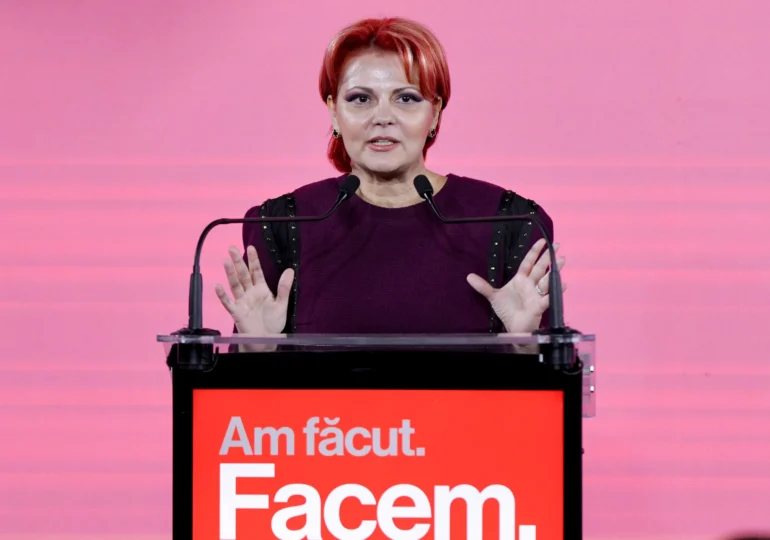
Three weeks ago, a meeting took place between Lia Olguța Vasilescu and George Simion, in which the two discussed forming a political alliance to ensure a parliamentary majority and joint governance, as announced by Cotidianul.ro.
Following the coordination in Parliament and the amendments submitted by the two parties to the PNRR laws, the information is indirectly confirmed. Additionally, Lia Olguța Vasilescu supports an alliance with AUR. There is also much discussion within the party about the possibility of removing Sorin Grindeanu if he fails to bring the PSD back to power.
AUR Invests in the Suspension of the President
The social-democratic barons are eager to reconnect to public resources, and a technocratic government that maintains budgetary rigor greatly hinders them.
"We, at the discussions we had at the Cotroceni Palace, when we were asked... our position was clear. We have nothing against trying to form a government. We even consider that we have every chance to get it through the Romanian Parliament," stated Lia Olguța Vasilescu a few weeks ago, as quoted by Mediafax.
President Nicușor Dan has a tough mission - to find a prime minister and a politically acceptable formula for PSD, PNL, USR, and UDMR, in a situation where each party has different objectives.
Therefore, the only strong negotiating leverage at his disposal is the possibility of initiating the process for organizing snap elections.
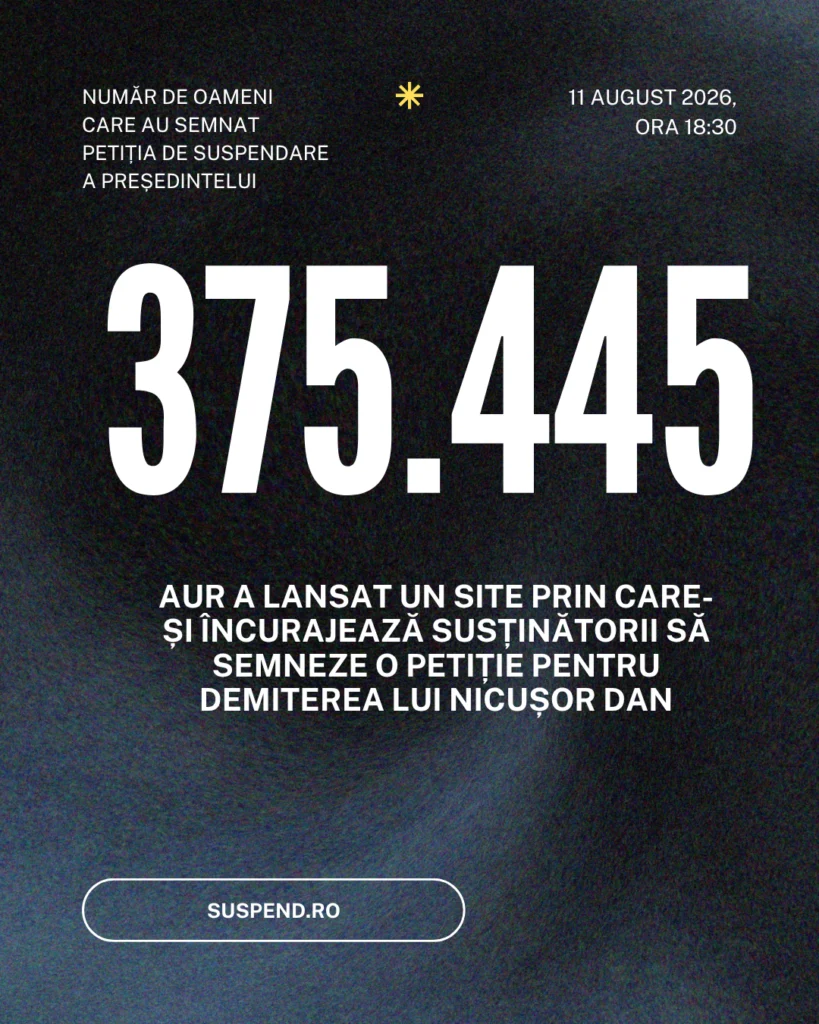
Meanwhile, while everyone is focused on resolving the political deadlock, AUR is running a campaign to suspend the president, creating a tool to monitor popular dissatisfaction with the head of state.
Despite the optimism displayed by Nicușor Dan, politically, a complicated autumn is announced, and the prospect of forming a new government, although urgent, is far from certain.