
Transelectrica, the national energy system operator, recommends keeping four lignite power units operational and building up sufficient natural gas stocks to avoid supply problems this winter.
The recommendations appear in a draft set of measures for the safe operation of the system during the period November 1, 2026 – March 31, 2027, a document consulted by Profit.ro.
Four coal-fired power plants should remain operational
The operator urges authorities to intensify efforts with the European Commission to obtain approval for the continued commercial operation of four units of the Oltenia Energy Complex: three at CTE Rovinari and one at CTE Turceni. These capacities would be necessary to cover consumption during difficult periods, including when other plants stop unexpectedly or when weather affects production.
The document also recommends establishing a safety fuel stock at coal plants and maintaining a minimum energy reserve in the hydroelectric power plants’ reservoirs.
Gas storage facilities filled to at least 90%
Regarding natural gas, Transelectrica recommends that storage facilities be filled to at least 90% of capacity, with a volume at least equal to that of winter 2025–2026. Extraction should be gradual and uniform, so that stocks remain adequate in February–March 2027. It also calls for ensuring gas supply to gas-fired power plants even under extreme weather conditions.
The company warns that failure to comply with these measures “can have a significant impact,” both technically and commercially.
From a technical standpoint, reducing the quantities extracted daily could degrade the parameters of the transport network and could make unavailable producers such as OMV Petrom (CECC Brazi, 830 MW), Romgaz (CET Iernut, 150 MW), Mass Global (CECC Mintia), and Electrocentrale București (CETs totaling 420 MW).
From a commercial perspective, Romania would become more exposed to risks related to gas imports, especially if an energy crisis breaks out in the region.
The new Mintia power plant, important for winter
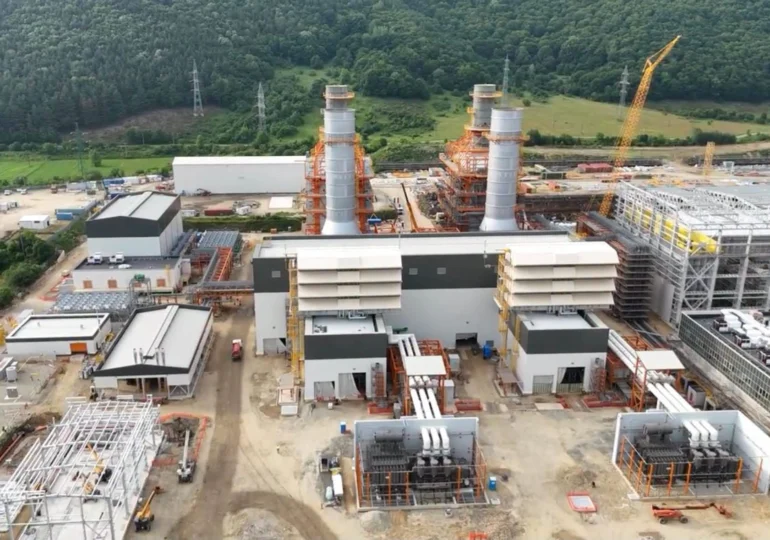
Transelectrica recommends putting into operation the gas turbines at Mintia (Mass Global), with a capacity of approximately 1,500 MW, and ensuring gas supply. The document considers a production of 135 MW, with a possible increase to over 1,000 MW in the first quarter of 2027.
It also targets the start-up of cogeneration units at Palas (Constanța, about 50 MW), Brazi (about 35 MW), and Arad (about 30 MW), as well as maintenance at CET Paroșeni for operation during the cold season.
Bucharest on the list of problems to solve
The operator calls for accelerating repairs at CET Vest, where electrical installations were affected by fires and damages in spring 2026, to restart the combined cycle power plant. It also demands speeding up the modernization of the capital’s district heating network to reduce heat and water losses.
At the national level, the operation of centralized heating systems is considered essential: if they do not function, the population might resort to electric or gas heating, which would increase pressure on the system.
Transelectrica also recommends increasing the volume of energy contracted on medium and long term to reduce exposure to high prices on spot markets.
What happens if the gas supply falls short
The document also foresees the possibility of administrative measures in the event of a gas deficit that cannot be covered through market mechanisms. Priority would be given to protected customers, including thermal energy producers supplying heat to the population and essential services.
“If market-based measures prove insufficient to address the deficit necessary for gas supply, administrative measures that are not market-based will be implemented, including consumption reduction for unprotected customers, to the extent that this gas is needed for heating,” the document states.
This is a possible measure in case of crisis, not a restriction already decided.
Problems at Cernavodă complicate the situation
Preparations for winter are taking place in the context of the shutdown of both reactors at Cernavodă due to drought, which affected the cooling water supply.
According to Profit.ro, authorities are preparing to extend until November 30 the measure allowing Transelectrica to limit the consumption of large industrial consumers and to stop energy exports in case of crisis. The measure was initially adopted by government decision on August 7, valid until August 31, then extended until September 30 and subsequently until October 31.
The reason for the new extension: “the forecast of the Danube flow entering the country does not provide a reliable outlook for restarting at least one unit at CNE Cernavodă in November,” the document states. The extension is still in preparation, and limiting industrial consumption and stopping exports would apply only if the system situation requires it.