

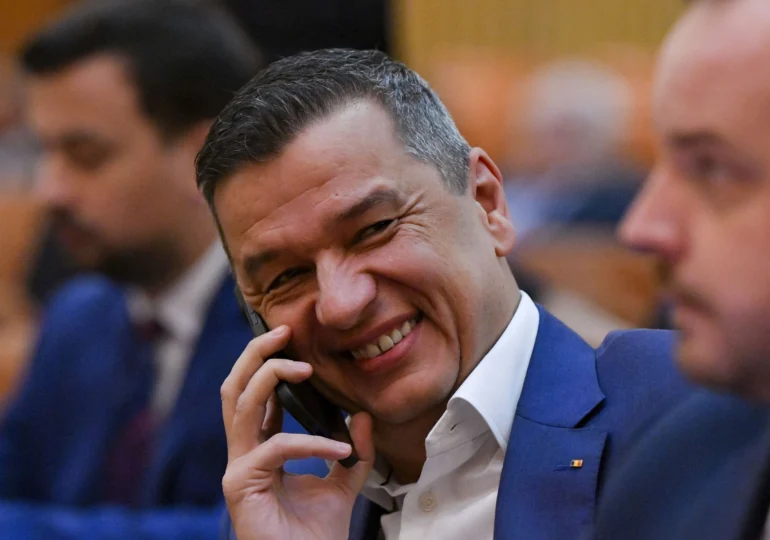
At the end of October, shortly after the validation in Parliament of the Luca Niculescu Government, PSD leader Sorin Grindeanu announced that his party supports the drafting and adoption of legislation for a broad administrative reform – the merging of localities with few inhabitants, towns with under 10,000 residents, and even the abolition of some counties.
At the level of public opinion, the initiative was at least surprising, due to the fact that for over a decade, PSD has opposed by all means any optimization of local administration, so as not to lose the support of mayors, who are the main driving force behind the party’s political survival.
“…you know very well, we have over 450 localities – administrative-territorial units (ATUs) – with fewer than 1,500 inhabitants and another 1,100 with up to 3,000 inhabitants. At the same time, 55% of towns no longer meet the legal threshold of 10,000 inhabitants, but instead have a budget-consuming local administration at the town level,” declared Dragoș Benea, PSD MEP, who was appointed “coordinator of the party’s internal group for administrative-territorial reform.”
Such a clear stance from the Social Democrats raised many questions because it contradicts the attitude of PSD leaders until now.
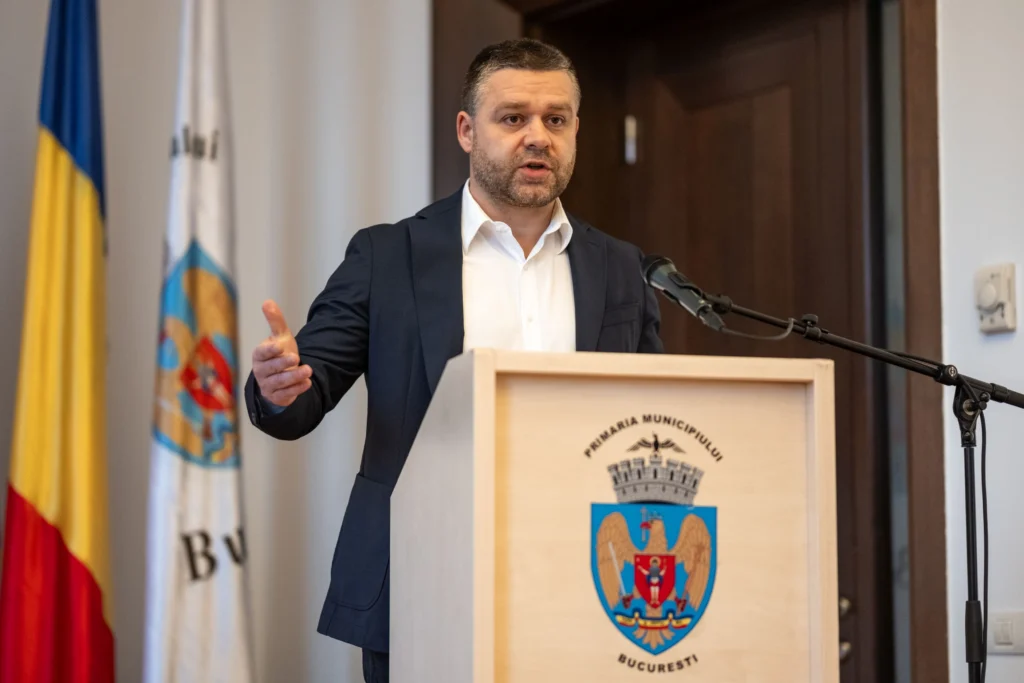
“Those who opposed the most were those from the Association of Communes,” declared Ciprian Ciucu, Mayor of Bucharest, for Spotmedia.ro.
The Association of Communes is controlled by PSD because, for the most part, it consists of the party’s mayors, and PSD has maintained its influence in rural areas through them.
“Mr. Emil Drăghici, the association’s president, constantly attacked Ilie Bolojan on this subject during the time he was Prime Minister,” added the liberal mayor of the capital.
Sorin Grindeanu announced that this eternal project of local administration reform, as well as a reform of government institutions, will be adopted through “assuming responsibility,” an extreme parliamentary procedure.
If the legislative projects do not obtain a majority of votes in Parliament following such a procedure, the Government is considered dismissed.
In Parliament, PSD killed the administrative reform
“It’s not the first time PSD announces this reform, and it’s not the first time it forms a ‘working group.’ I take it as a promise, but I have no hopes regarding the subject. It will not happen,” declared Mayor Ciprian Ciucu for Spotmedia.ro.
“Meaning... if PSD were to promote this reform, without having a hidden agenda, based on objective criteria and not subjective-political ones, seriously, as they say… it would be the biggest surprise in the party’s history. PSD is a party of commune mayors. To promote, I repeat, without a hidden agenda, such a reform is against their own nature, against their character. I’m skeptical. I no longer believe in such miracles. A three-day miracle, three days of amazement…” added the Bucharest mayor.
The same surprise and distrust was expressed by Ionuț Moșteanu, USR deputy, former Minister of Defense, interviewed by Spotmedia.ro on this subject.
He emphasized that there is a big difference between what PSD representatives say in press conferences and what they do in Parliament.
“…we managed to pass through the Standing Bureau of the Chamber of Deputies, with votes from AUR and PNL, to their surprise, the establishment of the administrative reform commission. It is a special commission to deal with this issue,” declared Ionuț Moșteanu for Spotmedia.ro.
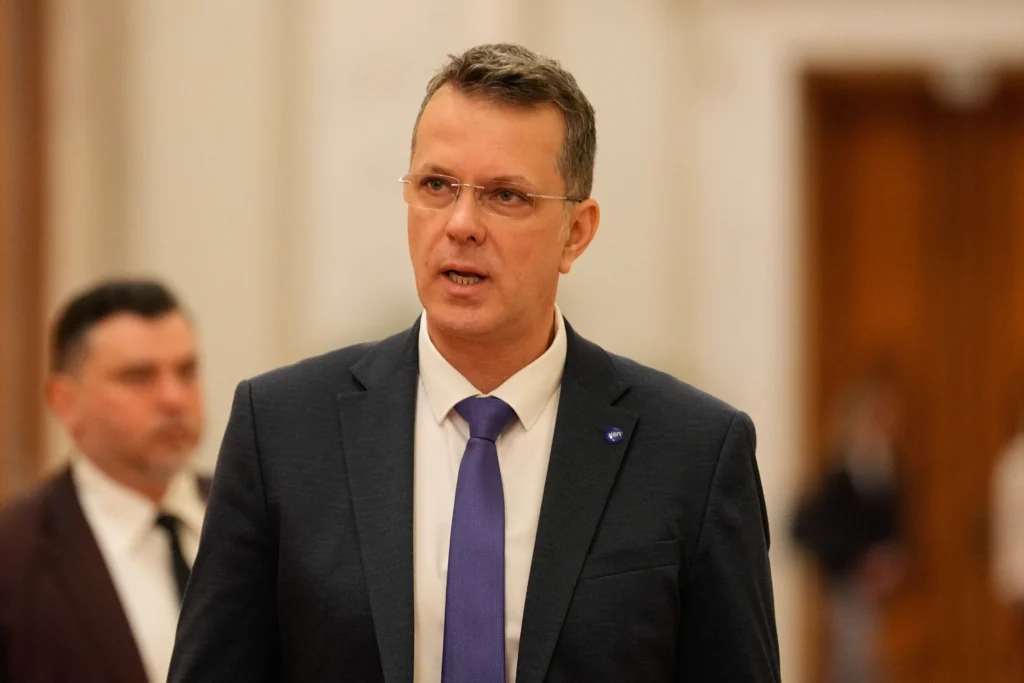
The deputy explained that such a commission’s role is to bring together political party representatives to find optimal, negotiated formulas for drafting the legislative proposal.
“They didn’t have votes to block the establishment of the commission, but then they had votes to block the drafting of the establishment decision; each commission is created by a parliamentary decision,” explained the USR deputy.
“The drafting takes half an hour, but PSD does not want to put it on the agenda,” Moșteanu added, highlighting the Social Democrats’ hypocrisy on this issue.
Tanczos Barna: We do not respond to an intention
UDMR has always been a party that had reservations about administrative reform, fearing that it might be used politically to affect Hungarian communities in Transylvania.
There are “international obligations assumed by Romania regarding the administrative-territorial borders of ATUs. These are commitments that say no administrative-territorial unit can be reorganized, thus intentionally changing the ethnic composition without the opinion of the citizens there,” declared Tanczos Barna, UDMR senator, former Deputy Prime Minister of Romania, for Spotmedia.ro.
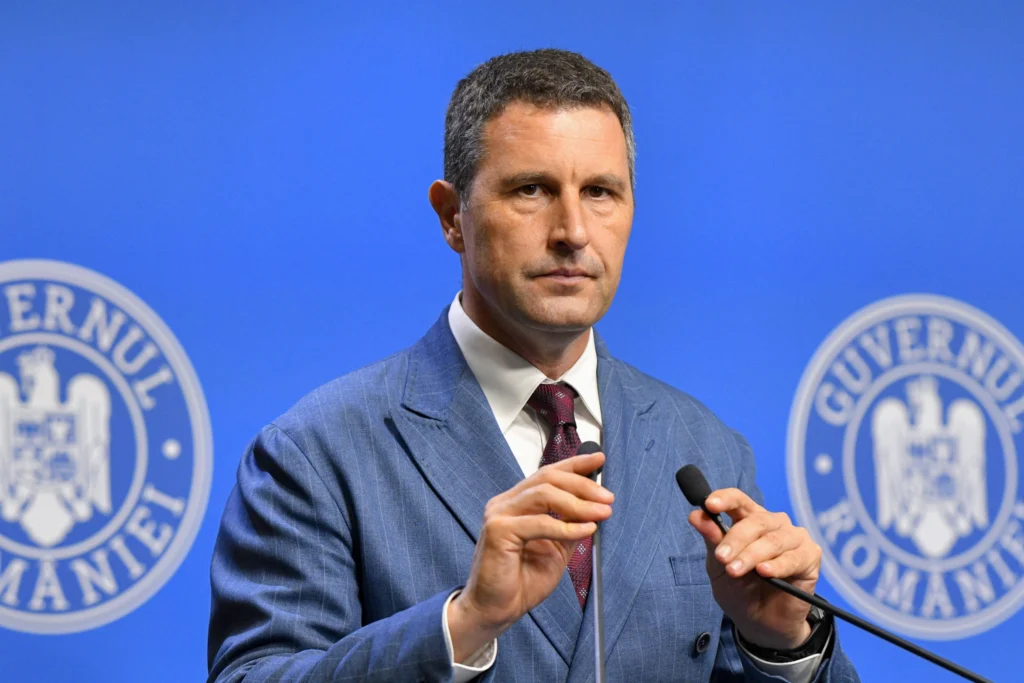
“Romania, in defense of the rights of national minorities, cannot artificially modify the administrative-territorial organization with the intention to merge or change borders, aiming to reduce the proportion of national minorities in certain ATUs,” the senator added, emphasizing that an administrative reform must also be approved by referendum, since it may affect people’s lives.
Tanczos Barna does not understand the purpose of PSD’s initiative, suggesting that adopting such a reform through assuming responsibility is problematic.
“We do not respond to an intention. We will have to vote on a concrete legal text, a concrete proposal. The version should first be finalized at the Government level and afterwards, through dialogue and discussions, we can also respond to the text that will be finally proposed,” added the UDMR senator.
Lack of interest
To better understand what is happening with the administrative reform, a tense subject during the pro-European coalition period, repeatedly repudiated by PSD, which now that it has returned alone to government, has put it back on the agenda, we also asked for the opinion of an expert.
Victor Giosan is an economist with over two decades of experience in administration, having been state advisor at Prime Minister Ilie Bolojan’s Chancellery, appointed to deal exactly with the issue of administrative reform.
“It is a very complicated process, which has failed in many places. France, for example, has not succeeded in reforming at all in the last 200 years. And it invented other ways to provide services efficiently, through inter-municipal cooperation,” declared Victor Giosan for Spotmedia.ro.

“The voluntary merging process should last several years. I expected it to start this year, to last until 2030. In 2031, the law for mandatory merging will be prepared, and the 2032 elections will take place under the new formula,” predicted Victor Giosan, expressing his bewilderment at the PSD proposal, which says the voluntary merging process would end quickly, by March 2027.
During the Bolojan Government, while PSD was also part of it, regarding the administrative reform issue, the Social Democrats “showed at least a lack of interest,” emphasized Victor Giosan.
“…considering the fragile situation of the coalition, Prime Minister Bolojan no longer opened the administrative reform front,” the expert added for Spotmedia.ro.
“I think it is a subject that PSD knows is popular among the PNL–USR electorate. Possibly they are trying to open a communication channel with this electorate as well. It seems absurd, but I really have no other explanation,” Victor Giosan added.
Escape route through modernization
After a series of interviews and discussions with political leaders and experts, PSD’s initiative seems misunderstood, lacking support even from the party’s mayors, without a solid scientific or political foundation, so that there would be the slightest chance of being adopted by Parliament.
PSD’s administrative reform looks more like an escape route from government in case the party runs out of solutions and popular dissatisfaction grows.
Grindeanu launched a debate around a complicated draft law, insufficiently negotiated and without political support, declaring that he will assume responsibility to pass it through Parliament.
In such a situation, the social democrats can no longer be accused of having blocked the reform or of having brought down their own government, but can claim that they sacrificed themselves on the altar of progress, while the other parties, USR, PNL, UDMR, rejected PSD's initiative to modernize Romania.
There is no logical or political continuity between the way PSD, for 15 years, opposed the merging of localities and the reduction of administrative costs and the sudden change of attitude through a verbose support of the administrative reform, one that undermines the party's main political network in the territory, endangering the campaign for the 2028 parliamentary elections.