
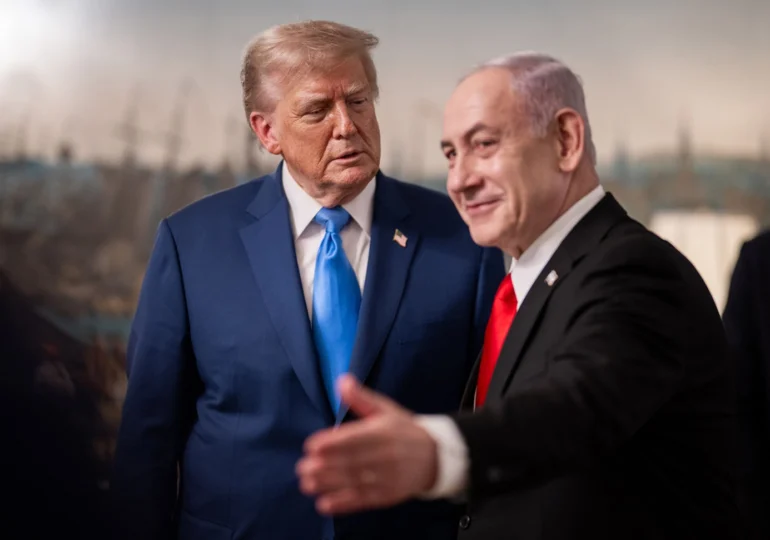
In complicated matters, Israeli Prime Minister Benjamin Netanyahu prefers to postpone things. If he absolutely has to take a position, he likes to leave room for ambiguity, an escape route, for any eventuality, in case things get more complicated later. Not this time, however, regarding American President Donald Trump’s plan for continuing the ceasefire agreement in Gaza.
„I want to be precise: Israel does not accept the 15-point document,” Netanyahu declared in the opening speech of the Israeli Cabinet’s weekly Sunday meeting.
In fact, he said it twice.
"I've heard people saying, 'You didn't say it.' So I'll say it again here: Israel does not accept the 15-point document."
Poc
It's a potentially risky move, as it could draw Trump's ire, comments CNN.
The American president - more desperate than ever for a victory, given that his Iran madness seems increasingly likely to bring him defeat - reinvested his efforts in Gaza 10 days ago, declaring that his Peace Council had reached a "historic agreement" with Hamas on the complete disarmament of the organization.
The Council's chief envoy, Nickolay Mladenov, then carefully explained on X that disarmament should occur "in step with" the withdrawal of Israeli troops, suggesting a phased process whereby the Israeli Defense Forces (IDF) would gradually withdraw from their positions in Gaza as Hamas surrenders its weapons.
Any lingering hope that Netanyahu might be persuaded to engage in such an initiative now seems unfounded.
"The IDF will not withdraw until Hamas is disarmed. And when I say disarmament of Hamas, I mean heavy weaponry, light weaponry, all weapons. And we're talking about real disarmament, not fake disarmament," the Israeli leader declared on Sunday.
By Sunday afternoon, Trump was still keeping his own opinions to himself, aside from a post on Truth Social quoting former U.S. Secretary of State Hillary Clinton's support for his Gaza plan. Meanwhile, Mladenov appeared Sunday evening on Israeli Channel 12, seeming to suggest that a certain type of phased process could remain the plan, but also hinting that Hamas should take the first step.
"No one is obliged to do anything, least of all Israel, before we have actual steps verified on the ground. If the disarmament of weapons is verified, if they are withdrawn from factions, stored, and ultimately rendered unusable, then Israel withdraws from Gaza," Mladenov stated.
Speaking to the Voters
Of course, there are skeptics everywhere on this issue, not least among the two main protagonists. Both Israel and Hamas have a common interest in ensuring that the other party is blamed for any failure.
Therefore, Hamas's reaction to Netanyahu's statements was quite sober and measured. The organization said it remains committed to the roadmap, adding that it expects the Peace Council to "exert pressure" on Netanyahu to adhere to it.
In reality, many doubt that Hamas ever intends to give up all its weapons, as these represent its clearest manifestation of leadership in Palestinian resistance and a guarantee of its own survival in the face of any internal instability in Gaza. The group has made many enemies in the nearly 20 years since it has controlled the enclave.
But, regardless of the lack of trust in Hamas's true intentions, Mladenov's confidence in the ability to verify disarmament or even Netanyahu's willingness to order any troop withdrawal, why provoke Trump so publicly? Surely, Netanyahu, the master strategist - as many of his followers consider him - could have handled this with a bit more finesse?
The reason - perhaps not surprising - lies in the upcoming general elections in Israel. There are less than 12 weeks until the vote, and polls suggest his position remains challenging. It was time to speak - unequivocally - to the voters.
All Israeli prime ministers must build a governing coalition made up of several parties. Netanyahu, as others have noted, prefers to build his next coalition before the elections, not after.
After the votes are counted, he will need his far-right allies to join him if he wants any chance of staying in power. That's why their very harsh public criticisms of the roadmap put him in a difficult position, as did calls to reverse a previous decision by the Israeli Cabinet to approve the deployment of an International Stabilization Force for Gaza, intended to oversee security in a small pilot project in the territory. Netanyahu had secretly approved the start of reconstruction work in the pilot area, as reported Sunday by Army Radio, which seemed to be just another sign of weakness.
And yet, it would be a mistake to view this situation only as an attempt to appease the far-right. The vast majority of Israeli voters, although still favorably disposed toward Trump, believe that the American president is deeply mistaken if he thinks that Israel's freedom to do as it pleases in Gaza should be limited in any way.
For example, none of Netanyahu's main rivals is likely to adopt Mladenov's argument about Israel's own interest, as expressed in his Sunday television interview, when he said that only the full implementation of the Peace Council's plan could guarantee that an attack like the one in 2023 on Israeli communities near Gaza would never happen again.
"If we get into arguments about this or that and use delaying tactics, I can assure you that the only alternative will be a new process of rearmament by Hamas and an increased risk of a new October 7," the senior envoy declared.
Frankly, it would be surprising if Gadi Eisenkott, Naftali Bennett, or many of the other contenders for the Israeli prime minister position believed there were too many votes to be gained with such a message.
Meanwhile, a U.S. Peace Council official tried to highlight Israel's military restraint in Gaza in recent days, as well as a shift in target-setting policy.
"We see backstage cooperation," the official stated.
A cold comfort for the two million inhabitants of Gaza, who remain excluded from this conversation and practically powerless to determine their own fate.