
While Russia is holding its annual international economic forum in St. Petersburg, Ukraine has launched dozens of drones over the city, targeting a major oil terminal and military objectives.
Participants seemed unaffected. Official images of the event showed them heading to conference halls – even as black clouds of smoke from explosions rose in the background.
However, beyond this appearance, a simple glance is enough to understand that this year's edition of the St. Petersburg International Economic Forum, held between June 3 and 6, has nothing in common with what it once was.
Until 2022, the forum hosted high-ranking guests from Western countries and around the world: former German Chancellor Angela Merkel participated in 2013, and Chinese President Xi Jinping in 2019.
In 2026, the event has become just a smoke screen barely concealing Russia's inability to ally with international partners, according to experts and participants from previous editions who spoke to the publication Kyiv Independent.
It was once a major event in the "northern capital" of Russia
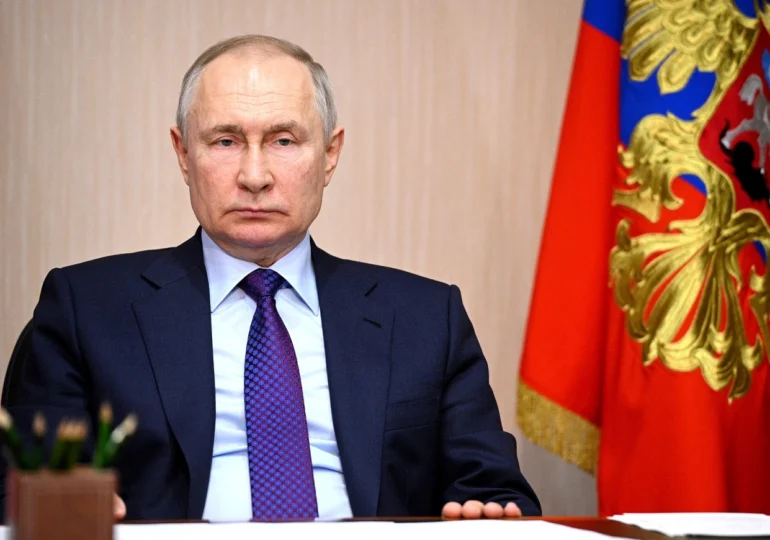
Since 2005, the St. Petersburg forum has been patronized by Russian President Vladimir Putin, and the organizers have clearly tried to replicate the scale of the World Economic Forum in Davos.
Initially, this plan had some success, at least until Russia's annexation of Crimea in 2014.
"When this forum became an important event, about 15 years ago, there was the idea that it would be a platform where Russia meets the world, and Putin meets world leaders," said Konstantin Sonin, a Russian economist in exile and a participant in previous editions of the forum.
The event has yielded results, even if it has always been "more of a show" than a place where important decisions were made, says Andrei Perţev, a political journalist at the independent Russian publication Meduza.
Over the years, however, numerous significant contracts have been signed in St. Petersburg: the agreement for the construction of the Nord Stream and South Stream gas pipelines in 2010, the agreement for Shell to exploit Russian oil and gas reserves in 2008, or the contract for Russia to purchase French Mistral-class helicopter carriers in 2011.
Since 2014, with the start of Russia's aggression against Ukraine, the scale of business deals concluded in St. Petersburg has never been the same.
Nevertheless, leaders of democratic countries have continued to participate, including French President Emmanuel Macron and Japanese Prime Minister Shinzo Abe in 2018.
Western leaders replaced by anti-vaxxers and conspiracy theorists
In 2026, very little remains of what the forum once was. On the first day of the event, Putin's advisor, Yuri Ushakov, boasted about the arrival of the "first official American delegation to the St. Petersburg Economic Forum since 2017–2018."
The American group is led, according to reports, by Rodney Mims Cook, the president of the U.S. Commission of Fine Arts, a little-known institution that advises the U.S. government on national heritage matters.
In public statements made on June 3, Secretary of State Marco Rubio stated that he knows nothing about this delegation and that, in any case, it is not a "high-level" one. Obviously, no important U.S. political or business figure traveled to St. Petersburg.
"They still invite certain celebrities to the forum, but none of them will change their opinion about Russia after a visit to St. Petersburg," said Sonin, referring to far-right personalities and conspiracy theorists participating this year.
The most well-known American present at the forum is far-right influencer Candace Owens, who has sparked repeated controversies by claiming that Macron's wife is a transgender man.
These statements prompted the French presidential couple to initiate a defamation lawsuit. Owens also claims that Neil Armstrong's moon landing was a hoax, that dinosaurs never existed, and that Covid-19 vaccines have been harmful.
At St. Petersburg, she is set to participate in a panel dedicated to "traditional values."
Another American present at the forum, former UN inspector in Iraq Scott Ritter, was convicted in 2011 for sexual harassment of a minor and subsequently became a frequent guest on the Russian propaganda channel Russia Today.
Among other marginal figures present this year is German politician Jörg Urban, known as a member of the radical wing of the pro-Russian party Alternative for Germany (AfD). The party's leader, Alice Weidel, had previously opposed members of the party participating in events organized in Russia.
Foreign heads of state announced at the forum are only the presidents of Uzbekistan and Tanzania, while only a few other countries have sent high-ranking representatives.
Why does Russia continue to organize this forum
Although the St. Petersburg forum is now just a shadow of its former self, it continues to serve certain purposes, experts told Kyiv Independent.
"Putin's people organize this forum to convince themselves and Putin that Russia has an annual international forum," Sonin explained.
The forum also provides a pretext for awarding lucrative contracts to Kremlin allies involved in organizing the event, the economist added.
"Many people in Russia earn huge sums from government contracts. When, for example, they invite Candace Owens, she is paid, and intermediaries in Russia take a percentage of this invitation."
Moreover, the St. Petersburg forum is simply an event that the Russian president personally enjoys, Perţev explained.
In this sense, the journalist said, the St. Petersburg Economic Forum has become a show for a single viewer: Putin.