
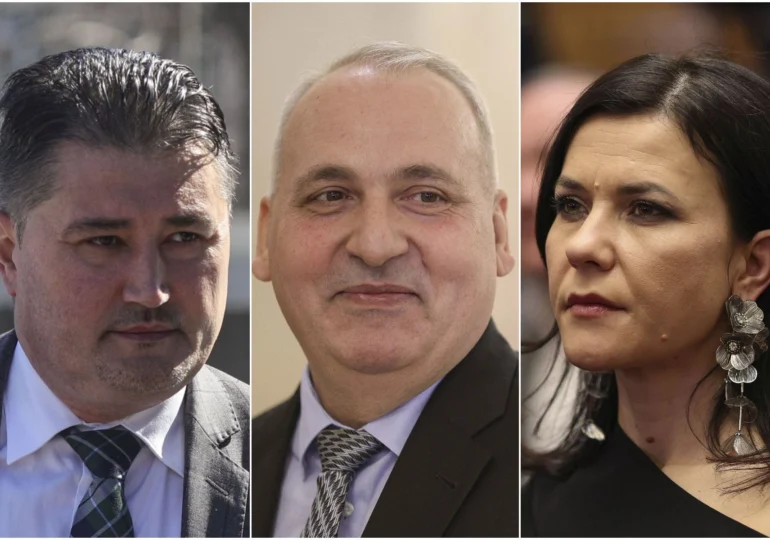
The new chief prosecutors at the General Prosecutor’s Office, DNA, and DIICOT are starting their three-year terms on Wednesday, at a time when public pressure to combat corruption and organized crime is high.
It is practically the first day of work for the new leadership of the major prosecution offices, following the signing of appointment decrees by President Nicușor Dan, based on proposals from the Minister of Justice, Radu Marinescu.
Who are the new heads of the prosecution offices
Heading the Prosecutor's Office attached to the High Court of Cassation and Justice is Cristina Chiriac, as the Prosecutor General.
The National Anticorruption Directorate is led by Ioan-Viorel Cerbu, and at the helm of the Directorate for Investigating Organized Crime and Terrorism is Codrin-Horațiu Miron.
Also starting their activity on Wednesday are the new deputies: Alex-Florin Florența at DIICOT, and Marius-Ionel Ștefan at DNA.
"Romanians see corruption every day"
President Nicușor Dan, at the time of announcing the appointments, stated that he expects a "boost in the activity" of the prosecution offices and concrete results in important cases.
"Romanians see corruption and major corruption in their daily interactions with state authorities. DNA deals with major corruption, while the General Prosecutor's Office deals with everyday corruption," said the head of state.
He also emphasized the role of DIICOT in combating drug networks and tax evasion, which he considers phenomena with a major impact on society and the public budget.
Another message conveyed by the president concerns the working method within the judicial system, which he believes is overwhelmed by routine activities.
He pointed out that prosecutors have become "clerks burdened by thousands of cases," limiting their ability to focus on truly relevant causes.
In this context, Nicușor Dan announced that one of the topics of discussion with the new heads of the prosecution offices will be the reorganization of activities, so that cases with a major impact receive priority.
The president also urged the new leadership to improve public communication, criticizing the lack of visibility of the prosecution offices in the previous period.
"To communicate in the public space, something that, unfortunately, their predecessors did not do," he said, indicating an expected change in approach from the early days of their mandate.