
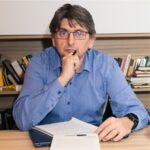
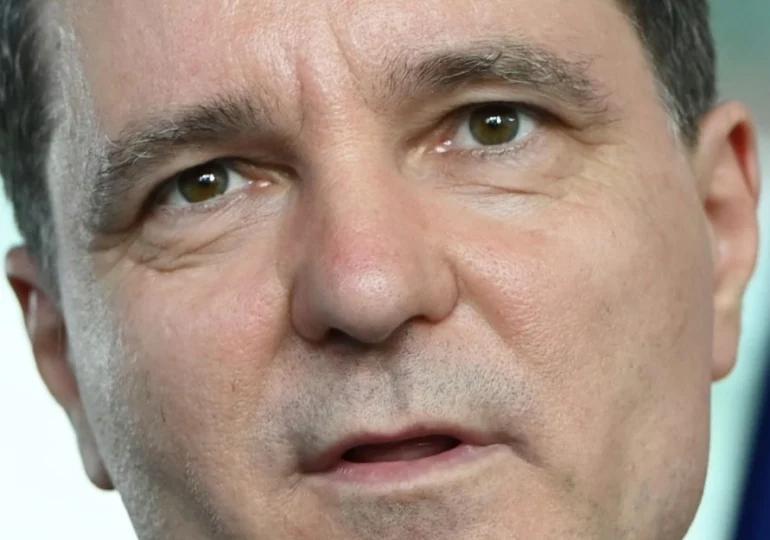
Almost a year after winning the elections, following the decisions of the president and the debates created around many of them, paradoxically, it seems that we are dealing with a conflictual leader.
The tension has not only appeared between Nicușor Dan and a large part of his voters, but it is also noticeable within the head of state.
For an observer monitoring the president’s political actions, it will be difficult to logically explain the political objective pursued in the speech given on Europe Day, but also the justifying reaction that came 48 hours later.
"It is also true that Romania has often been weak within the European Union, in the discussions that have taken place there. Romania has not consistently defended its objectives, because, again, it is true, because it is politics, it is not a literary circle, inside the European Union, European countries promote their national interests," said Nicușor Dan in the message dated May 9.
In the comments related to the speech given on Europe Day, most commentators referred to the untrue statements regarding nuclear energy, which contradict those regarding environmental policies.
There were fewer references to the statement that Romania was weak in the EU, that it was trampled on, and that national interests were not respected.
For any somewhat experienced politician, for any independent journalist, and for any expert in international affairs, the president's statement is not only false but also profoundly toxic.
It is part of populist-extremist propaganda, launched by Russia starting in 2014, immediately after the annexation of Crimea, with the aim of destabilizing the countries of the European Union.
It is surprising to find in the speech of the President of Romania the validation of such a poisoned idea, the result of an information war that has caused a real disaster in our country.
Romania has not been weak at all in the EU. It has always been treated according to the power and influence of its leaders, has had access to all the funds made available by the Commission through the multiannual budget, and politically, it is the sixth force in the European Parliament.
After the fiasco, the justification
After the "pro-Western" speech given on Europe Day, which was a fiasco in the eyes of many supporters of the president, being criticized on social networks, a justification followed.
"What I tried to say in that Europe Day speech is that Europe is a living organism, with very strong debates, with which Romanian society is not connected. And I did not criticize," declared President Nicușor Dan, two days after the surprising speech.
It remains a mystery why, if he did not criticize Europe, the head of state felt the need to justify himself to the public opinion regarding what he supported there.
"If you look at the structure of the speech, I said: yes, Europe has made mistakes, but Europe is a living, democratic organism, in which all these things are debated with all the cards on the table, directly, and you can find those elements of criticism, for example, in Mrs. von der Leyen's speech a week ago, in Erevan. So my interest was precisely to stimulate the debate, not, you see, God forbid, to position myself against Europe...," emphasized the President of Romania.
From Nicușor Dan's statements, it is not very clear whether he criticized or not, because they contradict each other: "I criticized, but I did not criticize..."
What Ursula said, what Nicușor Dan understood
Furthermore, in Ursula von der Leyen's speech, the President of the European Commission, held in Erevan, Armenia, on May 5, to which Nicușor Dan seems to refer, there is no criticism of Europe.
It is a roadmap, with concrete objectives, presenting future decisions taken with the aim of diversifying the energy sources needed for the countries of the old continent and encouraging economic development.
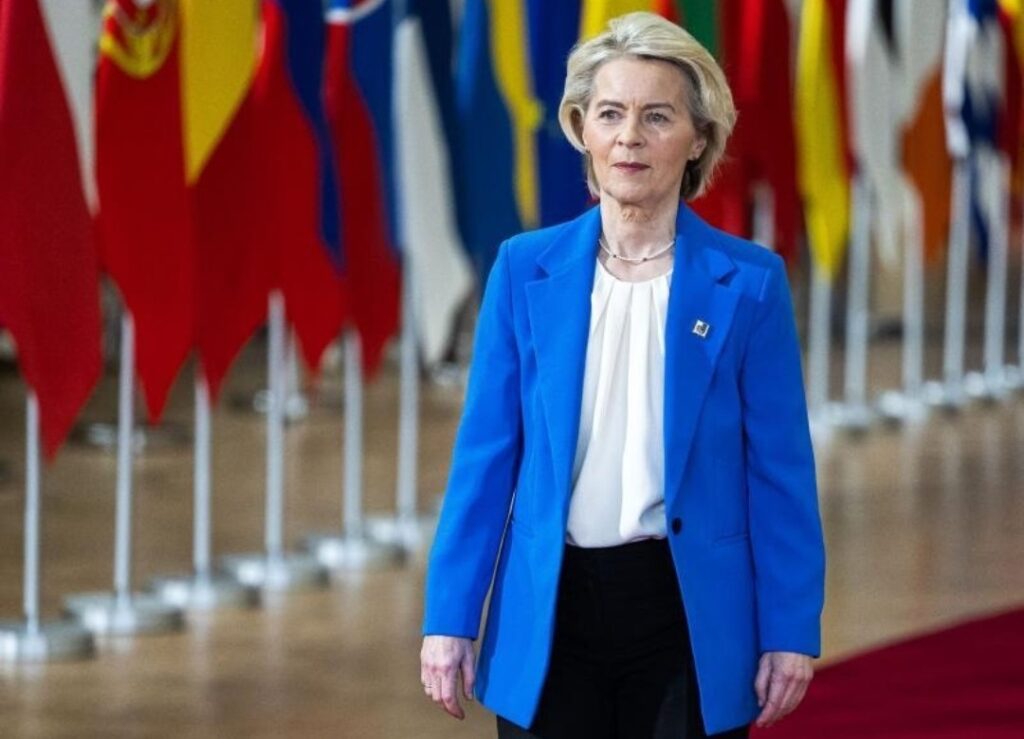
"Energy has always been a stumbling block in the internal market. But now, with the conflict in the Middle East, it has truly become a bottleneck for us," was the only reference made to Erevan, Armenia, by Ursula von der Leyen regarding past failures of EU energy policy, but not in the official speech, rather in a working group.
Inadequacy and errors
Most likely, Nicușor Dan refers to a completely different statement made by Ursula von der Leyen, two months prior and, by no means, on Europe Day, but in a specialized framework of the Nuclear Energy Summit, held in France in March.
"This reduction in the share of nuclear energy was a choice; I consider it was a strategic mistake on Europe's part to give up a reliable and accessible source of energy with low emissions," stated Ursula von der Leyen at that time.
Context is important. It defines the personality, preparation, and vision of a leader.
You don't start slapping your son on the back of his head on his birthday because you remembered that a year ago he got a 4 in math.
If you want to help him as a parent, you have a discussion with him when he is preparing for a test in that subject and remind him not to repeat the mistakes from the past that led to a low grade.
Good faith encourages accepting the president's explanations, but his total inadequacy and long list of errors cannot be overlooked... let's not call them false information.
In reality, this has caused astonishment in society and triggered criticisms.
And the most important aspect is the repetition of this inadequacy in too many situations - the law of legionarism and fascism, the crisis in justice triggered by the Recorder documentary, the process of appointing prosecutors, the public support of a magistrate with professional credibility issues, namely Cristina Chiriac, the prosecutor general of Romania, and a series of questionable foreign policy moves, such as repeated humiliation in front of Donald Trump, without gaining anything in return.
Chasing the AUR electorate
The succession of inadequacies actually indicates internal tension within the President of Romania, where a struggle between a number of rather conservative personal beliefs and values and the role for which he was voted by 6 million Romanians: that of continuing to develop Romania, modernize it, and transform it into a strong country.
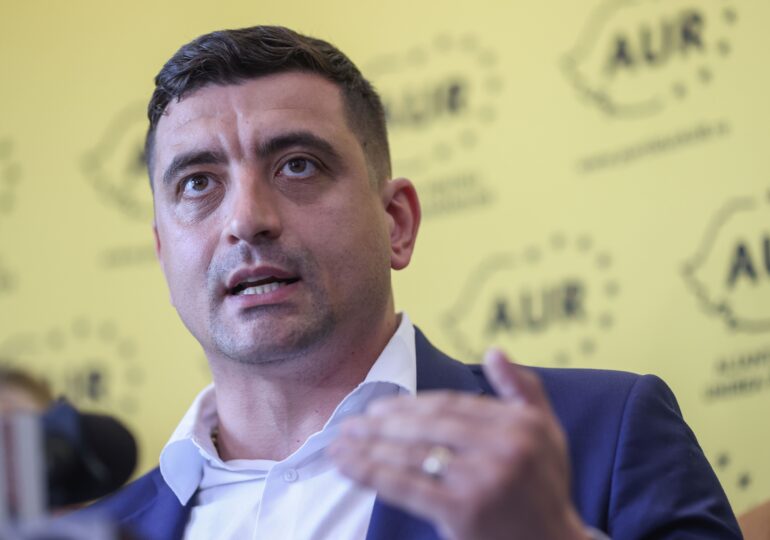
If his voters wanted less Europe in their lives and more nationalism, Nicușor Dan would not have won the presidency, because in the final round was George Simion, the leader of an extremist-nationalist formation. He built his entire campaign on populist messages and waving the flag to deceive people.
However well-intentioned someone may be, it is hard not to notice that the current president has not understood his role, that the presidential institution functions, at best, like at the end of Klaus Iohannis's second term, that inevitably there is a dose of vanity in the president's positioning, and in his pursuit to win support from the AUR electorate, he has started to drive away those who believed in him.