

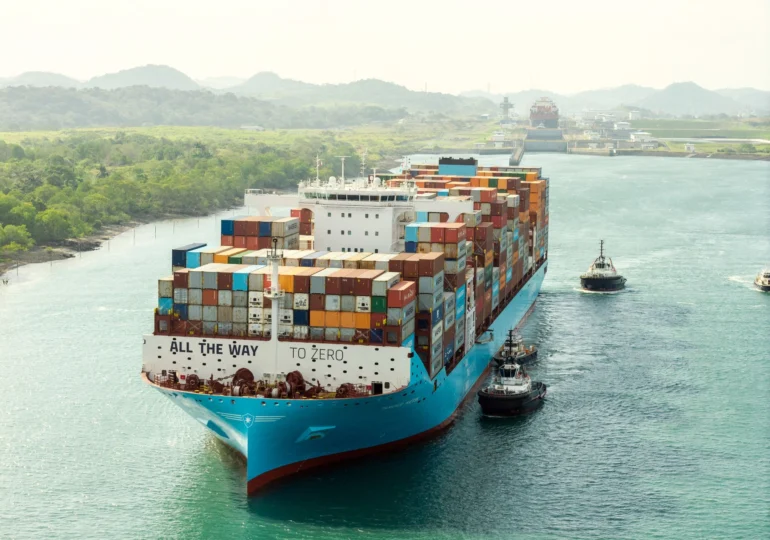
Major shipping companies have found alternative solutions to bypass the blockade in the Strait of Hormuz, but their capacity is limited, and trade to the states in the Persian Gulf has dramatically decreased.
Operators such as MSC, Maersk, CMA CGM, and Hapag-Lloyd have already reorganized transport routes, using ports in the Red Sea area and the Gulf of Oman to continue deliveries to the Middle East, as reported by the Financial Times, cited by Ukrinform.
Goods are unloaded at ports such as Yanbu and King Abdullah Port in Saudi Arabia or Fujairah in the United Arab Emirates, then transported by road to destinations such as Dammam, Basra, or Jebel Ali, the largest logistics hub in the region.
Few Ships, Multiple Attacks
The Strait of Hormuz has been practically blocked for commercial traffic since the beginning of the war between the US, Israel, and Iran on February 28.
Before the conflict, approximately 135 ships crossed this strategic route daily, but now only a few vessels manage to pass each day.
In addition, another 38 ships are said to have been attacked since the conflict erupted, according to the cited source.
"The Only Solution is the Land Bridge"
The CEO of Hapag-Lloyd, Rolf Habben Jansen, explained that the current alternative is combined transport through ports and land routes, but this cannot replace the huge volume of maritime transport.
"The only way to transport goods there is through a land bridge (...) but, of course, the capacity of all these land routes is much lower," he said.
He added that commercial flows to the Persian Gulf region have decreased by 60-80%.
Priority for Food and Medicine
According to a lawyer in the maritime transport industry, ports in the region are forced to prioritize essential shipments, such as food and medicine.
Indian company Tata Group has stated that products like tea, salt, and pulses intended for the Middle East are redirected to Jeddah Port in Saudi Arabia and Khor Fakkan in the UAE, from where they are further transported by land.
Grain traders also use similar routes, sending goods to ports in the Red Sea and the Gulf of Oman before being taken over by trucks and smaller vessels, a London-based shipping broker stated.
Emirates Accelerate Construction of a New Oil Pipeline
Meanwhile, the United Arab Emirates aim to reduce dependence on the Strait of Hormuz and are accelerating the construction of a new oil pipeline to Fujairah.
According to Ukrinform, the project is expected to double the capacity of oil exports through this terminal by 2027, thus avoiding one of the most critical and vulnerable maritime routes in the world.