
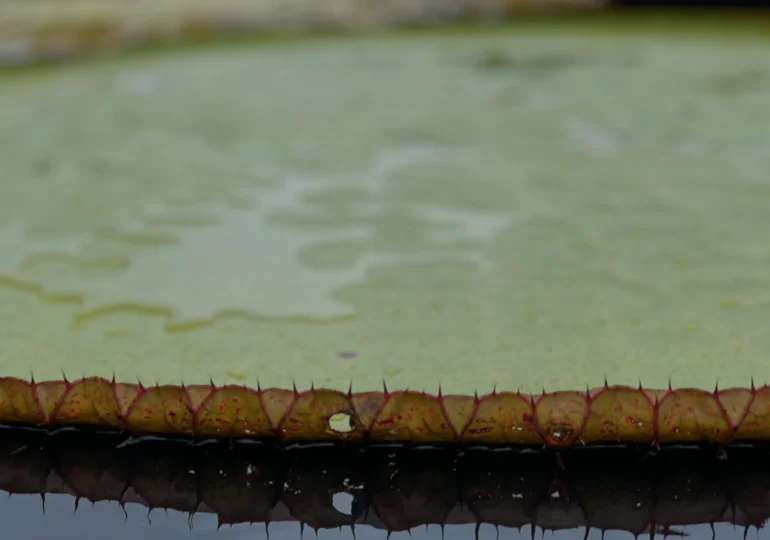
A photograph posted on social media has led to the discovery of a new species of giant water lily, hidden until now in the depths of the jungle in Colombia. The plant has leaves so large that they can be seen from space, but it is already considered critically endangered. Researchers are now trying to learn more about this rare species and find ways to protect it.
The giant water lily, whose leaves can reach a diameter of three meters and can support the weight of a small child, is among the oldest flowering plants still in existence. These plants existed before the separation of continents and have left traces in numerous cultures, from the Egyptian to the works of the painter Claude Monet, writes The Guardian.
Three years ago, botanist Carlos Magdalena, from the Royal Botanic Gardens, Kew, discovered on Instagram a photograph of giant water lilies from Colombia, misidentified by the author of the image as Victoria amazonica.
Suspecting it was an unknown species, Magdalena spent years analyzing satellite images and obtaining the necessary authorizations. On an expedition with researchers and members of indigenous communities, the team found the water lilies in an isolated lake in the flooded jungle.
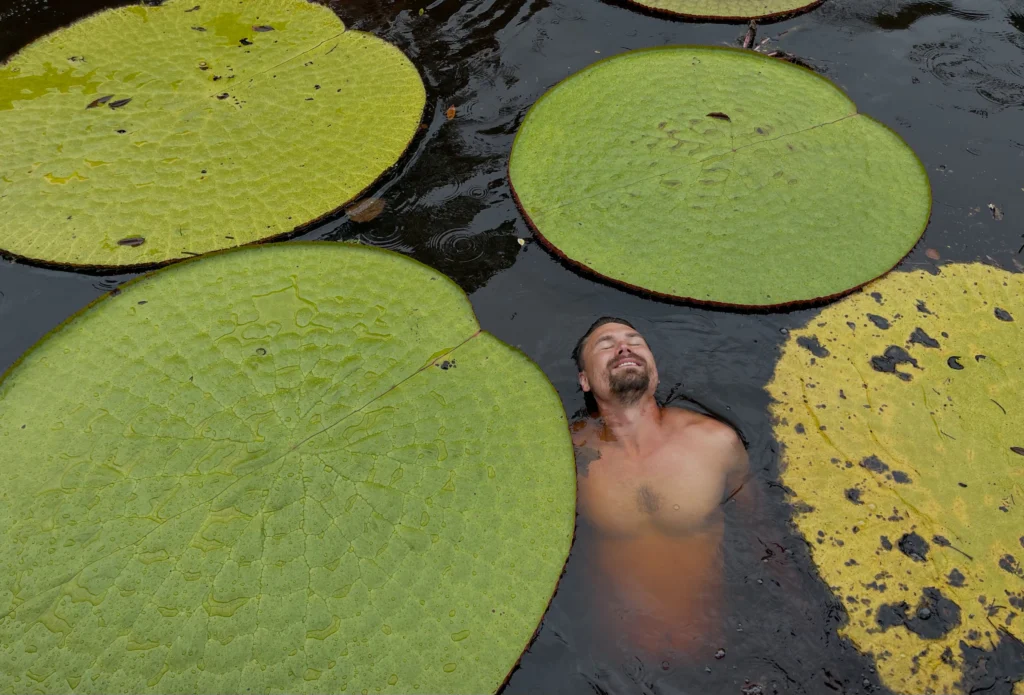
Photo: Facebook/Jeremiah's Carnivorous Plants
"It was so exciting that it brought tears to my eyes. It was one of those moments that will stay with me for the rest of my life. To come across something like this is absolutely fascinating, it takes your breath away," Magdalena said.
The team collected the necessary materials for the official identification of the plant, and a study published on Friday in the scientific journal Phytotaxa confirmed that this represents a new species for science. The water lily was officially named Victoria colombiana. Until now, only three other species of giant water lilies were known.
Researchers estimate that in the wild there are between 30 and 50 specimens of Victoria colombiana, making the species extremely rare and at high risk of extinction.
According to Maarten Christenhusz, a plant taxonomy specialist who analyzed the samples, new species are constantly being discovered, but few are as "large, spectacular, and emblematic as this one."
"This giant water lily can even be seen from space, which impressively reminds us how much we still do not know about life on our planet," he said.
The team is currently working to obtain an official classification in the International Union for Conservation of Nature (IUCN) Red List, which assesses the risk of species extinction.
Efforts are also underway for the long-term conservation of the water lily, including the possibility of creating a stable population in a more accessible lake, located within an indigenous community's territory.
Researchers hope to continue collecting seeds of the plant, with the aim of cultivating it in Bogotá and perhaps even in the Royal Botanic Gardens, Kew in the United Kingdom.
C.S.