
The economic battle between China and the West is not limited to rare earths. Beijing is complicating other countries’ efforts to break free from dependence on its technology in solar energy, drones, and pharmaceutical production.
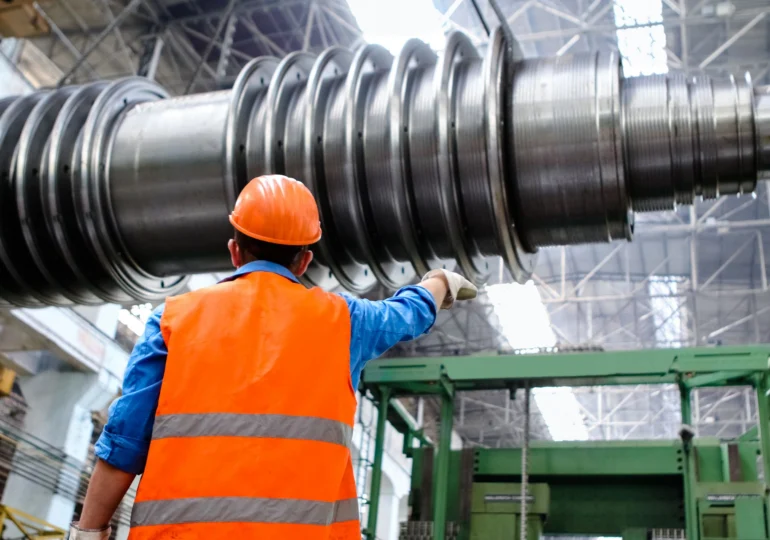
They are among the largest machinery in the world: steel cylinders, some as long as a football field, equipped with rotating discs capable of crushing rock to pave the way for road and railway construction. Known as „moles,” tunnel boring machines are produced by a limited number of companies, mostly in factories in China.
India uses them for tunnel digging – including in the Himalayan region – aiming to improve troop mobility for defending the disputed border with China. However, starting next month, Beijing may be able to control whether India can continue to purchase such equipment.
These machines are part of a broader Chinese objective to exercise control over products leaving Chinese factories and laboratories destined abroad. In the past month, Beijing has taken measures to regulate the export of dozens of technologies, including drones, artificial intelligence models and agents, as well as certain processes used in the development of advanced medicines and in the manufacture of solar panels, writes the New York Times.
This strategy would have two major consequences:
- it could significantly hinder efforts by companies in the United States and other regions to build solar equipment factories that compete with Chinese manufacturers.
- soon, it could become much more difficult for any entity outside China to gain access to the latest and most powerful Chinese artificial intelligence models.
A plan crafted years ago
The planned restrictions show that Beijing is intensifying its strategy to make Chinese factories indispensable worldwide, even though many governments are alarmed by their countries' dependence on China and are working to reduce this dependency:
- In the US, concerns over China's control of rare earths have prompted the government to revitalize the national rare minerals extraction and processing industry.
- In Europe, Japan, and elsewhere, governments are now trying to regain the capacity to produce antibiotics and active pharmaceutical ingredients – many of which currently come from China.
- In India, the Minister of Transport has urged companies to locally manufacture tunnel boring machinery.
These control measures represent the implementation of a plan conceived several years ago, at a time when the pandemic exposed China's dependence on other countries for advanced medical equipment – such as ventilators and life-support systems – as well as for raw materials and specialized components.
Xi Jinping has stated that Beijing will develop decisive technologies in sectors like high-speed trains, renewable energy, and telecommunications. This would not only increase China's self-sufficiency but also discourage other countries from trying to isolate China, the cited newspaper writes.
Beijing wants to decide who it sells to
Xi has portrayed China as engaged in a long struggle with the West, which is trying to stop its rise.
Beijing needs levers to ensure it can still obtain what it requires from other countries — namely access to their markets and advanced technologies, such as aircraft engines and high-performance chips, said Kirsten Asdal, founder of Asdal Advisory, a consulting firm focused on political research regarding China.
“Xi and the Party perceive themselves as naturally in conflict” with the West, she said, adding that they “have pursued confrontation, sooner or later, whenever the opportunity arises and the necessary capability exists.”
Domestically, the Communist Party has presented China's efforts to gain industrial and technological power as a fight for survival, referring to struggles from the party's revolutionary past.
In a recent front-page editorial, Renmin Ribao (People's Daily) praised China for withstanding tariffs and trade wars, while urging readers to prepare for a “great struggle.”
China has argued that the recent export control measures and proposed new regulations are necessary to protect Chinese commercial interests.
The country has invested decades and billions of dollars to secure a dominant position in solar equipment production, for example. Therefore, it argues that it must restrict the export of essential equipment to prevent competitors from trying to replicate the Chinese supply chain on their own soil.
Beijing has also stated that stricter controls are necessary to counter threats to national security.
“China is beginning to analyze, in a more systematic way, which technologies and equipment can be exported, to whom they should be sold, and what their final use will be,” said Sun Chenghao, an expert in foreign relations at Tsinghua University in Beijing.
He gave, for example, the argument that the risks of artificial intelligence being used in cyberattacks – or tunnel boring and dredging machinery being used by foreign armies against China – are legitimate reasons for Beijing to check the destination of these technologies.
China seeks another ace
American restrictions and sanctions imposed on China have contributed to Beijing's awareness that great powers need economic weapons just as much as they need aircraft carriers and long-range missiles, some analysts argue.
During the trade war with the Trump administration, Beijing halted exports of rare earths to the United States – minerals essential for manufacturing fighter jets, cars, and everyday technologies. This move pressured Washington, forcing it to accept a truce.
Some Chinese analysts express concern that Beijing's rare earth strategy has been too successful. Currently, the United States, along with many of its allies and partners, is making intense efforts to develop alternative sources.
Part of the wave of restrictions China imposed this month aimed at creating new levers of influence.
“China fears it might lose the 'rare earths card,'” said Zhao Minghao, an expert in international relations at Fudan University in Shanghai. “So, what other cards does China have up its sleeve? How can China effectively counter sanctions or tariffs imposed by the US? I think, at this moment, Beijing is giving top priority to this issue.”
A risky bet
China's exclusive focus on technological self-sufficiency, however, entails risks for Beijing.
For a long time, economists have urged Beijing to invest in pensions, healthcare, and unemployment benefits so that citizens feel secure enough to spend.
“This obsession with developing and protecting technology leads to a deeply inefficient allocation of resources in China, which generates slower economic growth and higher debt,” said Scott Kennedy, a researcher specializing in the Chinese economy at the Center for Strategic and International Studies in Washington.
The new control measures could also alarm other trade partners, such as the European Union, which is already worried about a wave of cheap Chinese exports.
“Such a way of doing business, based on threats, will not be sustainable in the long term,” Kennedy said.
Even some Chinese analysts acknowledge this danger. “If uncertainty becomes too great, customers might look for alternatives,” said Sun from Tsinghua University.
This is already happening in India. Experts say that as early as 2024 — before these products were officially included on the export control list — China blocked deliveries of tunnel boring machinery.
As a result, India was forced to look for other suppliers. However, New Delhi had few ways to retaliate, as its economic ties with China were extremely limited, said Pranay Kotasthane, coordinator of the High Technology Geopolitics Program at the Takshashila Institution in Bengaluru, India.
T.D.