

The government led by Péter Magyar is changing the way ethnic Hungarians in Romania can obtain Hungarian citizenship. From 2027, the Eurotrans Foundation, established by UDMR and funded by the Hungarian state, will no longer be able to assist applicants in preparing their files. The procedure will be managed exclusively by the Hungarian embassy and consulates.
The decision ends an 11-year collaboration and marks a change in Budapest’s approach towards Hungarian organizations in Romania, following the replacement of Viktor Orbán’s government with the one led by Péter Magyar.
According to the Hungarian publication Krónika, the new government in Budapest informed UDMR, shortly after the April elections, that it would no longer cooperate with the foundation for citizenship granting procedures.
What changes for Hungarians in Romania
The Eurotrans Foundation was established by UDMR and began providing assistance for obtaining Hungarian citizenship in 2015, based on an agreement with the government in Budapest.
Through its 25 offices in Transylvania, the organization helps applicants prepare their documents free of charge, including the necessary photographs and translations. The foundation’s employees regularly travel to rural localities so that people do not have to travel to a consulate.
From 2027, these services will no longer be offered by Eurotrans. Those who want to obtain Hungarian citizenship will have to apply directly to the Hungarian diplomatic missions: the Embassy in Bucharest and the general consulates in Cluj-Napoca and Miercurea-Ciuc.
The change does not mean that ethnic Hungarians in Romania lose the right to apply for Hungarian citizenship. Only the institutions that can assist them in this process are changing.
However, for people in remote localities, the procedure might become more difficult, as they will no longer benefit from the foundation’s local assistance network.
What happens with the funding
The president of the Eurotrans Foundation, Zoltán Levente Nagy, confirmed to Krónika that the organization will continue to help ethnic Hungarians in Romania obtain Hungarian citizenship until the end of this year.
Funding for the activity is secured until December 31, 2026, but the foundation’s future remains uncertain. Eurotrans has requested funds from the Hungarian government for operation in 2027, but has not yet received a response.
Therefore, for now, it is certain that the collaboration in the citizenship domain will end, but not the definitive cessation of all funding.
According to public data cited by Krónika, the foundation received 928 million forints (approximately 2.53 million euros) in 2026 and 950 million forints (about 2.59 million euros) in 2025, through the Bethlen Gábor Fund.
Since its establishment, Eurotrans has helped approximately 140,000 Hungarians from Transylvania prepare their files for Hungarian citizenship. The organization has also handled over 50,000 requests regarding the registration of civil status events and support requests for about 40,000 families.
The government in Budapest has not publicly explained why it is giving up cooperation with the Eurotrans Foundation.
The link with the Hungarian elections and tensions with UDMR
The Eurotrans Foundation was also involved in organizing postal voting for the Hungarian parliamentary elections held in April 2026. The organization helped Hungarian citizens in Romania who do not have domicile in Hungary to register for voting, participated in distributing and collecting the electoral envelopes, and handed them over to the Hungarian consulates in Cluj-Napoca and Miercurea-Ciuc, reports Krónika.
This involvement sparked criticism from some organizations that accused UDMR of not limiting itself to a neutral administrative role but indirectly supporting the Fidesz party led by Viktor Orbán.
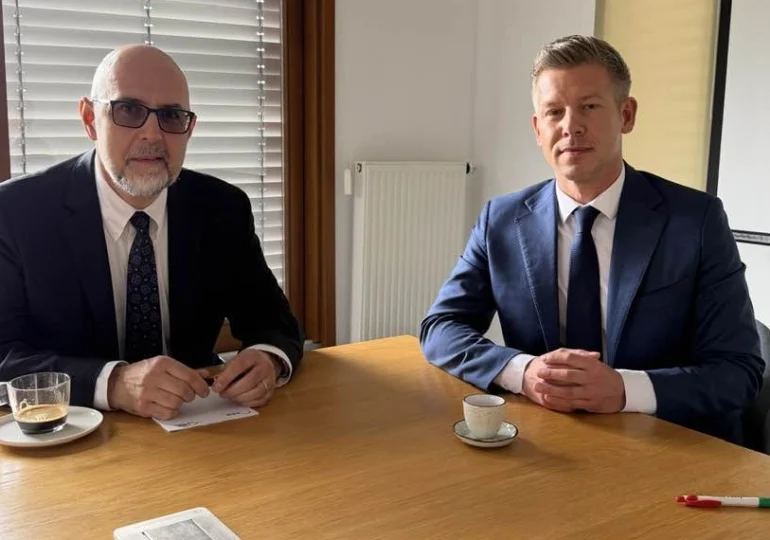
After the April elections, Péter Magyar met in Budapest with the UDMR leader, Kelemen Hunor. The two agreed that the irregularities reported in postal voting must be investigated, and the electoral rules revised to prevent possible fraud.
Kelemen Hunor stated that UDMR provided only technical assistance for vote transmission and that he is not aware of any irregularities that could have influenced the election results. According to Magyar, the UDMR leader promised that the organization will no longer get involved in political disputes in Hungary.