
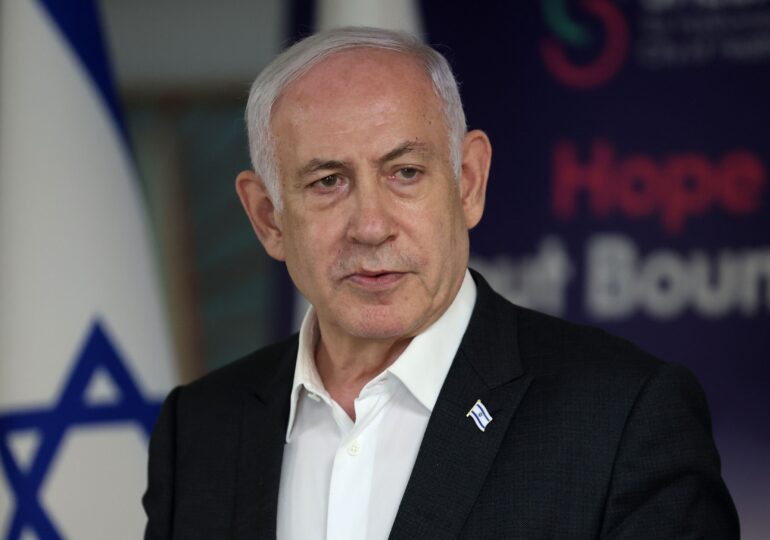
When Israelis go to the polls on Tuesday, they will have to answer a familiar question: should Benjamin Netanyahu, the longest-serving prime minister in the country’s history, remain in power?
Almost every recent election has been a referendum on Netanyahu. This time, many Israelis believe the choice carries more significant consequences than ever: it’s not just about who will lead the country, but also about the direction it is heading, comments CNN.
This is the first national election since the Hamas-led attack on October 7, 2023, the most serious security failure in Israel’s history, and the subsequent wars in Gaza, Lebanon, and Iran. These conflicts have mobilized a large part of the population and have further deepened Israel’s international isolation.
For many voters, this is the first opportunity to evaluate the leadership that was in power at the time of the October 7 failure, to decide who should lead the country in times of conflict, and who should bear the burden of extended military service.
The government led by Netanyahu, which is ending its term, was the first in recent decades to complete a full four-year term. It relied on far-right partners and ultra-Orthodox parties, which pushed Israel in a more nationalist and religious direction than ever before.
Netanyahu became the first sitting Israeli prime minister to be indicted on corruption charges, while his government promoted a judicial reform aimed at weakening the powers of the Supreme Court and other institutions that limit executive power. The initiative sparked widespread protests in 2023.
The stakes in Tuesday’s election are whether Israel will continue moving toward a nationalist, conservative, and religious orientation or whether it will change direction. The answer may not be clear for several weeks due to the way governing coalitions are formed in Israel.
Polls suggest that neither Netanyahu’s bloc nor the opposition will likely secure a majority on their own, meaning the election could trigger Israel’s next political crisis rather than resolve it.
Who is running and who leads in the polls?
Israelis vote for party lists, not individual candidates. In a society divided by nationality, religion, ethnicity, and ideology, this system leads to a crowded electoral competition.
Dozens of lists are registered for each election, but only those surpassing the electoral threshold of 3.25% gain seats and enter the Knesset, Israel’s parliament, which has 120 seats. As of Monday, 36 parties were in the race.
Polls suggest that between 11 and 13 parties will surpass the threshold. Seats are distributed through a proportional representation system.
The two largest parties are Likud, Netanyahu’s right-wing formation, and Yashar, a new centrist party led by Gadi Eisenkot, former Chief of Staff of the Israeli army, who has become his main rival.
The most recent poll by Channel 12 places Eisenkot in first place with 23 seats, ahead of Likud with 21, although other polling institutes show different results. According to Channel 14’s estimates, which favor Netanyahu, Likud would gain 30 seats, and Eisenkot about 20.
In head-to-head polls asking voters who would be more suitable for prime minister, Eisenkot has consistently maintained an advantage over Netanyahu.
However, obtaining the highest number of seats by a party is not enough to win the election. A prime minister needs 61 seats to form a government, and no party has ever achieved this majority alone.
Therefore, election night usually clarifies very little. The real competition begins after the vote, when parties calculate possible alliances. This process can take days, weeks, or even months.
Most polls estimate that Netanyahu’s bloc, made up of Likud, two far-right parties led by Bezalel Smotrich and Itamar Ben-Gvir, and two ultra-Orthodox formations, will obtain between 49 and 55 seats, below the 61-seat threshold needed for a majority.
The opposition, which appears strong on paper, is deeply fragmented. To Eisenkot’s right are parties led by former prime minister Naftali Bennett and former defense minister Avigdor Liberman, while to his left is the Democratic party, led by Yair Golan.
Bennett and Liberman have not declared support for Eisenkot and themselves aspire to the prime minister position.
According to polls, any alternative government would likely need the support of Arab parties or their abstention from voting. However, several opposition leaders have ruled out any form of cooperation.
Given that neither camp has a clear majority, several scenarios are possible: a political deadlock, a minority government, a national unity government, or the organization of new elections.
What could influence the result?
Since neither bloc is credited with a clear victory, the result could depend on small differences: which smaller parties surpass the 3.25% electoral threshold and how many votes are given to parties that fail to reach it, votes that, in practice, do not translate into parliamentary representation.
Voter turnout is important, as a few thousand votes can decide whether a party disappears entirely from the parliamentary scene, enters the Knesset, or even holds the decisive role in unlocking negotiations between the two camps and redrawing the political map.
Arab voter participation could be decisive. Palestinian citizens of Israel, who make up about 20% of the country’s population, have traditionally participated in voting at a lower rate than the national average.
In the 2022 elections, turnout among Arab voters was 53.2%, while overall participation reached 70.6%. This time, polling institutes estimate that Arab voter turnout will exceed 60%. This would raise the total number of votes needed to surpass the electoral threshold and make it harder for small parties to enter Parliament.
Netanyahu’s coalition has several small parties at risk of not entering the Knesset.
Another factor drawing attention is the situation of Israelis living abroad. Israel does not allow voting from outside the country, except for diplomatic staff, and official data suggests that over 11% of the 7.3 million eligible voters, about 810,000 people, live abroad.
Thousands of Israelis intend to return to the country by plane to vote in person, and their number could influence the election outcome.
What are Israelis voting for?
In a country that has experienced years of war, security and taking responsibility for past failures are important electoral factors. However, polls suggest that the cost of living is also one of the main concerns of voters, especially young ones.
According to the latest Channel 12 poll, 21% of Israelis consider the economy and cost of living as the main priorities for the upcoming elections. These are followed by the issue of ultra-Orthodox recruitment into the army, mentioned by 17% of respondents, the October 7 failure, indicated by 14%, and the war with Iran, mentioned by 10%.
Priorities differ significantly depending on political orientation. Among Netanyahu’s coalition voters, the war with Iran ranks first, mentioned by 21%. Among opposition voters, the main issue is the October 7 failure, indicated by 28%.
A poll conducted in September by the Achord research center of the Hebrew University showed that 58% of voters aged 22 to 34 consider high prices and housing costs will influence their vote, while 36% pointed to security issues.
Despite these figures, the economy has not been a central theme of the election campaign until this weekend, when Netanyahu brought it to the forefront.
How could the October 7 attack and the Gaza war influence the vote?
Netanyahu built his political career promoting a hard line on security, but he was prime minister on October 7 when Hamas infiltrated Israeli territory, killing over 1,200 Israelis and taking 251 hostages to Gaza.
He refused to take personal responsibility for the security failure and rejected calls to establish a state inquiry commission to investigate security system deficiencies. His opponents made the lack of accountability a central theme of the election campaign.
The war also influenced Eisenkot’s personal story. His 25-year-old son, Gal, was killed in the fighting in Gaza in December 2023. This loss strengthens his appeal among voters concerned about security.
Other parties have included bereaved families and relatives of former Israeli hostages on their lists. Also, opposition formations have recruited candidates who recently served as reservists and fought in Gaza and Lebanon, bringing the issue of military service to the center of the electoral debate.
Most Jewish Israelis over the age of 18 are subject to compulsory military service, but ultra-Orthodox men have long benefited from a general exemption to study religion.
Netanyahu’s ultra-Orthodox partners have tried to maintain and expand this exemption, while the Israeli army says it is short of over 12,000 soldiers, as it must sustain fighting on multiple fronts.
Reservists cover the deficit, being repeatedly called up and spending hundreds of days per year on military missions.
All opposition parties have included universal military service among their main electoral commitments.
What do the elections mean for Palestinians?
The outgoing government has been one of the most radical regarding policy towards the Palestinians in Israel's history, being largely influenced by the leaders of two far-right nationalist parties.
Smotrich, the Finance Minister, who also oversees the civil administration in the occupied West Bank, has promoted the massive expansion of Israeli settlements. He has also blocked the transfer of tax revenues to the Palestinian Authority (PA), a measure critics say could cause its economic collapse.
Ben-Gvir, the Minister of National Security, promoted a death penalty law in the Knesset, tightened detention conditions for Palestinian prisoners, and weakened measures to combat violence committed by Israeli settlers in the West Bank.
Both opposed ending the war in Gaza, support the construction of Israeli settlements in the enclave, and promote the full annexation of the West Bank and the establishment of Jewish control over this territory.
If Netanyahu returns to power alongside his current partners, it is likely that this approach will continue and intensify.
Smotrich wants to annul the Oslo Accords, dismantle the Palestinian Authority, and trigger a war in the West Bank. Ben-Gvir, who has declared he will seek the Defense portfolio in a future government, has called for the emigration of Palestinians from Gaza and the West Bank.
An opposition government would probably not represent a radical ideological change, but rather a change in tone rather than core policy.
Eisenkot, like Netanyahu, rejected the idea of establishing a Palestinian state, and any opposition coalition would include right-wing parties opposed to concessions to the Palestinians.
However, a government that would not depend on Ben-Gvir and Smotrich could take firmer measures against settler violence, abandon the explicit promotion of Palestinian emigration and the collapse of the Palestinian Authority, and be more receptive to U.S. and regional actors’ initiatives regarding Gaza and other issues.
Such a government would, however, inherit the same unresolved questions: how can Hamas be disarmed, who will rebuild Gaza, and who will restore order and law enforcement in the West Bank?
What do the elections mean for the rest of the world?
The wars in Gaza and Lebanon, the conflict with Iran, and the escalation of violence committed by settlers have brought Israel to one of the most difficult diplomatic moments in recent decades.
Netanyahu is targeted by an arrest warrant issued by the International Criminal Court, related to war crime allegations in Gaza, and avoids traveling to most European countries due to the risk of arrest.
On Monday, a UN commission stated that Israel continued to commit genocide in Gaza even after the ceasefire agreed upon in October last year, mediated by the United States. Israel rejected the accusation, calling it part of a “disinformation campaign.”
Former U.S. President Donald Trump expressed support for Netanyahu ahead of the vote, but American public opinion overall is much less favorable to Israel.
A survey conducted by the Pew Research Center in March 2026 showed that 60% of American adults interviewed had an unfavorable opinion of Israel, and 59% had little or no confidence in Netanyahu to make the right decisions regarding international affairs.
The global attitudes survey, conducted by Pew in spring 2026, indicated a similar trend: majorities of respondents from most of the 36 countries included in the research held unfavorable views of Israel and its prime minister.
The shift was particularly pronounced in Western Europe, where several countries, including the United Kingdom, France, and Canada, have recognized a Palestinian state and imposed sanctions and trade restrictions against Israeli settlements, as well as against individuals and entities associated with settler violence.
Ben-Gvir and Smotrich have been personally targeted by sanctions and face travel bans imposed by several Western states.
If Netanyahu's government is re-elected, international pressure will likely increase. A government led by Eisenkot or another opposition figure could lead to some reduction in tensions, at least initially.
Stronger measures against settler violence could pave the way for restoring closer relations with certain European governments and the Democratic Party in the United States.
However, it is unlikely that a change of government will reverse the overall trend. The main opposition candidates are not expected to radically reform Israel’s security and foreign policy. Thus, a new government might benefit from some diplomatic breathing room but would not start from scratch.