
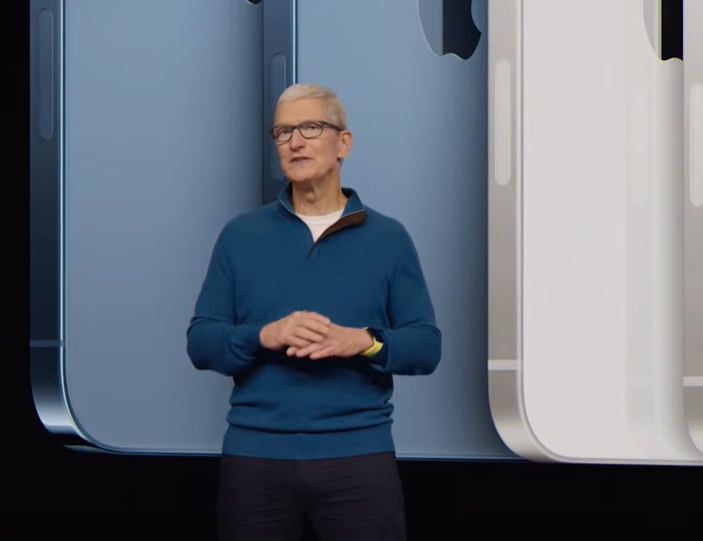
Tim Cook will step down as Apple’s CEO at the beginning of September, after over a decade and a half at the helm of the American giant.
The change marks the end of an era that began in 2011, following Steve Jobs’ departure.
Cook will remain in his position until the end of the summer to ensure a smooth transition, and will then become the Executive Chairman of the Board.
John Ternus, the internal successor
The new CEO will be John Ternus, the current head of hardware engineering, a company veteran who has been with Apple since 2001. He has steadily climbed the ranks, overseeing the development of key products and being involved in launches such as the iPad and AirPods.
"I am honored to take on this role and promise to lead with the values and vision that define this company for over half a century," Ternus conveyed.
He takes over at a critical moment as Apple seeks to catch up with rivals in the field of artificial intelligence.
Tim Cook's legacy
Becoming CEO in 2011, Tim Cook transformed Apple from a company focused on a few iconic products - Mac, iPod, and iPhone - into an extended ecosystem that includes services, entertainment, and wearable devices.
Under his leadership, Apple has introduced new categories such as the Apple Watch, AirPods, and the Apple TV+ platform, with the services business becoming the company's second most important segment. The group's market value has reached around $4 trillion.
Cook has also navigated through challenging times, from the Covid-19 pandemic to trade tensions between the US and China, including tariff policies promoted by the Donald Trump administration.
Challenges in recent years
Cook's tenure ends against a backdrop of difficulties in key areas. Apple has lagged behind in modernizing the Siri assistant, at a time when competitors like OpenAI (ChatGPT) and Google (Gemini) are accelerating artificial intelligence development.
At the same time, some recent products, such as the Vision Pro headset, have not achieved the commercial success of other Apple launches.