
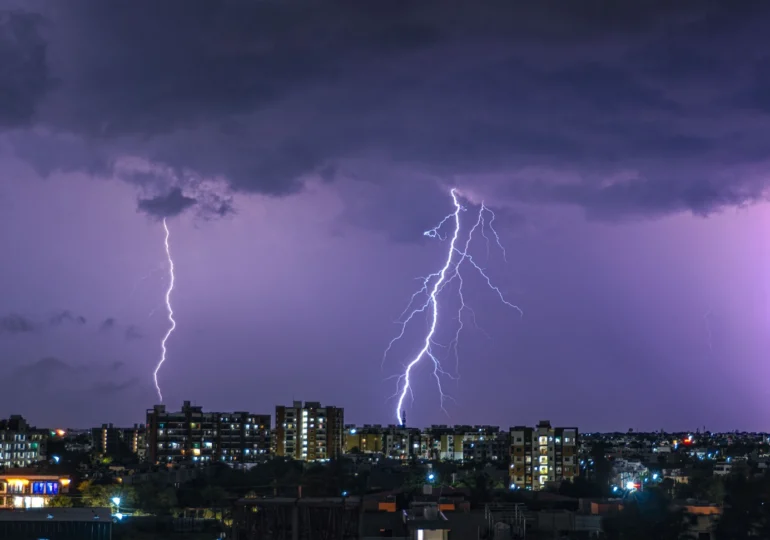
Ten countries have the highest exposure to storms, as shown in a report that assessed 193 states. Only two European countries are among the top 100 in this ranking.
Ten countries bear the brunt of the global exposure to storms, according to the Storm Risk Index included in the latest analysis WorldRiskReport.
These countries are:
- Philippines
- Mexico
- Madagascar
- Mauritius
- Japan
- China
- Micronesia
- USA
- South Korea
- Australia
Only two European countries are among the top 100 most exposed to risks, considering both physical exposure and social vulnerability: Portugal (69th place) and Ukraine (96th place).
Countries Most Exposed to General Disaster Risk
The 2026 report, conducted by the German alliance of NGOs "Bündnis Entwicklung Hilft" and the Institute for International Law of Peace and Armed Conflict (IFHV) at the Ruhr University Bochum, focused this year on storms, considered some of the most frequent and destructive natural hazards worldwide.
The storm risk is unevenly distributed, with coastal cities and islands being the most vulnerable. "Cities like New York and Boston, or Beijing and Tokyo, will face tropical cyclones in the future," says Dr. Friederike Otto, climatologist and co-founder of the World Weather Attribution (WWA) initiative.
On the other hand, the Global Risk Index, which measures the overall disaster risk associated with all natural hazards, includes 13 European countries in the top 100 positions, with Turkey being the only one ranked in the top 50, in 38th place.
Also, in the top 100 positions are:
- Italy (51st place)
- Greece (56th)
- Spain (58th)
- France (78th)
- Albania (81st)
- Poland (82nd)
- Portugal (86th)
- United Kingdom (89th)
- Croatia (92nd)
- Belgium (94th)
- Netherlands (96th)
- Germany (99th).
The top three positions in the general disaster risk hierarchy are, in order, the Philippines, India, and Indonesia.
Among the countries analyzed, the least exposed to disaster risk are Monaco, San Marino, and Andorra.
Main Conclusions of the Report
- Climate change intensifies storms and makes them more dangerous, altering their trajectories and exposing more people to their effects. "We are seeing an increase in the proportion of the most powerful storms," says Dr. Friederike Otto.
- Human-induced climate change resulting from the burning of fossil fuels is the cause of this phenomenon, with greenhouse gases leading to the warming of the atmosphere and oceans. "When a tropical cyclone forms under these higher temperature conditions, it has more energy, which increases the wind speed intensity and the amount of associated precipitation," explains the climatologist.
- Higher ocean temperatures also lead to a higher frequency of rapid storm intensification, making issuing warnings more challenging.
- Rising temperatures not only strengthen the destructive nature of storms but also generate new hazards, such as an increased risk of floods, erosion, and landslides in coastal areas due to rising sea levels.
- Convective storm systems – from simple thunderstorms to long-lasting supercells – produce heavier precipitation due to climate change, as warmer air holds more moisture.
- Storms rank third in terms of the number of casualties, after earthquakes and extreme temperatures (heat or cold).
- Storms cause the largest economic damage of all extreme natural phenomena, disproportionately affecting poorer economies compared to wealthy and industrialized nations.
- Tropical cyclones are rare in Europe, but extratropical cyclones are more common. They form over the sea but are much weaker. However, they influence the weather on land. "Especially in Northern Europe, we observe an increase in the number of these storms, meaning that winters have become much wetter," Dr. Otto points out.
T.D.