
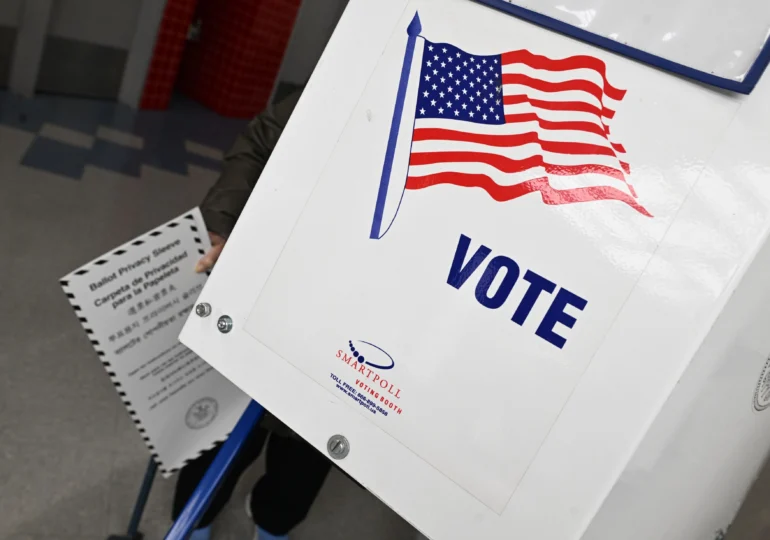
The Democrats’ victory in the midterm parliamentary elections, in an electoral wave dubbed the „blue wave,” is already producing effects worldwide.
The United States’ trading partners, strategic allies, and Washington’s adversaries are trying to assess the consequences of the election results, writes Reuters.
Iran and Israel
It is not yet clear how President Donald Trump's loss of control over Congress will influence the evolution of the conflict between the United States and Iran, which has been ongoing for eight months. Voters have shown that they are tired of war, which many consider responsible for the sharp rise in fuel prices.
Some Gulf governments now believe that Trump has more reasons than ever to try to reach a peace agreement and that a new large-scale military offensive against Iran is less likely after the elections, two sources familiar with these governments' positions told Reuters.
At the same time, Trump's electoral defeat could encourage Iran.
"If Tehran understands that Trump needs a deal, but not just any deal, a real opportunity to end the war could arise," said Ebtesam al-Ketbi from the Emirates Policy Center. However, interpreting the election result as a sign of weakness could instead lead to "a new military escalation," she added.
In the case of Israel, Democratic control of the House of Representatives and the Senate could intensify Congressional oversight of Israeli military operations in Iran, as well as in Gaza and Lebanon. At the same time, it could call into question the traditional U.S. support for Israel, including military aid and arms sales.
Political opponents trying to remove Prime Minister Benjamin Netanyahu have used the Democrats' victory to criticize him, arguing that under his leadership Israel has lost the bipartisan support it enjoyed in the United States. These statements come as they try to form a coalition following last week's inconclusive elections in Israel.
Pump Prices
The war in Iran has affected the supply of crude oil and liquefied natural gas from the Gulf region, causing the price of oil and fuels to rise worldwide.
On Wednesday, energy markets bet on the possibility that the election results would give new momentum to peace negotiations between the United States and Iran. Oil prices fell for the third consecutive day, but low stock levels prevented a more significant decline, analysts explained.
"The market seems to be increasingly betting that President Trump wants to leave the Middle East war behind," said Ole Hansen, an analyst at Saxo Bank.
Ukraine
Donald Trump has largely cut off direct U.S. financial and military aid to Ukraine, which is facing the Russian invasion, despite broad support for this assistance among both Republican and Democratic lawmakers.
The American president displeased members of Congress, including many Republicans, after lifting sanctions on Russian diesel and suspending restrictions on Russian energy just weeks after enacting them.
Taking control of both chambers of Congress will allow Democrats to propose new aid packages for Ukraine. If they gain enough Republican support and achieve a two-thirds majority, a new aid package could be passed even if Trump exercises his veto power.
However, it is unlikely that American support will increase in the short term. Moreover, any additional aid would not solve Ukraine's most urgent problem: the shortage of Patriot interceptor missiles needed to protect energy infrastructure and cities during the winter.
Democrats might also try to change other Trump administration decisions.
Gregory Meeks, a Democratic representative from New York and candidate for the chairmanship of the House Foreign Affairs Committee, has introduced a bipartisan bill aimed at blocking Trump's plan to reintroduce Russian diesel to the global market.
Still, the midterm election outcome is unlikely to change the U.S. administration's position in trilateral peace negotiations with Russia. Washington has pressured Ukraine to accept concessions to conclude an agreement while simultaneously discussing possible economic deals with Moscow that would favor American investors.
The Kremlin has expressed hope that the election results will not affect what it called Trump's "peace efforts."
Trade
The election results could give some Asian countries additional reasons to delay investment commitments made in an attempt to avoid U.S. tariffs. At the same time, China, the United States' main economic rival, could gain an advantage in ongoing trade negotiations, analysts believe.
However, economic relations between the U.S. and China will likely remain in a state of "fragile stability," said Chim Lee, an industrial policy analyst at the Economist Intelligence Unit in Beijing.
Trump's electoral losses could ease trade negotiations between India and the United States. Talks for a trade agreement have been delayed as New Delhi tries to protect its farmers.
"After the Republicans' defeats in the U.S. congressional elections, President Donald Trump's ability to impose arbitrary tariffs will certainly be challenged. At some point, he needs Congressional approval for trade measures and, from this perspective, he is weakened," said Anup Wadhawan, former Commerce Secretary in the Indian federal government.
Congress has the authority to regulate trade and set import duties. However, Trump has used legislative provisions that allow him to impose tariffs citing national security reasons or unfair trade practices. Any attempt by Democrats to limit these prerogatives could face the president's veto.
Another question is whether Trump will implement his more recent trade threats. These include imposing 100% tariffs on European countries that introduce taxes on digital services provided by major American technology companies.
It also remains to be seen whether a €3 billion (US$3.37 billion) loan granted to Airbus by the European Investment Bank will affect the transatlantic trade truce that has largely held since 2025.
Artificial Intelligence and Technology
Exit polls showed that many American voters are concerned about the rapid expansion of data centers dedicated to artificial intelligence. These concerns have triggered negative reactions in stock markets, affecting shares of major Asian chip manufacturers.
"A Democratic victory in both chambers of Congress would put pressure on technology companies and could lead to tighter regulations in the field of artificial intelligence. This could slow down the extremely rapid growth rate we see daily and often come to take for granted," said Jake Dollarhide, CEO of Longbow Asset Management in Oklahoma.
Shares of Asian companies in the chip and artificial intelligence sectors, such as TSMC, Samsung Electronics, SK Hynix, and Kioxia, fell on Wednesday.
Asian investors' concerns were also reflected in pre-market trading in the U.S. Data center operators' shares declined, including those of Applied Digital.