
Russian missiles and drones are striking Ukraine’s energy infrastructure more powerfully and earlier than in previous seasons. Additionally, the Kremlin has expanded its list of targets, attempting to cause even greater damage to the Ukrainian economy.
An independent United Nations investigative group concluded last week that Russia committed war crimes and crimes against humanity by intentionally attacking civilian infrastructure, especially essential power supply systems, during the severe winter of 2025-2026.
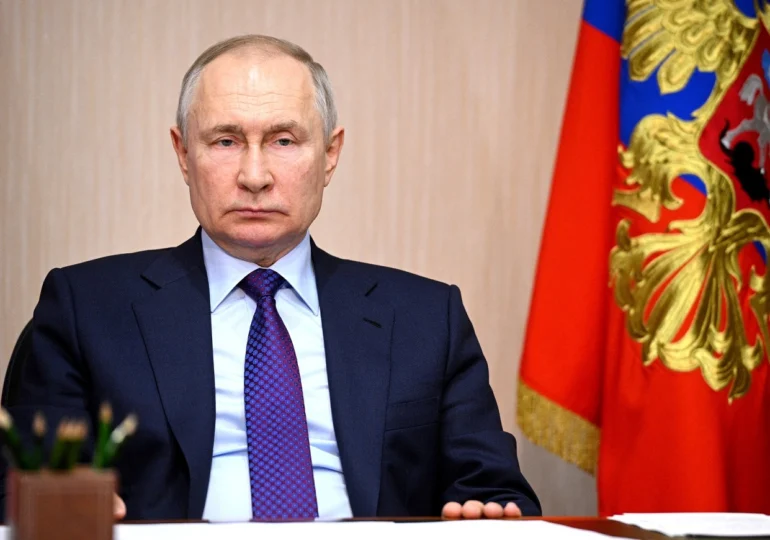
Experts warn that this winter's attacks could be even more severe, writes CNN. While the United States is set to mediate a new round of peace talks next week, Russian President Vladimir Putin is intensifying the offensive against Ukraine.
Russia's air campaign is currently "clearly aimed at destroying the Ukrainian economy," said John Lough, director for international partnerships at the New Eurasian Strategies Centre, a London-based think tank.
He also told CNN that many of Ukraine's European allies have not understood "how serious the situation in Ukraine is" nor how great the financial burden could become for Kyiv's European partners.
"Putin realized he cannot win in Donbas by sending more people into battle and trying to advance, because the Ukrainians actually had a relatively good summer," Lough explained.
"He concluded that the only way to change the situation is to destroy the economy, and this is happening in a systematic way," he added.
Cristian Vlas, a researcher specializing in Eastern Europe at ACLED, an international conflict monitoring organization, warns that Ukraine faces the prospect of a severe humanitarian crisis this winter, which could begin much earlier than last year.
"It will not be a normal winter," he told CNN.
The number of civilian casualties in Ukraine has reached the highest level since the early months of the war. According to ACLED data, Russian attacks have killed over 2,700 Ukrainian civilians since the beginning of 2026.
The number of strikes launched by Russia against Ukraine has steadily increased this year. In January 2026, 3,650 attacks were recorded, while in October the number reached 5,532.
At the same time, Ukraine has intensified its attacks on Russian territory, carrying out 2,302 strikes in October. The Ukrainian Ministry of Defense announced that last month it targeted at least seven Russian companies involved in arms production, three military airfields, as well as significant radar and military communications facilities. During the summer, Ukraine also attacked the Wildberries warehouses, Russia's largest online retailer.
Russia targets industry and grain exports
Russian attacks on Ukrainian exports from the Black Sea, Danube ports, industrial warehouses, railway infrastructure, and the steel industry have become increasingly frequent.
Some of these targets have both civilian and military uses, but experts say that recently there have also been attacks directly aimed at the civilian population.
At least 55 Ukrainians were killed on Monday after Russia bombed a school building in Zaporizhzhia, used as a shelter and aid distribution center. The incident was among the deadliest since the start of the fifth year of the war.
Moscow consistently denies targeting the civilian population. Meanwhile, several major steel plants in Kryvyi Rih and Zaporizhzhia were hit by ballistic missiles between August and October, forcing them to cease operations. Authorities in Kryvyi Rih warned of "serious socio-economic consequences" and loss of income for thousands of families following the plant's closure.
"These attacks affect Ukraine's tax base, not just industry in the abstract. People's salaries are affected," Vlas explained.
Alongside strikes on other key sectors such as agriculture and grain exports, the attacks seem to be part of a Moscow strategy to simultaneously provoke multiple economic crises in Ukraine.
"Shopping centers, storage spaces, and goods warehouses are targeted. This disrupts the circulation and sale of products," said Kateryna Stepanenko, coordinator of the Russia team at the Institute for the Study of War, a Washington-based think tank closely monitoring the conflict.
While Russia previously attacked mainly at night, Stepanenko says that recently it has started launching more strikes during the day. Some of these aim to disrupt normal economic activity.
"When an air raid alert is triggered, many public institution buildings and many Ukrainian companies cannot legally operate. Thus, economic activity is interrupted," she explained to CNN.
Attacks on energy infrastructure also affect the economy, as power and water outages have significant consequences for company operations.
Russian forces have begun striking energy infrastructure in areas not previously targeted, such as the city of Rivne in western Ukraine, Stepanenko added. This places new pressure on the country's already limited air defense system.
The effects of attacks on the energy sector are increasingly severe. Many of Ukraine's power plants have been damaged so severely that they can no longer be repaired.
"We must consider the cumulative effect of this war and the very high level of exhaustion on the Ukrainian side. The economy is so affected that we are at an extremely dangerous moment," Lough warned.
On the night from Saturday to Sunday, Russia attacked the power grid in the Dnipropetrovsk region, leaving over 600,000 people without electricity, according to Ukrainian President Volodymyr Zelensky. He announced that large-scale power outages were also recorded in other regions, including Kharkiv and Zhytomyr.
Local authorities in Kyiv reported that on Saturday, approximately 40% of the buildings in the capital had no heating.
Meanwhile, Ukrainian Foreign Minister Andrii Sybiha issued a new warning this weekend as the first snowflakes of the year fell in Ukraine.
"Moscow is deliberately trying to leave millions of Ukrainians without electricity, heating, and water on the brink of winter. Russia is trying to achieve through cold and darkness what it fails to obtain on the battlefield," Sybiha said.
Civilians bear the consequences of the war
The increase in civilian casualties occurs amid Russia's growing use of jet-propelled Shahed drones and loitering munitions, which can remain airborne until they identify a target. These weapons are difficult for Ukrainian forces to intercept.
Ukraine is trying to improve its interception systems, but experts say that currently Russian weaponry holds the advantage.
Additionally, the Ukrainian military faces a constant shortage of Patriot interceptors, manufactured in the United States. These are among the few defensive systems capable of destroying Russian ballistic missiles.
Under these conditions, the number of civilians killed or wounded has increased almost continuously since April, Vlas explained to CNN. He described the rise in casualties recorded in early October as "staggering."
The civilian population is also paying an increasing economic price.
A new report by the International Rescue Committee (IRC) shows that in the southern and eastern regions of Ukraine, financial difficulties are forcing people either to abandon their homes or to take extreme risks to earn a living.
For example, in some regions, farmers risk their lives working on mine-contaminated land just to avoid losing all sources of income.
Of the hundreds of households surveyed in the Mykolaiv region, 91% stated they urgently need financial assistance. In the Dnipropetrovsk region, 42% indicated financial support as an urgent necessity.
"Lack of financial resources does not just mean difficulties paying bills. It puts real pressure on people and forces them to make decisions that can change their lives," said Olga Kashuba, deputy director for field coordination at IRC in Ukraine.
She noted that for many residents of the eastern part of the country, the war has affected their lives and livelihoods since 2014. Therefore, they have been facing economic pressures for over a decade.