
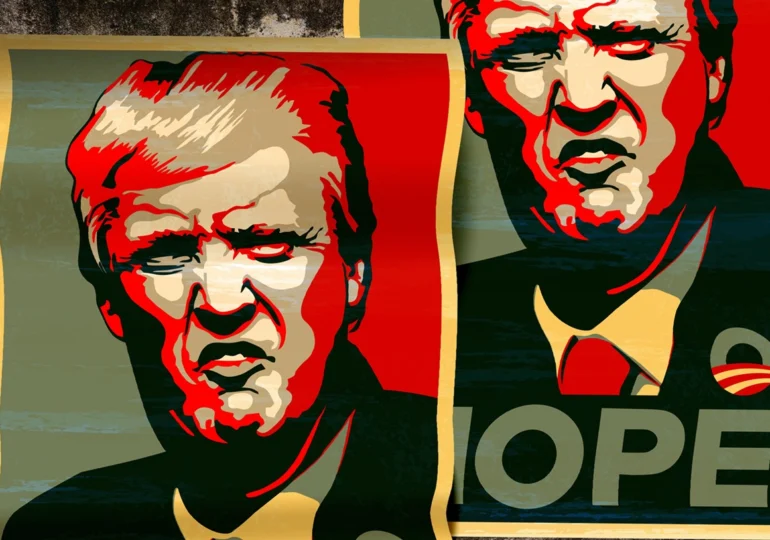
Trump missed it all. He had good cards in hand in 2024 and 2025, but this year – through a mix of vanity, instability, and recklessness – he turned a sure victory into a defeat. Two of the worst ideas he had sealed his failure.
To fully understand the scale of the electoral upset the Republicans have just suffered, we need to go back 12 months, when President Trump seemed well positioned to implement an ambitious agenda that still enjoyed popularity, suggests Christopher Caldwell, author of the book “The Age of Entitlement: America Since the Sixties”, in an article published by the New York Times.
A year ago, Trump was at the helm of a country at peace, with a growing, albeit uneven, economy.
By various means – some legitimate, others less so – he had managed to neutralize the influence of the bureaucracy within the so-called “deep state,” which during his first term had blocked or slowed his trade and immigration policies. He carried out purges within the vast United States Agency for International Development (USAID), which he suspected of promoting the Democratic Party's priorities abroad. His Department of Justice neutralized civil rights activists opposing his efforts to repeal diversity, equity, and inclusion policies. He even managed to penetrate the country's cultural elite, especially in Silicon Valley, where there was talk of a “change in atmosphere.”
Trump removed both his internal adversaries and external allies. He frightened investors with his frantic announcements about tariffs.
Still, nearly a year into his second term, his administration enjoyed – if not great affection – at least stable popularity. By the end of October 2025, there were still polls indicating an approval rating of nearly 50%.
In other words, his failure on Tuesday was by no means inevitable. However, Trump missed it all. He had good cards in hand in 2024 and 2025, but this year – through a mix of vanity, instability, and recklessness – he turned a sure victory into a defeat, Caldwell emphasizes.
The Moment When Trump Lost the Country
Domestically, some of the policies Trump supported during his campaign and implemented – such as tightening border controls – remain popular. The Center for American Progress, which advocates for broader legal immigration and clear pathways to citizenship, found in a survey conducted last spring that strict border security remains the migration policy enjoying the greatest voter support.
During his first term, Trump largely won the dispute he had carried on for years with the “system” regarding how mass immigration affects the working class.
However, polls showed that Trump had low approval ratings on this issue. This is because he chose arrogance over rational arguments: rather than letting his policies take effect, he wasted his energy humiliating his opponents.
Many of his decisions require explanations, and explanations have always been his weak point. He almost seems allergic to logical coherence and often speaks through a chain of unrelated ideas – perhaps because he considers himself a master negotiator, a field in which acknowledging a connection between two facts is often equivalent to making a concession, the author notes.
Trump and administration officials repeatedly claimed that welfare fraud was widespread among Somalis in Minnesota. It was a blatant justification for ICE's forceful actions – but by no means the sober reasoning that was needed. When poorly trained officers treated the operation as a terrorizing exercise rather than problem-solving, Trump lost the country.
The same happened with his attacks on political correctness, where he initially had considerable support. After changing the Department of Justice's policies, he could have simply let his project take root until the public got used to a country without invasive enforcement of political correctness, speech codes, and new gender rules.
But Trump couldn’t stay aside – he was like a child playing with his food. He sought to impose his own rules on campus speech.
Devastation on the International Stage
This inability to stay put proved disastrous in foreign policy. Trump’s ideas were often pertinent, Caldwell believes:
- Greenland was indeed a strategically important area, vulnerable to being drawn into the sphere of influence of hostile powers;
- It was indeed lack of discernment on the part of the Democrats to worry more about Russia than China;
- Countering China’s influence in our own hemisphere was indeed a strategic priority;
- U.S. industrial autonomy (achieved either through tariffs or other means) was indisputably a necessity.
However, again, through his insistence on humiliating his interlocutors, Trump created problems where none existed.
Canadian conservative Pierre Poilievre seemed sure to become prime minister until Trump started spouting nonsense about annexing Canada as the 51st American state – a fact that ensured the electoral victory of Mark Carney, one of his most determined opponents on the international stage.
The U.S. president’s insistence on denigrating Denmark led to the deployment of non-American NATO troops in Greenland, culminating in September with a security agreement that offers nothing more than what Trump could have simply obtained by requesting it from the start.
The Worst Ideas That Doomed Trump
However, Trump’s two worst ideas were the two wars he started against Iran. His poll ratings never recovered to the June 2025 levels after he joined Israel in a bombing campaign aimed at eliminating Iran’s nuclear program.
A few days later, when Trump announced a ceasefire, he seemed to show a remarkable capacity to break free from an illusion. But on February 28 came Operation “Epic Fury.”
This war penetrated every corner of the Trump administration, discrediting it entirely. It humiliated the United States, not only militarily but also diplomatically.
It weakened the alliance between the U.S. and Israel and, implicitly, Israel itself.
Moreover, it led to a sharp rise in gasoline and diesel prices, forcing Trump’s supporters to bear the heaviest burden of inflation. The districts and states that had supported him by a wide margin in 2024 drifted away from the Republicans, a phenomenon felt nationwide.
Vanity destroyed Trump’s second term. One reason this blow seems to have more severe consequences than the one he suffered during the 2018 midterm elections is that this time, he had the freedom to let his vanity run unchecked, concludes the author of the analysis.
T.D.