
NATO has a plan to repel a potential Russian attack on Europe and possesses military capabilities that would allow it to inflict massive losses on Moscow’s forces. The problem is that the Alliance’s military plans depend on increasingly unpredictable political decisions, especially in the United States, France, and Germany.
Donald Trump’s unpredictable policies, the prospect of anti-NATO leaders coming to power in France, and the rise of the German far right raise serious questions about the allies’ ability to act together in the event of a war.
This is the main conclusion of a Reuters analysis, published on Friday, which shows that NATO's military preparedness is advancing, but the political unity necessary to implement defense plans is increasingly uncertain.
NATO knows how to respond to an attack. But who will fight?
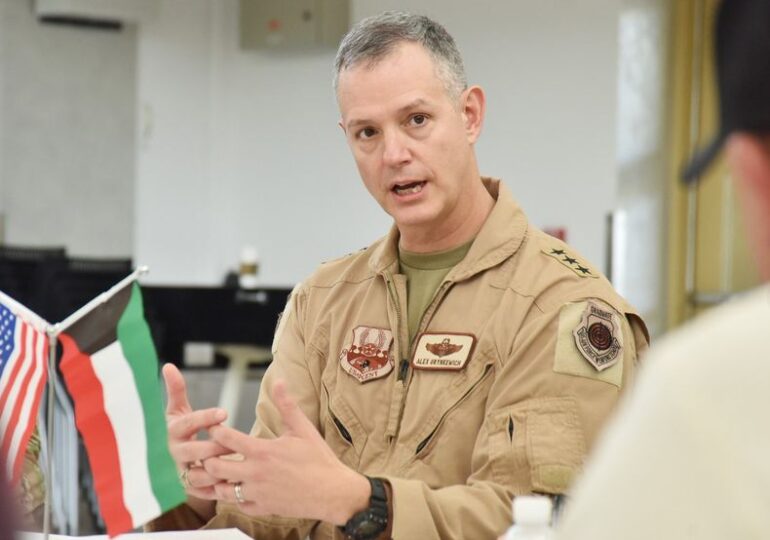
At the Warsaw Security Forum held last month, the supreme commander of Allied forces in Europe, American General Alexus Grynkewich, tried to reassure the allies. “My theory about victory is simple,” he said, explaining that NATO would block an initial attack, stop the enemy's advance if the offensive continued, and, if necessary, destroy its forces and military combat system.
The message was primarily addressed to the Kremlin but also to other potential adversaries of the Alliance.
According to analysts and Western officials cited by Reuters, NATO's air superiority would allow it to strike heavily at Russian military infrastructure, including strategic areas such as Murmansk, the Kaliningrad enclave, and Saint Petersburg.
However, there is a major vulnerability: these capabilities largely depend on the United States.
And when General Grynkewich was directly asked whether American troops would fight alongside European allies in the event of a Russian invasion, his answer did not provide the expected guarantee. “Ultimately, it is a political decision who sends troops and where,” said the NATO commander, noting, however, that American forces are currently deployed along the eastern flank.
Trump sends mixed signals
Uncertainty is fueled by the foreign policy of the Trump administration, as well as by the results of the US midterm elections held this week. The election is widely interpreted as an electoral sanction for the war against Iran, which has so far not produced the results sought by the American president.
However, the new Democratic lawmakers have very different positions regarding the United States' international role and support for allies.
American Ambassador to NATO, Matthew Whitaker, tried on Wednesday at the Berlin Security Conference to convey a message of continuity. “The foreign policy of the United States has not changed and I do not expect it to change following the midterm elections,” he said.
Whitaker insisted that Washington remains committed to the entire NATO treaty, including Article 5, which enshrines collective defense.
Not everyone is convinced, however. “Trump wants to leave his mark on world history in the last two years of his presidency. He wants to tear things down,” said Liis Mure, a former Estonian diplomat and defense official, to Estonian radio.
Concerns have increased after several decisions and initiatives from Washington. Trump welcomed the idea of a trilateral meeting with the leaders of Russia and China, initially proposed by Vladimir Putin in a phone call on October 9. He abruptly lifted sanctions on Russian diesel, and reports of attempts to resume European imports of Russian gas and Ukraine's acceptance of a peace agreement largely on Moscow's terms have caused new fears.
Movements of American troops in Europe have not helped either. The discreet withdrawal of some combat units from the Baltic states before the NATO summit in Ankara in July caused concern within the Alliance.
Subsequent announcements regarding the stationing of two armored units in Lithuania for the winter and the return of a US tank detachment to eastern Estonia brought some relief.
Russia tests the Alliance through sabotage and drones
Europeans' fears of a major military conflict are now the highest since the end of the Cold War. However, both General Grynkewich and officials from the states most exposed to the Russian threat have stated that there is no direct intelligence indicating the imminence of a conventional attack.
Europe is, however, facing an intensification of hybrid warfare actions attributed to Russia. Reuters mentions suspected cyberattacks, arson at the facilities of a major Estonian defense industry contractor, and incursions of drones and aircraft into NATO countries' airspace, incidents that have reached Leipzig airport in Germany.
Many analysts believe such actions aim to undermine public confidence in the Alliance's defense capability, cause divisions among allies, and prompt European governments to reduce support for Ukraine.
General Grynkewich says that the public presentation of some elements of NATO's military plans is precisely a way to counter these fears. “Given the scale of sabotage and arson activities, I think populations in Alliance countries are somewhat uneasy,” he explained.
“I want to assure the one billion citizens of the Alliance that we have the situation under control. We know what needs to be done. It will require all of us to work together, but we are prepared,” added the NATO commander.
France could radically change direction
Political problems are not limited to Washington. In France, next year's presidential elections could bring to power leaders who challenge NATO's role and Paris's current military commitments. Under President Emmanuel Macron, France has increasingly expressed its willingness to defend East European allies, including, in extreme situations, through its nuclear capabilities based on missiles launched from submarines and aircraft.
However, this orientation could change. Marine Le Pen, a representative of the far right and in a favorable position in polls for the presidential elections, reiterated in September that France should withdraw from NATO's integrated military command structures. She noted, however, that such a withdrawal should not take place as long as the war in Ukraine continues.
Jean-Luc Mélenchon, a representative of the radical left and possible presidential candidate, also does not support NATO.
A possible change of direction in Paris raises questions even about French military commitments in Estonia and Romania, as well as France's participation in a possible European military mission in Ukraine after a ceasefire.
Germany is rearming, but AfD could change the calculations
Germany is trying to accelerate its rearmament to be ready for a possible conflict by 2029. However, federal elections are also scheduled for that year, and the far-right party Alternative for Germany (AfD) leads in opinion polls and hopes to come to power.
AfD does not have a unified position regarding the defense of Europe. However, within the party, there are numerous representatives favorable to Russia's interests. Possible participation of the party in government could complicate or even derail German rearmament plans, Reuters warns.
In Poland, the situation is different. The main political forces are largely united regarding the threat posed by Russia, and Warsaw has been praised by allies for its military preparedness efforts. Even so, Polish authorities have not received sufficient clarifications regarding a possible permanent deployment of a few thousand additional American soldiers on Polish territory, an idea discussed since Trump's first term.
A new American attack on Iran would further complicate the situation
Besides the uncertainties related to Europe's defense, allies are also monitoring the possibility that Donald Trump might order a new series of large-scale military strikes against Iran. American forces in Europe have already intensified precautionary measures in case of an Iranian response.
Since Trump's return to the White House in January 2025, Washington's policy towards Iran has oscillated several times between negotiations and military confrontation. For European allies, this means that sudden shifts in the United States' direction could continue in the coming years.
G.P.