
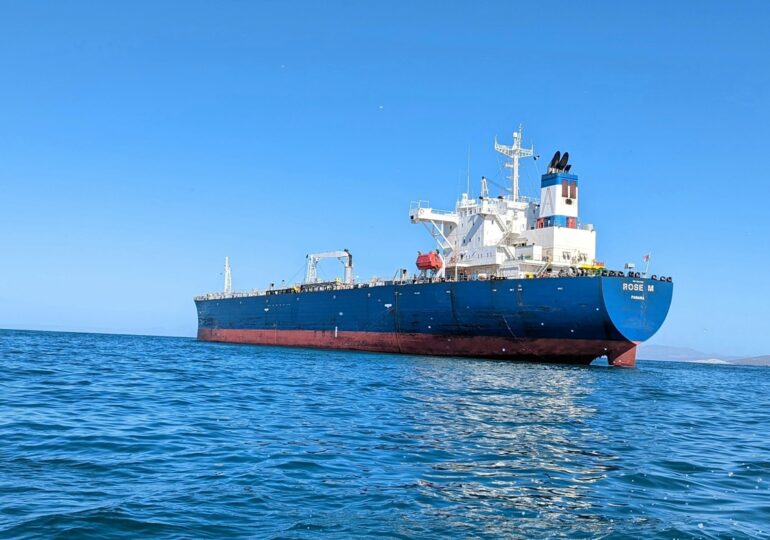
Iran’s oil exports have sharply declined in recent weeks due to the naval blockade imposed by the US, forcing Tehran to store its oil at sea on tankers as onshore storage capacities near their limit.
According to Reuters, American measures significantly hinder oil deliveries, especially to China, Iran’s main buyer.
Some Iranian vessels deliberately shut down their tracking systems to avoid monitoring, while US forces intercept and turn back tankers, making it difficult to accurately estimate the exported volumes.
Between April 13-25, only a few tankers carrying Iranian oil managed to leave the Gulf of Oman, as shown by data from the analysis company Vortexa.
The drop is drastic: exports have decreased by about 80% compared to the level of 23.4 million barrels recorded in March, according to data provided by the London Stock Exchange Group (LSEG).
Oil stranded at sea: dozens of full ships unable to deliver
The US Central Command states that the blockade prevents Iran from earning revenues from oil. American officials claim that 41 tankers, carrying a total of approximately 69 million barrels, cannot unload their cargo yet.
Meanwhile, Iran continues to load oil at the main terminal on Kharg Island, according to the firm TankerTrackers. Satellite images also indicate the presence of at least 10 tankers anchored near the port of Chah Bahar in the Gulf of Oman.
Onshore storage approaching limit
Iran's storage capacities are already utilized at about 60%, according to estimates from the Kpler platform. Out of the total of 86 million barrels available, around 50 million are already stored.
Under these circumstances, pressure on the Iranian oil sector is mounting, and consultancy firms warn that Tehran may be forced to reduce production in the coming months.
FGE NextantECA estimated as early as April 15 that capacity constraints could lead to production cuts starting from mid-June.
Major tensions in the global oil market
The Iranian export blockade comes in an extremely tense regional context. The US and Israel's war against Iran has effectively blocked the Strait of Hormuz, affecting oil flows from Saudi Arabia, the United Arab Emirates, Kuwait, and Iraq.
The impact is already visible in prices: since the conflict began on February 28, the price of Brent crude oil has increased by about $50 per barrel, according to the International Energy Agency.
In a surprising move, the US temporarily lifted some sanctions on Iranian energy exports last month, attempting to temper price increases. However, the naval blockade continues to severely limit Iran's ability to monetize its production.