
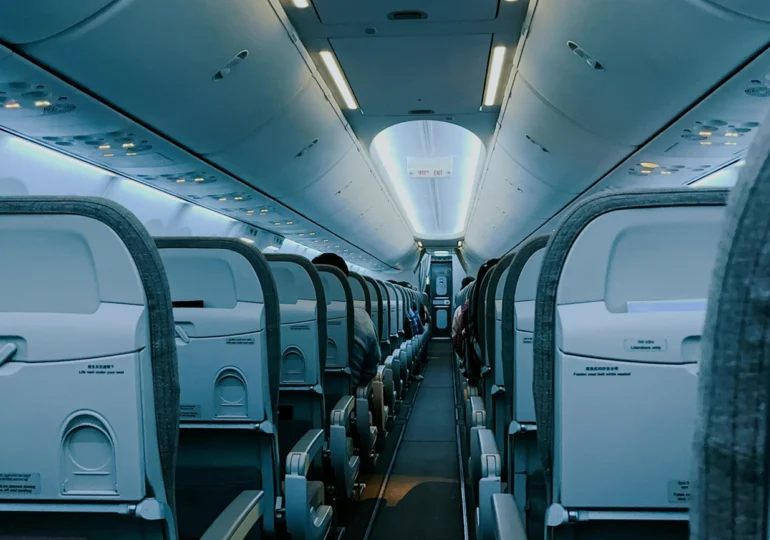
European airlines are reducing summer flight prices to counter the delay in bookings, as customers fear that a shortage of airplane fuel will affect their holiday plans.
Repeated warnings about the risk of an airplane fuel crisis, following the conflict in Iran that led to the closure of the Strait of Hormuz over two months ago, have not gone unnoticed. Carriers, travel agents, and analysts have noticed that people tend to postpone flight bookings out of fear of ticket price increases, writes Financial Times.
"We are living in an era similar to what we saw during the pandemic. There is still a lack of long-term visibility," Turkish Airlines President Murat Şeker told investors.
As a result, airlines have started to react. Since the first warnings in early April regarding the airplane fuel shortage, prices have dropped for flights to some of the most popular destinations in southern Europe, according to an FT analysis of the cheapest fares on the Google Flights platform.
Prices Have Dropped
Between April 9 - a day before European airports warned that the region could run out of airplane fuel - and May 6, airfares for a one-week trip in July have decreased for 27 out of the top 50 European flight routes to the Mediterranean Sea.
Prices have dropped by 10% or more for 15 routes, including from Heathrow to Nice, Manchester to Palma, and Gatwick to Barcelona. Flights between Milan and Madrid have become up to 44% cheaper.
On routes where prices have increased, the changes have been less significant. Price drops of 20% or more have been recorded on eight out of the top 50 routes, while only two routes have seen price increases of the same magnitude, the newspaper notes.
Europeans Are Fearful
As the peak summer season approaches, airlines and tour operators have been caught in a "confidence game" with consumers to convince them to make bookings, said Barclays analyst Andrew Lobbenberg.
While flights in the US are still booming, European travelers remain cautious. "People are hesitant to book, they book late, and airlines and tour operators need to stimulate them with lower prices," Lobbenberg explained.
Ipsos found that a fifth of UK consumers surveyed have switched from an international holiday to a domestic one for this year, while another fifth are considering it.
Trivago CEO Johannes Thomas told FT that the company has not noticed a decrease in bookings from the UK, but it is worth noting that "in times of crisis... people tend to stick more to domestic flights."
Like other airline executives trying to secure bookings, he warned that waiting could lead to higher costs. "People should take the risk, as it's better to book now, because by the time summer arrives, things may become much more expensive than they are now," he said.
People Don't Know What Will Happen
Prices on many top European routes have been reduced, even though some long-haul operators have warned of price increases due to rising fuel costs and reduced schedules.
Airlines have already cut two million seats globally from May schedules, after kerosene prices doubled, with some capacity reductions made to maintain profits and others due to decreased demand.
"There is an element of short-term uncertainty, people don't know what will happen, will I lose my job? Can't I fuel my car? There is a level of hesitation," Wizz Air CEO József Varadi said. "You can stimulate demand, but at a cost... in the short term, you actually see a decrease in prices."
Like other airline executives trying to secure bookings, he warned that waiting could lead to higher costs. "People should take the risk, as it's better to book now, because by the time summer arrives, things may become much more expensive than they are now," he said.
EasyJet, a company whose growth depends on its expanding holiday division, has also tried to calm consumer concerns by promising this month not to add kerosene costs or other surcharges to already booked packages.
Last month, the low-cost airline observed that people are booking later, warning that higher fuel prices could impact profitability. "The booking window has shortened, reducing visibility, but what we see is strong demand in the month of travel," Jarvis said at the time.
British Airways also promised this week that flights will not become more expensive after payments are made.
The Sky Won't Remain Empty
Even though Europe is less exposed than Asia to kerosene imports from the Gulf, the continent is supplied by the US, and supplies are likely insufficient if the Strait of Hormuz remains closed for months, FT notes.
European governments have tried to alleviate fears. The UK pledged last weekend to change takeoff rules to prevent airlines from operating empty planes and to provide greater passenger safety.
"Currently, we do not see disruptions in airplane fuel supplies. But if that happens, we will support you," Transport Secretary Heidi Alexander said.
Barclays' Andrew Lobbenberg estimated that between 5 and 15% of flights could be canceled during the summer, with this degree largely depending on the full reopening of the strait.
Passengers who have already purchased tickets will likely be transferred to non-canceled flights, while prices for remaining seats would increase significantly for those who have not booked yet, he said. Ultimately, the vast majority of flights will continue to operate, he anticipates: "The sky won't remain empty."
T.D.