


Romanians enter the summer of 2026 with two major themes dominating the public agenda: corruption and economic pressure. Almost 28% of respondents in a survey say that the country’s main issue is corruption, while almost half believe that the priority for the next six months should be increasing salaries and pensions.
The Barometer, conducted by INSCOP Research between May 11-14, 2026, also reveals strong divides between party electorates and different social categories, from economic priorities to the perception of Romania’s main issues.
Corruption returns to the top of major issues
When asked about Romania's main issue at the moment, 27.8% of respondents indicated corruption. Far behind are lack of well-paid jobs (14.9%), political instability (13.4%), and inflation or the cost of living (10.7%).
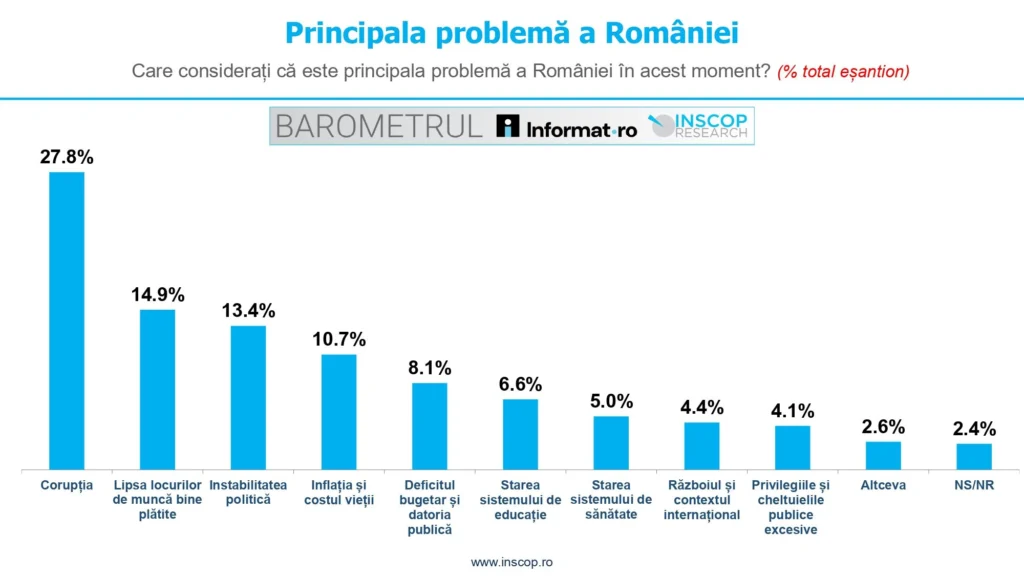
Budget deficit and public debt are mentioned by 8.1% of respondents, while education and health together gather just over 11 percent.
War and the international context are considered the main issue by only 4.4% of those surveyed.
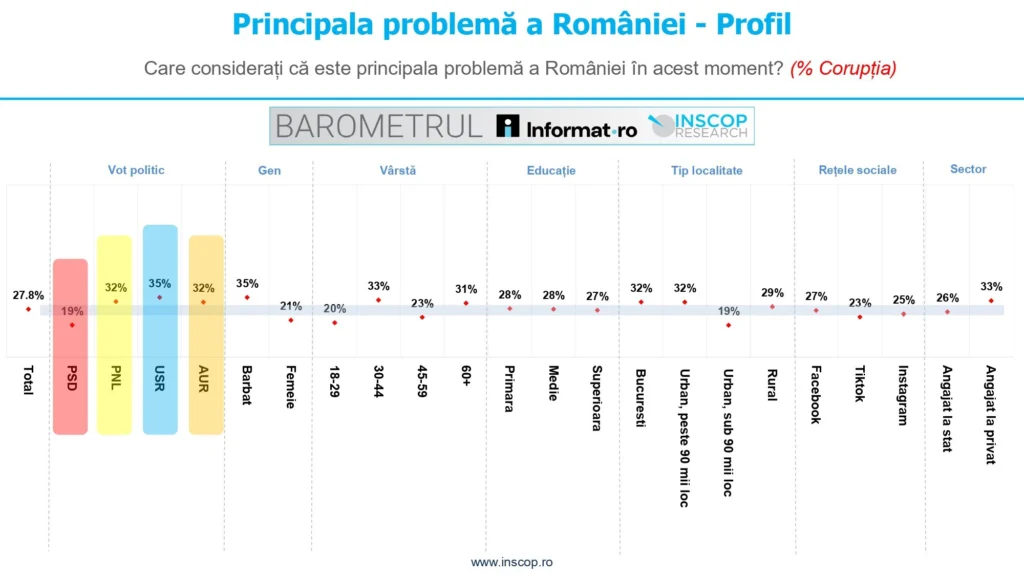
The survey data show significant differences between party electorates. The corruption issue is especially invoked by PNL, USR, and AUR voters, as well as by men, individuals aged between 30 and 44, and residents of Bucharest or major cities.
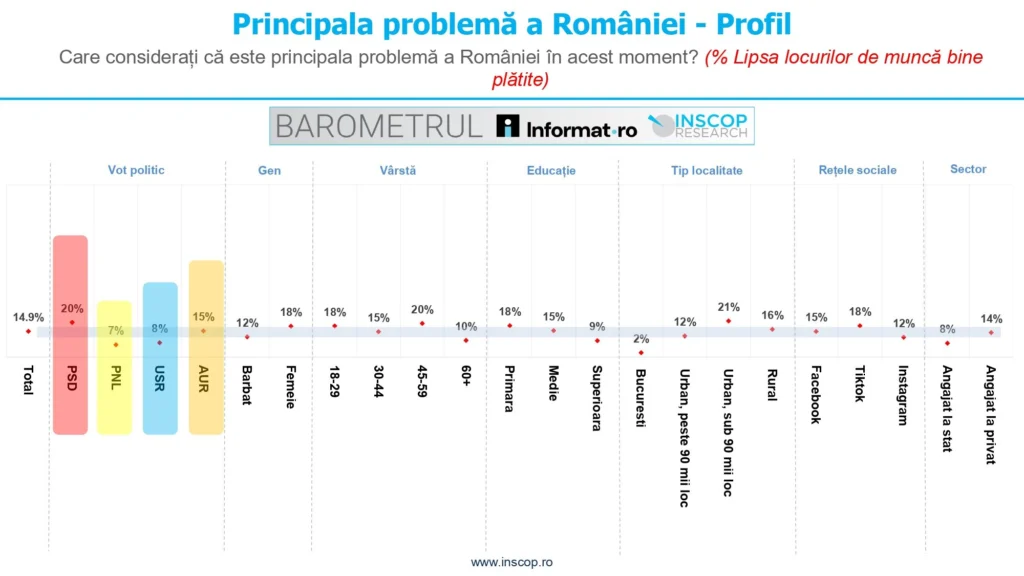
On the other hand, the lack of well-paid jobs is more frequently indicated by PSD voters, individuals aged between 45 and 59, and residents of small urban areas.
"Moralizing" Electorate, Yet Dependent on Economic Protection
INSCOP Research Director, Remus Ștefureac, says the results indicate an accumulation of anxieties related to systemic and economic insecurity.
"The study indicates a concentration of public anxiety on issues related to systemic insecurity. The fact that the corruption theme coexists with strong pressure for salary and pension increases shows the emergence of an electorate simultaneously moralizing and dependent on the state's economic protection - a combination that favors populist discourses promising both 'cleanliness' and rapid redistribution," says Remus Ștefureac.
He argues that the differences between party electorates describe the existence of distinct socio-cultural "Romanias."
"The divides among party voters suggest not only electoral differences but also the existence of distinct socio-cultural 'Romanias': one oriented towards administrative efficiency and European integration, the other focused on immediate economic security and distrust of institutional elites," adds the INSCOP Research Director.
Salaries and Pensions, Dominant Priority
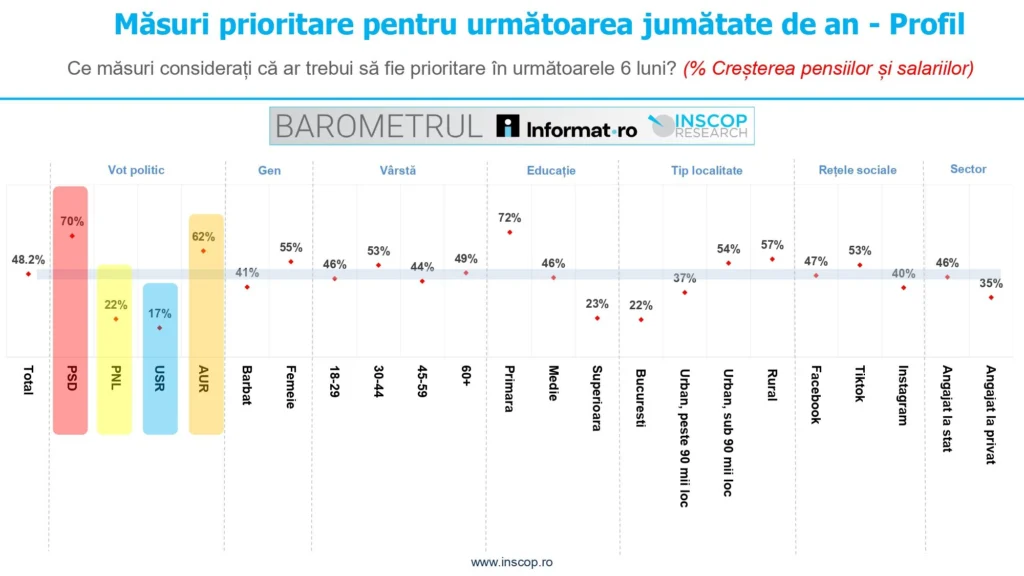
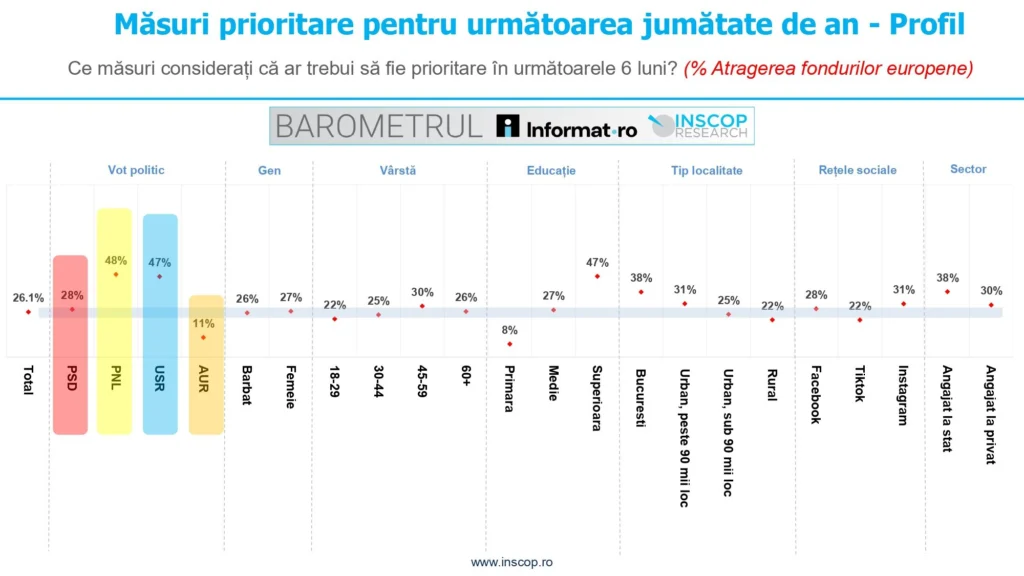
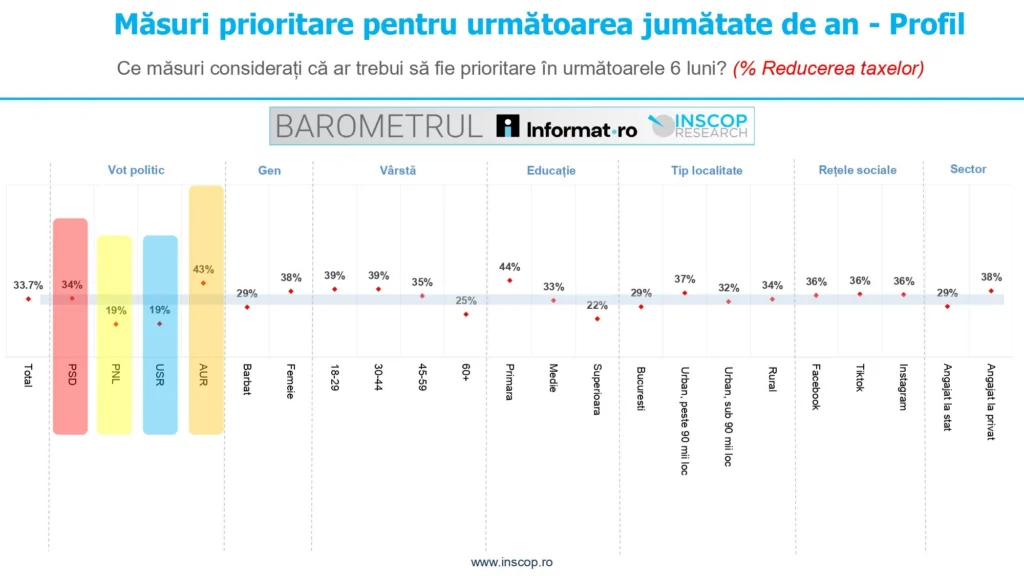
When asked about the measures that should be prioritized in the next six months, 48.2% of Romanians indicated increasing salaries and pensions. Tax reduction is mentioned by 33.7% of respondents, while attracting European funds by 26.1%.
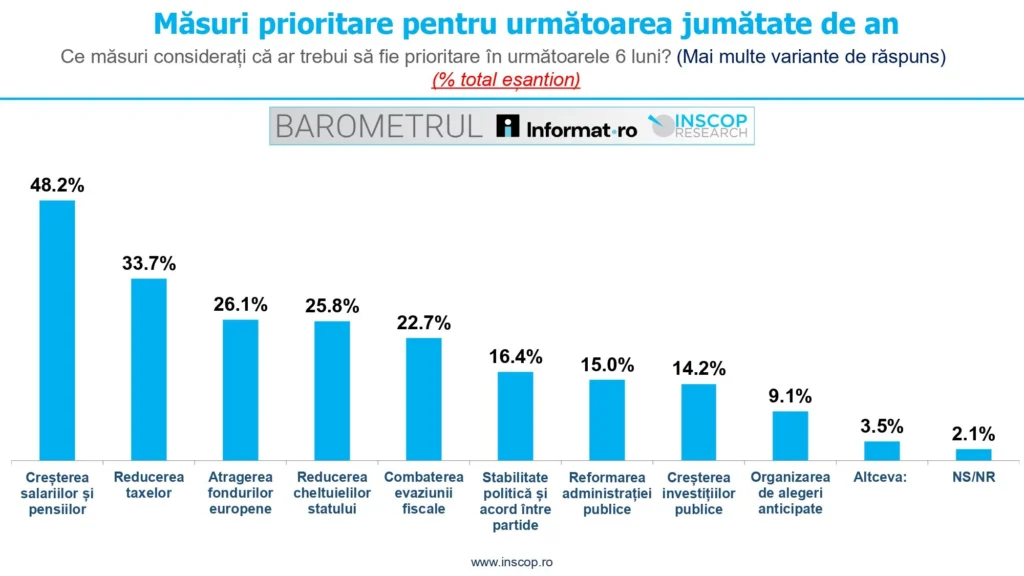
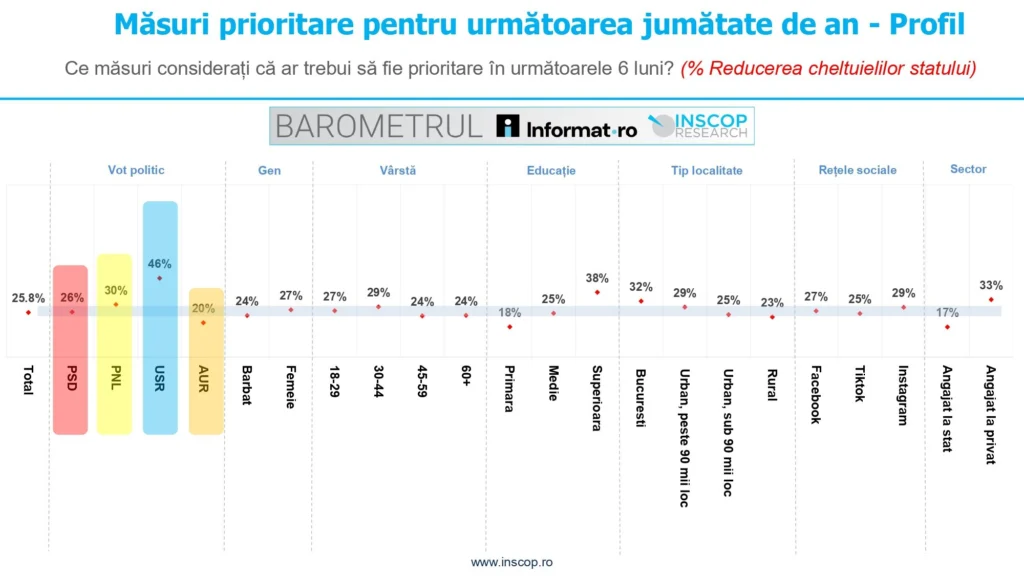
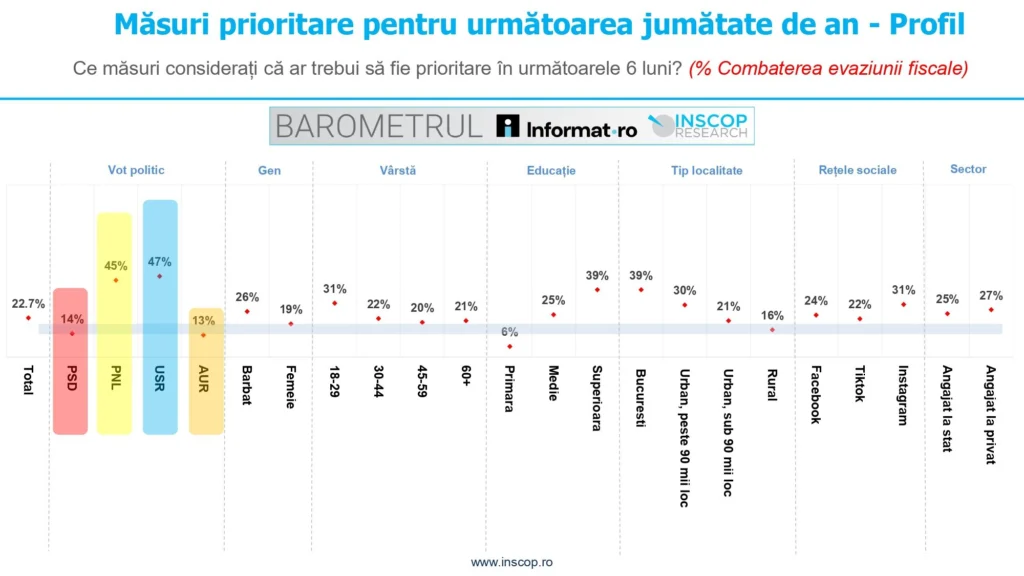
Reducing state expenses is considered a priority by 25.8% of respondents, while combating tax evasion by 22.7%. Political stability and agreement between parties are invoked by 16.4% of those surveyed.
The increase in salaries and pensions is supported especially by PSD and AUR voters, women, individuals with primary education, and residents of rural areas or small towns.
European Funds and State Expense Reduction, Priorities for PNL and USR Voters
The survey also reveals a clear difference in priorities between party electorates. PNL and USR voters are the ones who most frequently indicate attracting European funds as a priority measure for the next six months.
The same categories, in a proportion higher than the average, believe that the state should reduce expenses and combat tax evasion more firmly.
Tax reduction is supported especially by AUR voters, women, and individuals under 45 years old.
How the Survey Was Conducted
The Informat.ro Barometer – INSCOP Research was conducted between May 11-14, 2026, through telephone interviews (CATI), on a sample of 1,100 individuals. The maximum admitted error is ±3%, with a confidence level of 95%.