
Millions of people are suffering from the Middle East conflict that drives up bills and disrupts energy markets. But a perverse effect of the war is that some sectors of the economy are doing well. That’s how the global financial system works: some lose, others gain.
The conflict in Iran puts pressure on many economic sectors. But a group of American energy companies could benefit from the conflict. „American exporters of liquefied natural gas (LNG) are clear winners in the short term,” said Tom Purdie, chief LNG analyst at Energy Aspect, quoted by Sky News.
What's the explanation? The conflict has created a gap in the market, and these companies have something special that puts them in an excellent position to cover part of this deficit.
Qatar has shut off the tap and created a huge gap
The Ras Laffan plant, located at the northeastern tip of Qatar, usually produces a fifth of the world's LNG - the gas is cooled to facilitate transport by ships, in this case through the Strait of Hormuz.
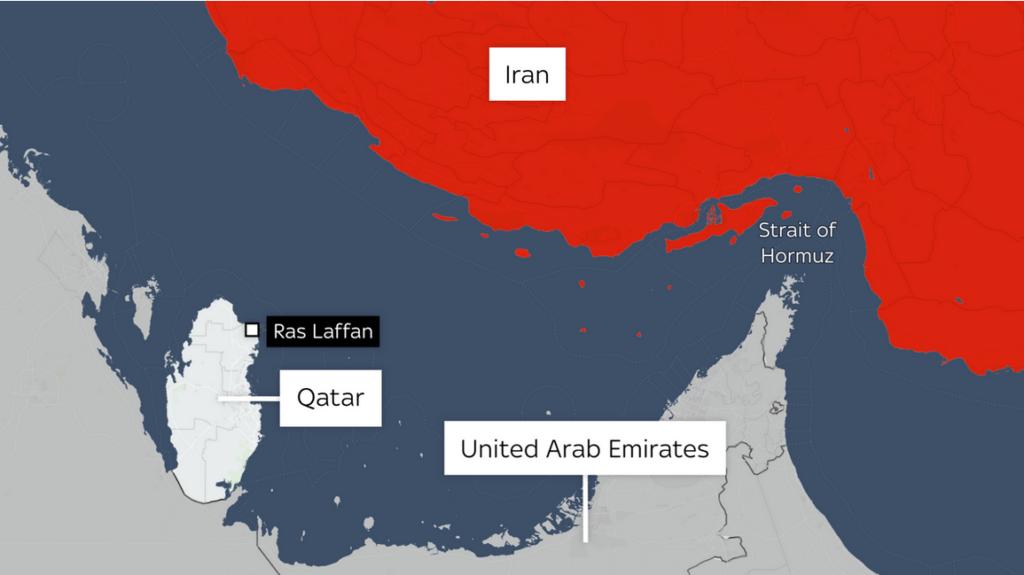
But Qatar has stated that it was forced to shut down the plant due to Iran's airstrikes and maritime transport blockades.
And this is where the U.S. comes in: at this moment, America is the largest LNG exporter in the world, thanks to the recent shale gas revolution.
But what truly sets them apart in this context is the relatively large proportion (10% to 15%) of production not already tied to long-term contracts. This allows companies to sell LNG on the spot market to the highest bidder, and prices soar, rising by 50% in European and Asian markets in the first week of the conflict.
Qatar has stated that its plant will likely remain closed for four weeks, even if the conflict were to end now. This gives the American LNG sector the opportunity to target unexpected profits of $4 billion in the first month of the conflict, according to an estimate by Energy Flux.
"The United States is the ideal source for additional supply. Therefore, LNG exporters, their customers, the customers who take the goods from them and then sell them on end-use markets, these players will be among those who will reap unexpected profits from the war in Iran," explained Seb Kennedy, founder and analyst at Energy Flux.
"This always happens when there is a supply shock; companies that control the additional supply are always rewarded by the market," he added.
Key Players
This growth seems to already boost market valuations of some key players.
Venture Global sells substantial quantities of gas outside traditional contracts and last week declared itself "ready" to contribute to maintaining market supplies.
Its stock price rose by 28% in the first week of the conflict (although it was also boosted by a court ruling on an issue related to its ability to sell spot cargoes).
Cheniere Energy, a smaller player in the spot market, still enjoyed an 8% increase, although it stated that it had already sold almost all of its production for 2026.
Who Gains the Most
However, it must be emphasized that the same flexibility that allows these players to sell at high prices at this time operates in both directions: when prices fall, these companies incur losses.
At this point, American LNG exporters are not even close to the level needed to cover the entire gap left by Qatar.
Meanwhile, LNG exporters from other countries will step in and also benefit.
In the long term, "winners" are countries that can then supply LNG with unobstructed maritime transport routes, said Mathieu Utting, principal analyst in natural gas and LNG at Sky News: "Countries like Australia, Canada, Peru, the west coast of Mexico, Argentina are the ones that benefit the most overall, as they have LNG that stays in the Pacific basin and does not pass through blockage points."
T.D.