
Romania’s budget deficit has been reduced to less than half in the first four months of 2026 compared to the same period last year, while investments supported by European funds and the National Recovery and Resilience Plan (PNRR) continued to grow rapidly, according to data published on Tuesday by the Ministry of Finance.
In the first four months of the year, the budget deficit reached 23.95 billion lei, equivalent to 1.17% of GDP, compared to 55.97 billion lei and 2.92% of GDP in the same period in 2025. The Ministry of Finance claims that this is one of the most significant fiscal adjustments in recent years.
The ministry led by Alexandru Nazare states that the deficit reduction was achieved without cutting public investments, with European funds becoming the main driver supporting the economy in a period marked by high inflation and weaker domestic consumption.
Nazare: Romania enters a new fiscal stage
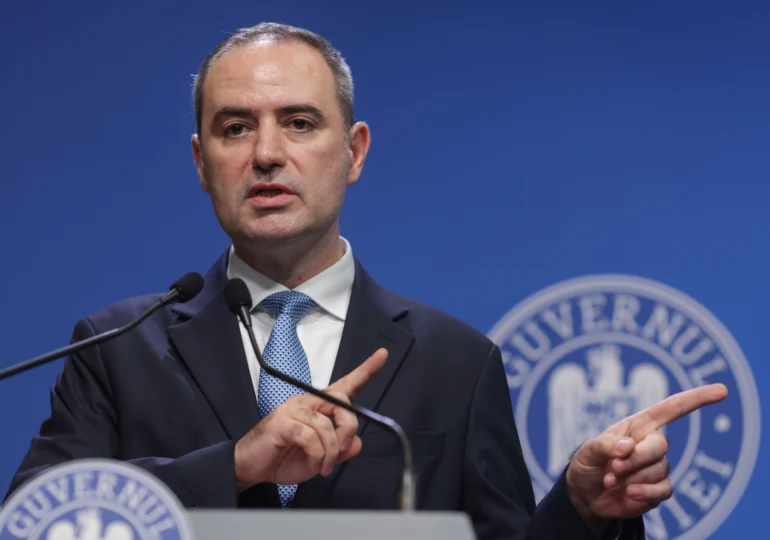
The Minister of Finance, Alexandru Nazare, states that the budget execution after the first four months of the year indicates a rapid reduction of the deficit and an important change in public finance management.
"The four-month execution confirms Romania's entry into a clear fiscal consolidation trajectory, one of the most substantial budget corrections in the European Union during this period," said the Minister of Finance.
However, Nazare warns that the situation remains fragile and that strict control of expenses and accelerating the absorption of European funds are still needed.
"The deficit reduction was achieved without blocking public investments, which is essential for maintaining economic growth and protecting Romania's strategic projects," the minister said.
According to him, the target for the entire year 2026 remains a deficit of 6.2% of GDP in cash terms, in line with commitments made at the European level.
The Ministry of Finance states that the budget execution in 2026 indicates "a significant change in fiscal trajectory," as budget pressures are higher than they were two or three years ago.
Officials point out that the budget deficit has decreased from 3.24% of GDP in the first four months of 2024 to 2.92% in 2025 and to 1.17% in 2026. The ministry claims that this year's budget execution is even below the level recorded in 2023, when the annual deficit was 5.76% of GDP.
Public investments remain at a record level
The Ministry of Finance argues that the fiscal adjustment is taking place in a challenging context, marked by higher financing costs and the pressure to accelerate projects under the PNRR. At the same time, the government is trying to maintain a high level of public investments.
In the first four months of 2026, public investments exceeded 31 billion lei, with approximately three-quarters of the amount coming from European funds and the PNRR.
Payments for projects funded by European funds and the PNRR have increased by over 34% compared to the same period last year.
Finance officials state that this year's budget execution marks an economic model shift, "from a model based on consumption and high deficits to one supported more by European investments and fiscal discipline."
State revenues have increased significantly
Total revenues to the budget reached 223.83 billion lei, up by 12% compared to the first four months of 2025. The largest increases were recorded in VAT, income tax, and social contributions.
VAT receipts increased by 22.4%, income tax and revenue by 21.8%, and social contributions by 8.8%.
At the same time, total state expenditures decreased by 3.2% compared to the same period last year. As a percentage of GDP, these decreased from 13.4% to 12.1%.
Personnel expenses decreased by nearly 2 billion lei compared to the first four months of 2025, according to the budget execution.
The challenge for the coming years: a smaller deficit and rapid absorption from the PNRR
The Ministry of Finance warns that the main challenge for the period 2026-2027 will be to maintain the balance between reducing the deficit, controlling financing costs, and swiftly completing European projects before the PNRR deadlines expire.
Officials state that maintaining investor confidence and continuing the absorption of European funds will be essential for reducing Romania's economic vulnerabilities.