
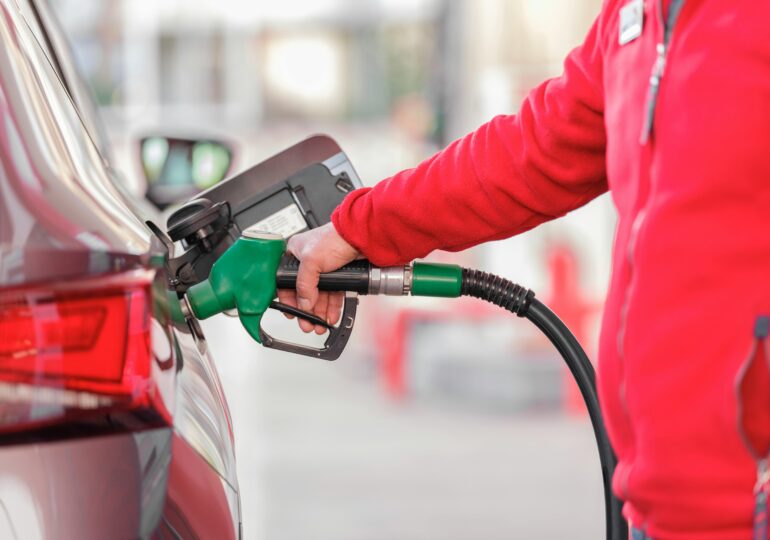
The government and oil companies have reached an agreement for a 50 bani reduction per liter of fuel, in an attempt to stop the wave of price increases in recent weeks, as announced by Profit.ro.
The measure primarily targets diesel, where price increases have been most pronounced, and Romania is a net importer.
How the reduction will work
The scheme is similar to the one applied during the pandemic: the 50 bani per liter reduction will be divided between the state and oil companies.
The state will cover 25 bani, while the remaining 25 bani will be covered by gas stations through a voluntary contribution mechanism.
At the same time, the government is considering temporarily abandoning the idea of reducing the diesel excise tax, relying on this mixed system to quickly stabilize prices.
What happens if diesel exceeds 10 lei again
Authorities have also prepared a contingency plan.
If the price of diesel exceeds the 10 lei per liter threshold again, the government will intervene by reducing excise taxes. The initial plan even envisaged a gradual reduction of excise taxes, up to 25% in total.
The reductions are expected to be applied automatically, depending on the evolution of oil prices and international reference prices.
Where the money for the measure comes from
The part covered by the state is expected to be funded from two main sources:
- additional taxation of oil producers in Romania, especially OMV Petrom
- additional VAT revenues generated by recent fuel price hikes
At this moment, the government excludes a VAT reduction due to the risk of breaching European rules.
How prices and adjustments are calculated
For potential future adjustments, authorities will also consider Platts quotations - an international benchmark used in the wholesale fuel market, reflecting global supply and demand.
Updates could be made every 10 days, and the measure is currently only planned for the second quarter.
Government's message: the state must bear part of the crisis
Minister of Energy, Bogdan Ivan, says it is necessary for the state to also contribute to reducing the pressure on the population.
He states that "it is not normal" for only consumers and companies to bear the impact of the energy crisis and that authorities must intervene using the additional revenues collected in the budget.
Prime Minister Ilie Bolojan announced that a final package of measures is expected to be adopted in the coming days.
In the absence of a stable agreement, reducing excise taxes remains the most likely option to keep pump prices under control.