
Exploiting the gas resources in the Black Sea presents Romania with a historic opportunity, but success will not depend on the quantity of gas extracted, but on how the state will use the revenues obtained. Dumitru Chisăliță, the President of the Intelligent Energy Association (AEI), warns that numerous countries rich in natural resources have remained vulnerable precisely because they have failed to turn this wealth into economic development.
In his opinion, Romania has the chance to become the largest natural gas producer in the European Union, which would reduce imports, improve the trade balance, and bring significant revenues to the budget.
"Resources do not automatically create prosperity. The difference is made by institutions, investments, and the state's ability to transform natural advantages into economic and technological benefits," says Dumitru Chisăliță, according to Digi24.
Gas should finance the modernization of the economy
The specialist argues that Romania should not view gas exploitation as an end in itself, but as a source of funding for the modernization of the economy.
Among the priorities he indicates are the development of energy infrastructure, expansion of nuclear capacities, investments in renewable energy, digitization of networks, and support for a new industrial policy.
At the same time, Chisăliță criticizes the public debate on energy, which he considers to be stuck in artificial oppositions, such as "gas or renewables," "nuclear or solar," or "state or market."
According to him, a modern energy system needs all these components, each playing a different role: nuclear energy for stability, hydropower for flexibility, renewables for cost and emission reduction, and natural gas as a transitional source and system balancer.
Energy transition is also an economic competition
The President of AEI says that energy transition is often presented only as an obligation imposed by the European Union for emission reduction when, in reality, it represents a global industrial competition.
In his view, the countries that will benefit will not be the ones buying green technologies, but those designing, producing, and exporting them.
He warns that Romania would quickly lose the advantage offered by the Black Sea gas if it limited itself to exporting raw materials and importing the technologies necessary for its own modernization.
Instead, he believes that the revenues should be directed towards developing a competitive national industry capable of producing energy equipment, components for smart grids, batteries, nuclear technologies, and software solutions for the energy sector.
Education and research, conditions for resource exploitation
Chisăliță states that economic patriotism does not mean artificially protecting inefficient companies or rejecting foreign investments, but making substantial investments in education, technical universities, research, and innovation.
In his opinion, Romania must create conditions for Romanian firms and specialists to participate in developing new technologies, not just buying them.
Why This Is an Important Moment for Romania
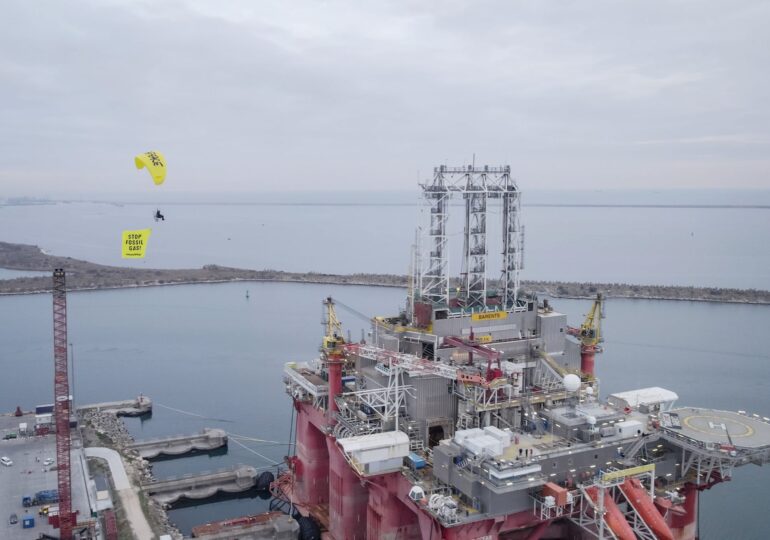
The debate takes place as Romania approaches the start of exploiting the Neptun Deep offshore field, the largest natural gas project in the Black Sea. The project is developed by OMV Petrom and Romgaz, with the first gas deliveries estimated for 2027.
According to the estimates of the companies involved, the field contains approximately 100 billion cubic meters of natural gas, enough to cover Romania's domestic consumption for several years and to turn the country into one of the main gas producers in the European Union. At the same time, the project is seen as a key element in reducing the region's dependence on gas imports and strengthening energy security in Southeast Europe.
Energy, an Instrument of Regional Influence
The specialist believes that exploiting resources in the Black Sea also has an important geopolitical dimension.
He believes that Romania can become one of the main providers of energy security in the Black Sea region and can play a significant role in supporting Moldova, Balkan integration, and the reconstruction of Ukraine's energy infrastructure.
At the same time, he argues that EU membership does not limit Romania's interests but provides the necessary tools to promote them more effectively.
In conclusion, Dumitru Chisăliță states that Romania is in a rare moment, having significant natural resources, a strategic geographic position, and access to European funding simultaneously. In his opinion, the challenge is not the lack of resources but the existence of a political vision capable of turning natural advantages into a long-term development project.