
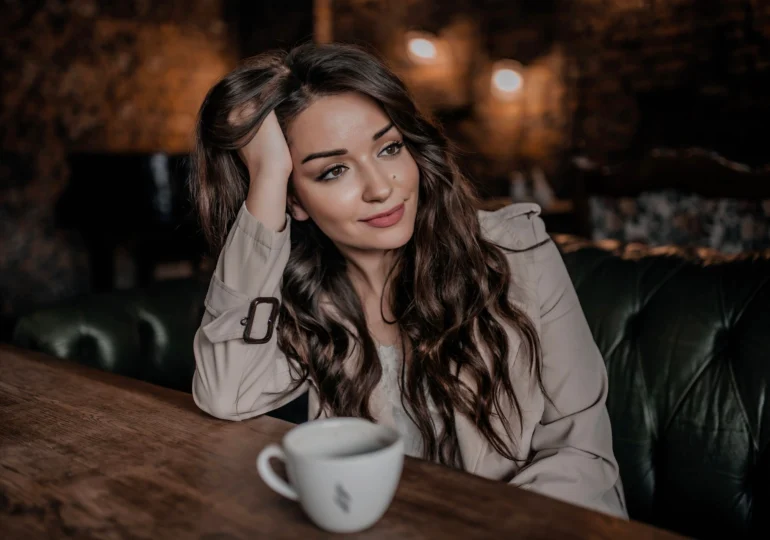
Frozen pizza, a lit candle, a book, and the quiet of one’s own apartment. For millions of people, such a Friday evening would seem sad. However, for an increasing number of women who share on social media how their daily lives look like, it is exactly the lifestyle they desire. They don’t present it as a withdrawal from the world but as a conscious choice based on independence and tranquility.
The phenomenon has attracted millions of views on TikTok and Instagram and sparked debates about the difference between loneliness and choosing to spend time with oneself. According to an extensive article published by BBC, more and more content creators are trying to change the perception of living without a partner and a close circle of friends.
"I Had No Friends and I Decided to Say That"
One of the most well-known creators in this niche is Lana Isa, a sales manager in the software industry, based in Toronto.
Her videos, watched by hundreds of thousands of people, capture seemingly mundane things: evenings spent at home, solo outings to a restaurant, nighttime walks, or reading sessions by a lake.
In a clip that has gathered approximately seven million views on TikTok, she simply describes an ordinary evening: prepares dinner, lights a candle, and eats in front of the TV. The message on the screen reads: "You're a childless girl, alone, without friends, and living alone. That's how you spend your Friday evening."
Isa says this was not a marketing strategy but the reality she lived for a few years after changing several high schools, going through pandemic isolation, and moving to another corner of the country after a breakup.
"People don't really talk about not having friends. It is still considered something shameful or taboo," she says.
After she started openly discussing this experience, her TikTok community grew from about 2,000 to over 175,000 followers in just eight months.
From Empathy to Criticism
Many users have said they identified with her experience and that, for the first time, they felt like someone was openly talking about a situation they were going through as well.
However, criticisms have also emerged.
Some of these creators have been labeled as "loneliness influencers," accused of romanticizing isolation or promoting a form of comfortable resignation instead of social relationships.
They, however, reject this interpretation.
In their videos, they show solo outings to cafes, spontaneous trips, attending parties without a companion, or simply quiet evenings at home. The message is not that friends don't matter, but that time spent alone should not automatically be seen as a failure.
"Being Alone Doesn't Mean You're Lonely"
Devon Noehring, a content creator from Phoenix and a self-proclaimed introvert, says she is frustrated by the idea that any person spending the weekend at home is automatically considered unhappy.
"It's the exact opposite of our videos' intention. I hate the idea that if you're alone, it automatically means you're lonely," she asserts.
Although she has close friends, Noehring recounts that for years she felt ashamed because of social anxiety and being a reserved person. Only after talking about it online did she discover a community of people going through similar experiences.
"When I'm alone, I feel the freest and most myself. That's how I recharge," she says.
Experts: There Is a Difference Between Solitude and Isolation
Researchers interviewed by the BBC, however, point out that choosing to spend time alone should not be confused with prolonged social isolation.
Melody Ding, an epidemiologist and researcher in the field of social connections and loneliness at the University of Sydney, says it is important to eliminate the stigma associated with loneliness and to distinguish between those who choose this lifestyle and those who end up isolated against their will.
"Everyone feels lonely at some point, but some people are not comfortable admitting it," she explains.
At the same time, she warns that humans are inherently social beings, and long-term lack of close relationships can affect both mental and physical health. "We cope better when we have people around us," the researcher says.
An Antidote to the "Perfect Life" on the Internet
Another explanation for the success of these accounts lies in the changing landscape of social networks.
Anne Oeldorf-Hirsch, an online communities expert at the University of Connecticut, says the audience seems less interested in perfect images and spectacular lifestyles promoted for years by influencers.
Instead, people seek authentic content and experiences they can relate to. "We are moving towards influencers who show their lives as they are. Ultimately, we just want to find people we can identify with," the researcher says.
None of the women interviewed by the BBC, however, say they want to remain friendless forever. On the contrary, they hope to form new relationships in the future, but argue that the lack of them should not be seen as a personal failure.
"I believe all this material actually conveys one thing: find your own path. There shouldn't be a single life recipe for everyone," says SJ Hoadley, one of the interviewed content creators.
G.P.