
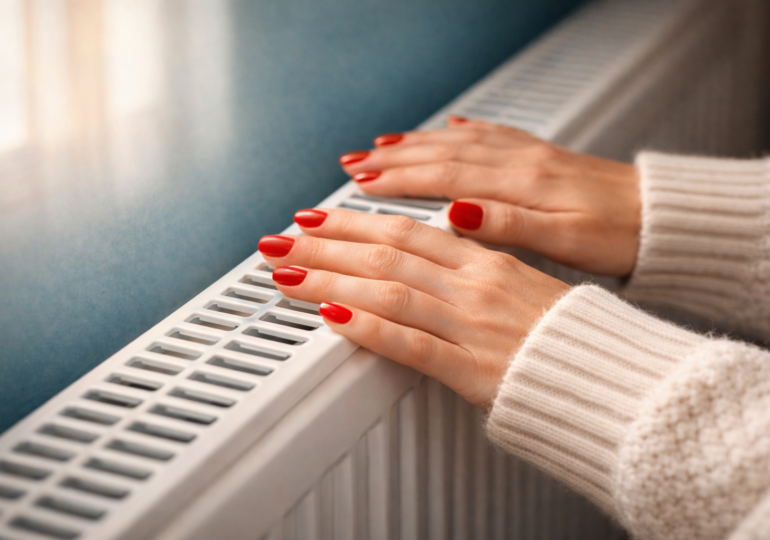
We are already in October, but the temperatures are still mild enough to delay turning on the radiators. Not for long, though. In Bucharest, for example, Termoenergetica has already started testing for the heating season from October 1st. The same goes for other areas in the country.
However, this is the right time for a few simple checks. A radiator that doesn’t heat properly, a boiler that hasn’t been turned on for a few months, or a poorly set thermostat are things better taken care of before the cold sets in.
Moreover, how we use heating also matters for the bill. Some seemingly insignificant habits – from the temperature we choose to how we ventilate the house or where we dry clothes – can lead to higher consumption than necessary.
Here’s what you should do before the cold season, depending on the heating system you have:
### If you have your own boiler
The boiler hasn’t been used to heat the house for a few months, so it’s worth starting it for a test before you really need it.
Before the cold season, manufacturers recommend checking the boiler and installation, including pressure, any water leaks, radiators, and the thermostat. You can also test the heating to see if all radiators heat up.
The correct pressure should be checked in the manual of the boiler model you have. For many boilers, the value is around 1-1.5 bars when the installation is cold. If the pressure drops repeatedly or the boiler displays errors, the issue should be checked by a specialist.
It’s also worth checking the date of the last periodic technical inspection. According to [ISCIR](https://iscir.ro/intrebari-frecvente), this should be done every two years by an authorized company.
Separately, gas installations have their own mandatory checks: the periodic technical check is done every two years at most, and the technical revision every ten years or in other situations provided by regulations. Checking the boiler and gas installation are not the same thing.
If after turning on the heating, a radiator is warm at the bottom but remains cold at the top, there may be air in the installation. Radiators can be bled, following the installation and manufacturer’s instructions. After bleeding, the boiler pressure should be checked again, as it may drop.
### If you are connected to the centralized heating system
In the case of centralized heating, things are a bit different. You don’t control when the system is turned on, but you can check the installation in your apartment in advance.
Check the radiators, valves, and pipes around them. If you notice water stains or have had work done on the installation in recent months, any issues should be resolved before the building’s installation is filled.
In Bucharest, [Termoenergetica started loading the installations with water from October 1st](https://spotmedia.ro/stiri/social/de-la-1-octombrie-incep-in-bucuresti-probele-pentru-sezonul-de-incalzire) and pressure tests, and asked property associations to ensure that the interior installations are in working order and that the work is completed.
After turning on the heating, check if all radiators heat up evenly. If one remains cold or is only partially warm, first try to find out if the issue is only in your apartment or also in neighboring ones. In a building, the cause may be in the common installation, so it is advisable to notify the administrator or the property association, rather than intervene on the installation yourself.
### What can we do to consume less
Regardless of whether you have your own boiler or centralized heating, how you use radiators and the temperature you maintain in the house can influence consumption.
– **Keep radiators free** – A radiator covered by a thick curtain, hidden behind furniture, or used for drying clothes does not efficiently distribute heat in the room. [E.ON recommends](https://www.eon.ro/statie-energie/ghid-energie/cum-sa-economisesti-energie-in-fiecare-camera-din-casa-ta) that radiators should not be covered by curtains and should not be used for drying clothes. The warm air must be able to circulate freely in the room.
– **One degree can make a difference** – Not all rooms need to be heated to the same temperature, and we don’t need the same temperature throughout the day. According to E.ON, lowering the temperature by one degree in the house can reduce heating energy consumption by about 6-7%.
Temperature can also be adjusted according to the room. In a living room where we spend most of the day, more heat may be needed than in a bedroom or a room we rarely use.
– **Reduce the temperature when you leave** – If you leave for a few hours, there is no need to maintain the same temperature in the house as when you are at home. E.ON recommends reducing the temperature when the house is empty. For those with their own boiler, a programmable thermostat can do this automatically and start heating the house again before the owners return.
In the case of a longer absence, especially in very cold periods, heating should not be turned off without considering the risk of freezing the installation.
– **Ventilate briefly, with windows wide open** – Even in winter, we need fresh air in the house, but how we ventilate matters. Instead of keeping the window slightly open for a long time, E.ON recommends airing for about 5-10 minutes with windows wide open. This way, the air in the room changes quickly without allowing the walls and objects in the house to cool down too much.
G.P.