

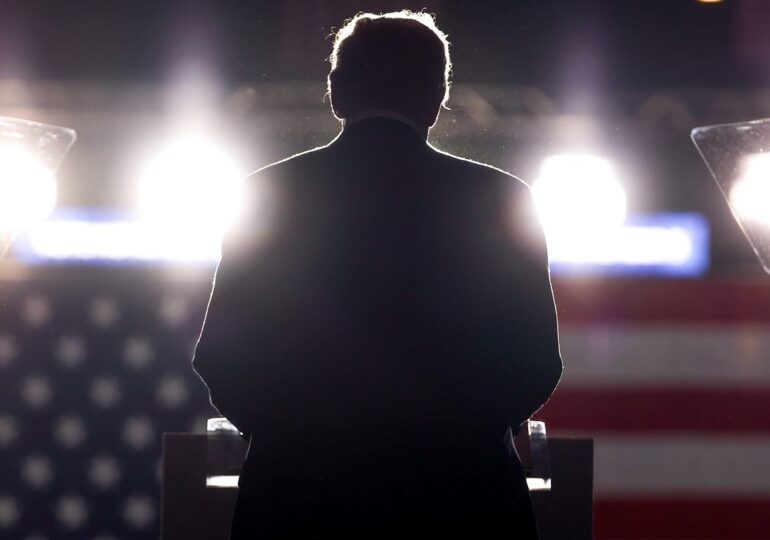
The President of the United States, Donald Trump, is trying to apply the unpredictable style that has defined his career as a businessman and political leader in a much more complex context: leading a war.
An analysis by CNN shows that this approach is being tested to the maximum by the conflict with Iran.
Trump's supporters appreciate his ability to break rules and shatter structures, but at the same time, the American leader often avoids firm positions, preferring to maintain his freedom of maneuver. Even though he does not always provide details or historical context, his style conveys a sense of certainty.
Such a style has yielded results in the past - including in the American raid in January, when Venezuelan dictator Nicolás Maduro was captured and transferred to a prison in New York. However, in the case of Iran, Trump fails to convey the same clarity and gravity specific to a leader in wartime.
Overlapping Crises: Military Front, Economy, and Internal Politics
Trump is facing multiple simultaneous crises. Tehran's strong resistance risks leading to a prolonged conflict, while the global economy is affected by the rise in oil prices after the blockade of the Strait of Hormuz.
At the same time, domestically, the president is dealing with political tensions, including the resignation of a key official from the MAGA area.
According to CNN's analysis, Trump was taken by surprise by the intensity of Iranian attacks on U.S. allies in the Gulf and did not fully anticipate the strait's closure, although this scenario was considered by experts.
Furthermore, his attempt to persuade allies to send ships to the area failed, as they refused to participate in a conflict in which they were not consulted.
A Risky Bet: Without a Clear Exit Strategy
The White House leader is banking on his high risk tolerance. However, without a clear justification and exit strategy, there is a risk of strategic drift and loss of public support.
Although it is too early for a verdict, U.S. and Israeli attacks have significantly affected Iran's ability to project military power, including through nuclear and ballistic programs.
The future of the Tehran regime remains uncertain, especially after the deaths of key figures, including Ali Larijani.
An eventual success will be hard to claim if the Strait of Hormuz remains blocked, the global economy is affected, and Iran maintains its nuclear capability. In this context, the analysis suggests that resolving the conflict may require riskier operations, including ground troops.
The Resignation Shaking the MAGA Core
The Resignation of Joe Kent, former director of the National Counterterrorism Center, has caused shock in Washington. Kent informed Trump that he had been misled and that Iran did not pose an imminent threat to the United States, as Israeli leaders had manipulated American leaders to believe.
"You can change the direction and chart a new course for our nation or let us slip further into decline and chaos. The ball is in your court," he wrote in his resignation letter.
His statements were criticized by Republican leaders such as Don Bacon and Mitch McConnell, who accused him of anti-Semitic rhetoric.
CNN's analysis highlights that this rupture shows that a potential political revolt against the war could come from within the conservative base.
Contradictory Messages and Unclear Justifications
Trump fueled criticism with contradictory statements regarding the war.
After seeking allies' support to secure the Strait of Hormuz, he later stated that he did not need help: "I didn't push very hard because if I did, they would probably be there, but we don't need help."
When asked if he fears a Vietnam-like scenario, he replied, "No, I'm not afraid... I'm really not afraid of anything."
About the post-war plan, Trump said, "We have plenty," without providing details. "If we left right now, it would take them 10 years to rebuild. But we're not ready to leave yet, but we will leave in the near future."
In another statement, the president said, "We don't need it, but we did it. Almost - you could say we did it out of habit, which is not a good thing. But we did it because we have some good allies there."
Trump's Intuition, Between Strength and Vulnerability
Trump has repeatedly claimed that the war is already won, but at the same time, he believes it is not yet time to withdraw troops. He thinks his instinct will tell him when the right moment is.
This confidence in his own intuition has helped him in the past, but in the context of a major conflict, it becomes a risky bet with potential major consequences for the U.S. and global stability.