
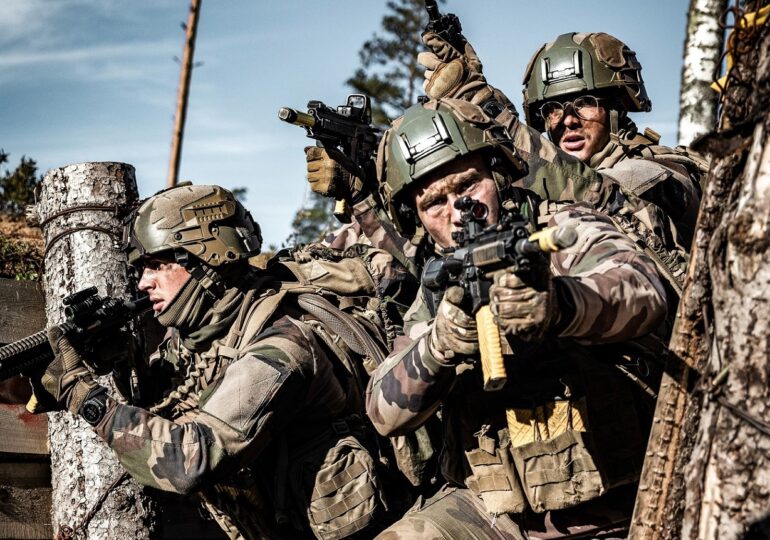
NATO will need an additional 35-50 brigades to fully implement its new defense plans designed in case of an attack from Russia, a military source told Reuters.
The source, speaking on condition of anonymity, refused to provide further details about these plans, which are classified.
A brigade can consist of between 3,000 and 7,000 soldiers, so forming an additional 35-50 brigades means up to 350,000 soldiers.
NATO has three options
At the 2023 summit in Vilnius, NATO leaders agreed on the alliance's first major defense plans, called "regional plans," after more than three decades, and officials have since been working on translating the documents into concrete military requirements.
At this week's summit in Washington, NATO leaders will be briefed on the current status of these plans.
Asked to comment, a NATO official said that the alliance's military experts have identified "detailed requirements regarding the need for troops and weapons for the defense of the alliance."
"Air and missile defense systems, long-range weapons, logistics, and large ground maneuver formations are among our top priorities," he added, anticipating that "NATO will likely set more demanding capability targets for allies."
The German Ministry of Defense in Berlin declined to comment on NATO's future plans, which are classified, but stated that all allies are called upon to coordinate on capability requirements, and these efforts will continue into next year.
It is not clear where NATO allies could source additional personnel for 30-50 brigades. Possibilities include transferring troops from other branches of the armed forces, recruiting additional soldiers, or a combination of both measures.
Germany needs Patriot
Anti-aircraft defense is another deficient area identified by NATO military strategists, as the war in Ukraine has demonstrated the importance of these systems in protecting critical military and civilian infrastructure. Such systems would be particularly crucial for Germany, as a major logistical hub and training area in a potential conflict with Russia.
Germany had 36 Patriot systems when it was on the front line of NATO during the Cold War, but even then, it relied on additional assistance from allies.
Currently, Germany has only nine Patriot systems after donating three to Ukraine, and the government has begun placing orders for Patriot systems from Raytheon and other anti-aircraft defense systems, whose mission is to intercept missiles.
After the end of the Cold War, many NATO allies reduced their number of anti-aircraft defense systems, following assessments that in the future they would only face a limited missile threat from countries like Iran.
This perception changed drastically with Russia's invasion of Ukraine, prompting allies to make efforts to increase their ammunition stocks and address the shortage of anti-aircraft defense systems.