
At no point, since the formation of the coalition, has the head of state made any public statement that undermined the alliance between PSD, PNL, USR, and UDMR, formed to govern after his victory in the presidential elections in May 2025.
After taking office, difficulties arose in the relationship with Ilie Bolojan. Even before the designation of the liberal leader for the position of prime minister, there were a series of insider reports indicating tensions between the two.
The bone of contention was the difference of opinion regarding the economic measures that needed to be taken to rapidly reduce the deficit.
The coalition lasted almost a year, and no one can contest the fact that unpopular decisions were made, such as tax increases, as well as some difficult ones, such as the reform of special pensions in the justice system.
Alongside the confrontations and tensions caused by this reform, demanded by the vast majority of the population and which political leaders had avoided taking responsibility for for years, decisions were also made regarding reducing public spending.
Not as many as Prime Minister Ilie Bolojan would have wanted for the financial health and a healthy economic recovery, but too many for Sorin Grindeanu, who could not withstand the pressures from PSD mayors dependent on budget funds.
As the social democrats realized that their popular support was gradually declining, they consulted and decided to remain in the coalition on the condition of achieving a symbolic victory: the removal of Ilie Bolojan from the government leadership. They needed a major political achievement to revive the party after a disastrous electoral season.
Enlightened Minds and Their Failures
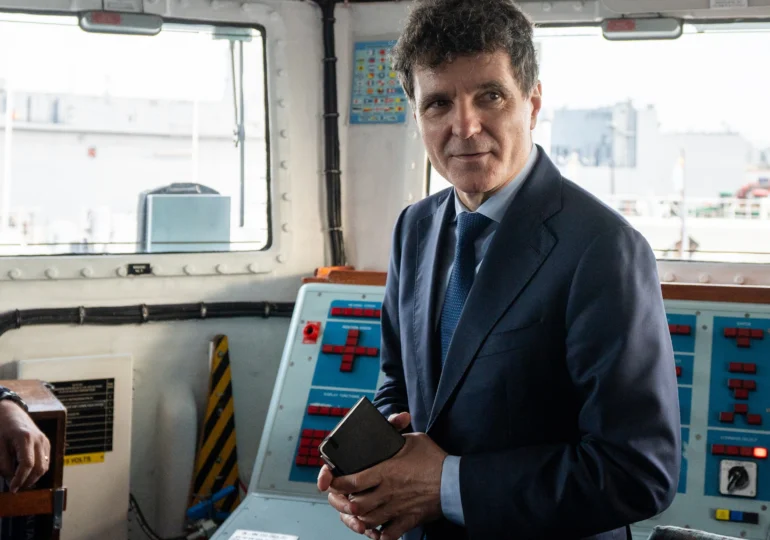
Nicușor Dan was not part of any plan to remove Prime Minister Ilie Bolojan, confirmed by several political sources close to the discussions between the president and the coalition party leaders, as reported by spotmedia.ro.
Furthermore, he made efforts to maintain the coalition, considering it the only solution for Romania to remain on the pro-Western path, as the president likes to say.
Nicușor Dan, President of Romania
I have heard various opinions, that I satisfied X over Y or that I did not satisfy X over Y. It is not my mandate...
It should be noted, however, that within the institutional system in Romania, there is great concern that the extremist party AUR could obtain a score in the upcoming parliamentary elections that would allow them to govern.
It is not clear from the information circulating whether this concern is fabricated, real, or both, to serve personal and group interests. Especially considering the many indications over time that the nationalist-extremist movement was an innovation of "enlightened" minds within the Romanian state, trying to please another president, also in a complicated political context.
Many of the ideas and decisions of former heads of state since 1990 have had catastrophic effects over time, even if, at the moment, they solved a difficult situation for Romania's political leadership.
Another clarification must be made. Despite the corruption, cliques, underground confrontations between institutions, intelligence agencies, ministries, with their different agendas and backstage struggles, these pale in comparison, have no value, in the face of political decisions.
Thickets and Quagmires
"Political decision-makers," as they are called within the state system, those who have received the citizens' vote and have reached executive positions in the government up to the head of state - the supreme commander - have legal authority over the state system and can act upon it.
Every time there are public reports about hidden influences, interferences in the decision-making process, manipulations, institutional opacity, and others, these are an effect of the crisis of political authority among the "decision-makers."
And most likely, Nicușor Dan has also wandered into these thickets and quagmires.
Riding a wave of popular enthusiasm to the Cotroceni Palace, after the electoral confrontation with George Simion and the fear of many that Romanian democracy could fail after the Kremlin's attack in 2024, Nicușor Dan believed he could make visible changes very quickly.
Unfortunately, lacking a party and in the conditions of a fragmented parliament, full of extremists, he could not meet the demands of those who voted for him.
So, after several failures of actions aimed at producing certain electoral mutations in the conservative area, the unsuccessful attempt to appoint heads at SRI and SIE, the report of the indefinitely postponed annulled elections, and involvement in the judicial crisis following the Recorder documentary, the president changed his strategy and started to act behind the scenes, being careful not to provoke tensions between parties, but also significantly reducing the number of political objectives.
Non-Western Majority
Even so, the situation did not improve. The crisis caused by PSD was an image disaster for the President of Romania, who now seeks more of a stabilization of the situation, as he stated, rather than triggering an institutional revolution in Romania.
"My mandate is: one, to maintain Romania's pro-Western direction; and two, to prevent a sudden economic downturn that would affect every family in this country, and I am concerned that these issues are being questioned today," stated Nicușor Dan, President of Romania, in a public intervention.
Eugen Tomac, the honorary advisor to the head of state, will go to Parliament only with the political support of PSD, hoping for a miracle to happen there.
This possibility should not be excluded. Over the years, many miracles have occurred in Romanian politics.
However, a non-Western majority to support a new government will by no means represent a public revival solution for the current president. On the contrary.