
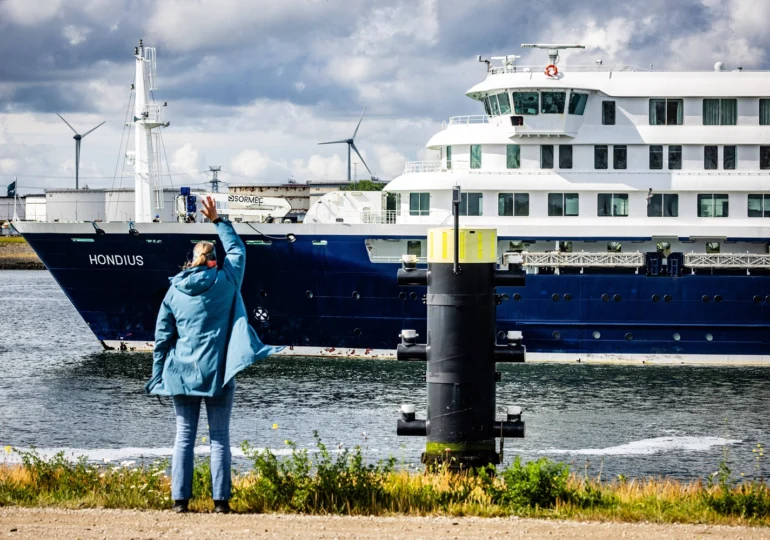
The Head of the World Health Organization announced on Thursday the end of the hantavirus episode that broke out on a cruise ship, MV Hondius, sparking strong international concern, AFP reports.
„Today, the last person who had contact with an individual exposed to hantavirus on board the cruise ship MV Hondius has completed their quarantine period, tested negative, and returned home,” said Tedros Adhanom Ghebreyesus at a press conference in Geneva.
"No other cases have been reported since May 25. Therefore, we are very pleased to announce that WHO considers the hantavirus outbreak to be over," he said, adding that there were 13 cases associated with this episode, including three deaths.
In total, over 650 individuals who had contact with the cases have been identified and monitored by health authorities in 33 countries and territories, he specified.
WHO will continue to collaborate with governments and its partners to better understand this episode and the hantavirus.
"We are also coordinating a study involving 21 countries to understand the disease's progression, which will help in the development of diagnostic methods, treatments, and vaccines for future epidemic outbreaks," explained Tedros.
The 13 cases identified in this episode represent only a small fraction of the tens of thousands of hantavirus infections - a rare virus for which there is no vaccine or specific treatment - recorded globally each year. However, these are mostly the result of direct animal-to-human transmission, usually from a rodent.
The concern here was about the risk of human-to-human transmission: the strain in question, known as "Andes," is the only one known to allow such contamination.
On April 1, the MV Hondius cruise ship, flying the Dutch flag, departed from the port of Ushuaia, located at the southern tip of Tierra del Fuego, bound for Cape Verde, making stops at isolated islands in the South Atlantic. After the virus was discovered, the ship headed to Tenerife, in the Spanish Canary Islands, to evacuate over 120 passengers on May 10.
The polar exploration cruise ship finally docked on May 18 in the port of Rotterdam, Netherlands, Europe's largest port, with a reduced crew, required to observe a quarantine for several weeks.
In total, two deaths occurred on board the ship: a Dutch national in April and a German national in May. A third individual, the first one's spouse, passed away at the end of April in South Africa after leaving the ship.
However, a big question remains: The origin of the outbreak has not yet been identified.
In the case of the first death, the link to hantavirus is not definitively proven as no virological tests were conducted, but it seems likely given the subsequent epidemic. This individual, a Dutch passenger, also spent 48 hours in Tierra del Fuego before boarding.
Prior to heading to Ushuaia, they traveled for four months through Argentina, with excursions to Chile, where hantavirus is also present, and Uruguay.