

More and more information coming from Western military sources announces that Vladimir Putin is preparing to attack a NATO country in the near future.
Drones and missiles launched towards the territories of Romania and Poland in recent weeks have represented strategic military tests to observe the reaction of authorities from NATO countries, from the affected ones to the central command, as well as the positions of European leaders.
As shown in an article dated August 3, Vladimir Putin aims to portray himself as a victim in the eyes of Russians through a plan to escalate the conflict in Europe, allowing him to claim that he was not defeated on the Ukrainian front, but by „Western forces.”
Thus, he would have the opportunity to emerge from the conflict as a hero defeated by the "absolute evil," read Europe and the USA, extending his mandate once again by presenting himself as the only solution guaranteeing Russia's survival in a hostile environment.
"Russian President Vladimir Putin could try to test NATO's solidarity through an attack on an allied country..., according to new reports from American intelligence services, which present possible scenarios, from a cyber attack to a small-scale ground incursion," as stated in an article published by the American newspaper "Wall Street Journal" on Friday, August 7, which confirms the references presented by spotmedia.ro and the plans of the Russian leader.
The opening image of the article is from Galați, a photograph capturing the investigation carried out by Romanian authorities after a Russian drone hit a residential building at the end of May.
Europe's Review
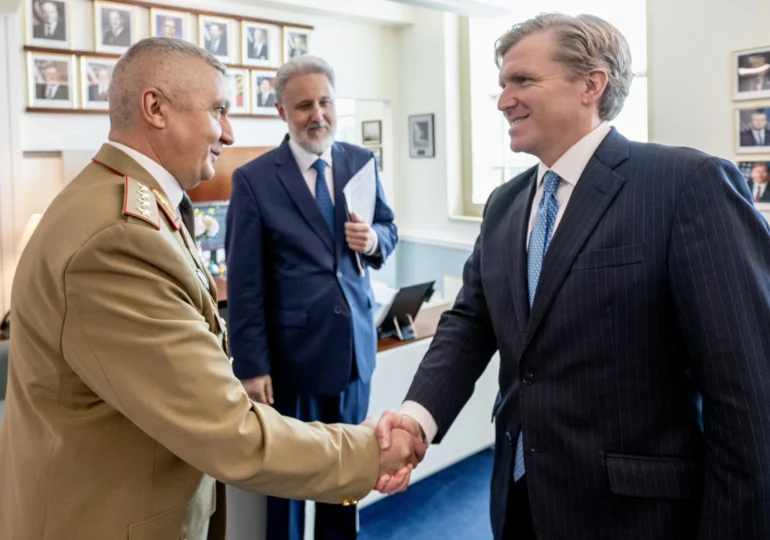
On July 27, Marius Lazurcă, the national security adviser to President Nicușor Dan, together with General Gheorghiță Vlad, the Chief of the General Staff, departed on a visit to the USA.
The event took place shortly after the Romanian Air Force shot down, on three consecutive days, Russian drones that violated the airspace, using American-made F-16 Falcon aircraft.
Bucharest's military actions caused a stir internationally, marking the first time since Russia invaded Ukraine that a NATO member state attacked and destroyed Kremlin devices conducting active operations in Europe.
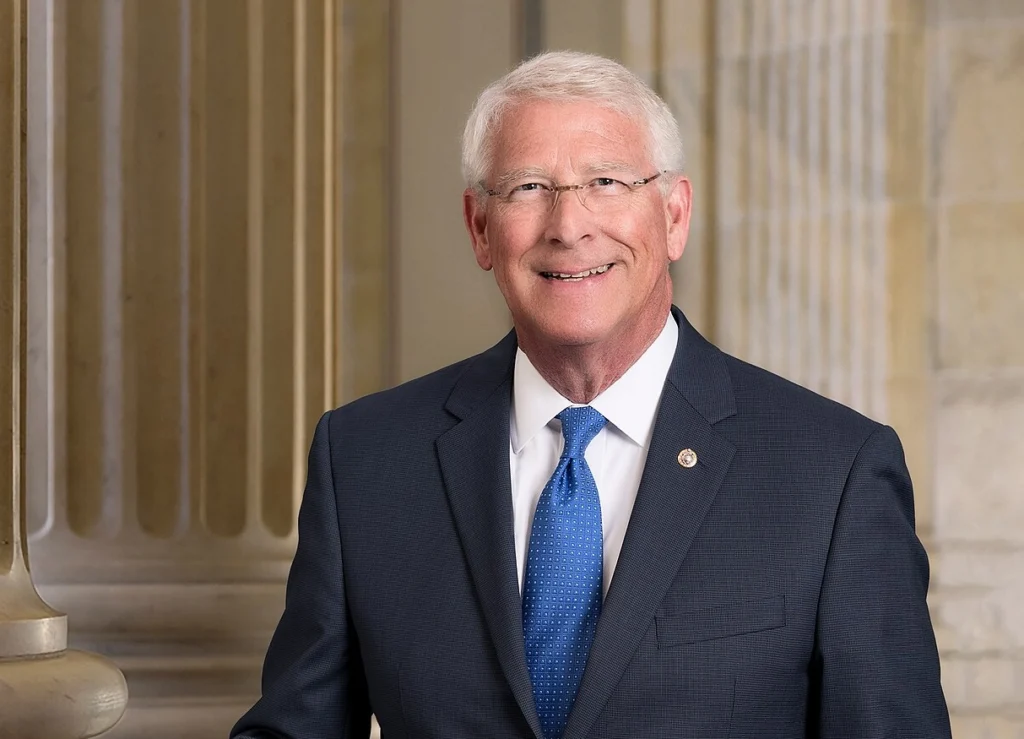
Romania's special envoys to Washington met with Elbridge Colby, Under Secretary of Defense for Policy, Andrew Baker, Deputy National Security Advisor to the American President, Michael Anton, State Department Advisor, and Senator Roger Wicker, Chairman of the Senate Armed Services Committee, a Republican member representing Mississippi.
"On July 29, I received the Romanian national security advisor, Marius Lazurcă, at the Pentagon. I presented our approach to 'Europe's Strategic Position Review' in advance. Additionally, we appreciated Romania's proactive approach regarding burden-sharing. We agreed that it is time for allies to turn defense spending into real combat capabilities within the NATO 3.0 initiative," Elbridge Colby wrote on his X account.
Contradictory News
According to this statement, the most relevant one regarding the visit of Romanian officials, Romania received quite contradictory news from Washington.
"Europe's Strategic Position Review" is a conditioning mechanism requested by Donald Trump and Pete Hegseth, the Pentagon chief, whereby American military support directly depends on the value of defense contracts concluded with the USA, the allocation of the GDP for armaments, and the action privileges offered to American military forces for the optimal conduct of operations - using local military bases, the right to fly over airspace, logistical facilities for troop transport, recovery, and rotation, etc.
Another interesting aspect is that Elbridge Colby had a series of meetings with representatives of important NATO countries starting from the end of July: Germany on July 23, the United Kingdom on July 24, Italy on July 27, Romania on July 29, and a meeting with NATO officials on July 31.
It is important to note that Romania, still, is seen, at least by the Pentagon, as an important NATO country, with our delegation being received on a meeting schedule with representatives of much larger and more influential states within the military alliance.
Consolidating Commitments
It is not clear what Marius Lazurcă and General Gheorghiță Vlad returned with from Washington. There has been no communication from the Romanian President regarding this visit.
"I am proud to have represented Romania in Washington last week. Our message was simple: Romania stands with the United States. We met with American officials to strengthen our defense commitments and enhance our common security in the Black Sea region," wrote advisor Marius Lazurcă on his X account upon returning to the country.
The message, although quite cryptic, suggests that there was interest from the American government to continue the strategic-military relationship with Romania, but it is unknown at what cost and if it can be paid.
"Consolidating commitments" may mean that Bucharest had something to offer the current American administration to meet the requirements of the NATO 3.0 initiative proposed by the Pentagon.
Also, against the backdrop of declining public support for Donald Trump, the US policy once again feels the presence of a strong strategic military alliance with Europe, promoted in the US Senate by both Republicans and Democrats.
"We strongly oppose the decision not to maintain the American brigade on rotation in Romania, as well as the process initiated by the Pentagon regarding the current review of force disposition, which could lead to further reductions in US forces in Eastern Europe," stated Roger Wicker, the Republican Senator from Mississippi, chairman of the Senate Armed Services Committee, on October 29, 2025.
"On March 19, I stated that we will not accept significant changes to our fighting structure to be made without a rigorous interagency process, without coordination with operational commanders and the Joint Chiefs of Staff, and without collaboration with Congress," the US official further stated at that time.
"Unfortunately, it seems that is exactly what is being attempted. Two weeks ago, President Trump stated that the United States will not withdraw its forces from Europe, but, on the contrary, 'might reposition them a bit.' The President is right when he says that the American military presence in Europe needs to be updated, considering that NATO is taking on additional tasks and the nature of war is changing. However, this update must be coordinated broadly within the US government and with NATO," Wicker also said at that time.
"Romania has been a strong ally, making major investments to host American forces and modernize the infrastructure that supports them. Romania has spent over 2% of GDP on the military for many years and has committed to reaching the 5% GDP threshold. These investments, along with its contributions to NATO's eastern defense and Black Sea security, underscore Romania's central role in the Alliance's security. In particular, since 2016, Romania has hosted an American Aegis Ashore missile defense detachment, assuming substantial political, military, and economic risk to operate systems primarily designed to defend NATO allies rather than its own territory," emphasized the Republican official.
And from the above statement, the political tension between American senators and Donald Trump is evident, manifested as early as last year.
Since then, it has intensified, which could be fortunate for Romania and NATO in general.
Counteroffers
The US President's anger towards Europe and the North Atlantic alliance has diminished significantly with the loss of public support and reduced opportunities to make absurd decisions. But the danger has not passed.
Certainly, Marius Lazurcă and General Gheorghiță Vlad did not succeed in arranging a visit to the White House for Nicușor Dan.
They were called to Washington to be informed by the American administration of some general decisions that have already been made.
The only things they could do were to come up with counteroffers to reshape some decisions and possibly delay the implementation of those that would have a negative impact on Romania.