

The price of wheat has risen to nearly the highest level in the past three years, following the increasingly intense attacks by Russia and Ukraine on ports and commercial ships in the Black Sea, which have started to block the exports of two of the world’s largest grain suppliers.
The situation risks turning into a new problem for global food prices. Russia and Ukraine together account for approximately 30% of global wheat exports, and a significant part of the infrastructure through which cereals reach international markets is now affected.
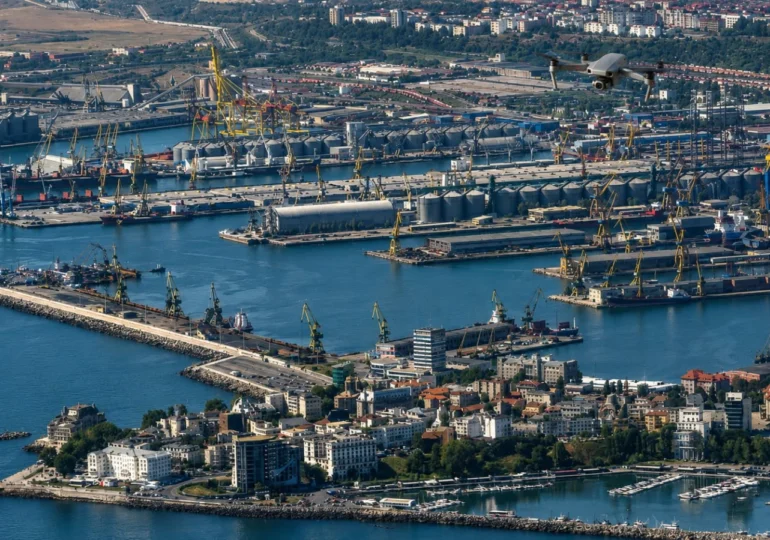
In this equation, Romania comes into play: the port of Constanta and the Danube route can take over some of Ukraine's exports. However, their capacity is limited, and the low level of the Danube further complicates transportation.
Financial Times writes that traders have started to react to the attacks in the last two weeks on the Ukrainian port of Izmail, the most important port in Ukraine on the Danube, and on the Russian terminals in Novorossiisk.
"It's worse for the wheat market than the situation in the Strait of Hormuz was for oil," says Andrey Sizov, director of SovEcon, a research company specializing in agricultural markets in the Black Sea region.
The comparison refers to the situation in the Strait of Hormuz, where maritime traffic remains heavily restricted due to the war with Iran, with effects on global energy supplies. "The longer the situation persists, the greater the consequences will be," warns Sizov.
How much wheat is at risk of disappearing from the market
The figures show how important the region is for global supply.
Russia is the world's largest grain exporter, and Ukraine ranks fifth. Oxford Economics estimates that issues in the ports of these two countries on the Black Sea and the Sea of Azov could reduce global deliveries by up to 86 million tons this year.
This represents approximately 17% of global grain exports.
Out of this total, around 52 million tons would be affected Russian exports, and another 34 million tons would be Ukrainian exports.
The problem is that alternative routes cannot cover this difference.
According to Oxford Economics, Ukrainian rail and Danube transport could only supplement about 17 million tons, even if additional capacity is made available.
Ukraine's exports have plummeted
Russian attacks on cargo ships have practically halted shipments through Odesa and other Ukrainian ports on the Black Sea, just as the country's main harvest season begins.
The impact is already visible in numbers.
Ukraine's grain exports in August are about 75% lower than in the same period last year, according to government data cited by FT.
This is a significant blow to the Ukrainian economy, considering that agriculture generates about 60% of the country's export revenues.
But Russia is also struggling to get its grains to sea at the usual pace.
The Ukrainian attack on Novorossiisk last week forced all three major grain terminals at the port to suspend operations.
SovEcon estimates that Russia will export around 2.2 million tons of grains in August, compared to about 4.6 million tons in August last year. Most of the remaining deliveries are now being made through routes outside the Black Sea and Sea of Azov basin.
Russia's export capacity from this region has dropped from about 3.3 million tons per month to only 250,000 tons, available through the only major facility still operational, in the port of Tuapse.
Constanța regains importance as a route
Ukraine has faced this issue before. After Russia withdrew from the agreement on transporting grains through the Black Sea in July 2023, Kiev developed alternative routes. One of them follows the Black Sea coast to the port of Constanta, while another uses Ukrainian ports on the Danube.
These options are once again important, but the situation is now more complicated.
The very hot and dry summer has led to a decrease in the Danube's water level. Ships can carry smaller quantities of goods, reducing the route's capacity and increasing costs.
In addition, Russia attacked the infrastructure at Izmail last week, the main Ukrainian port for exporting grains via the Danube.
Therefore, Constanta can take over some of the Ukrainian flows, but the Danube route cannot replace the volumes that would normally go directly through the Black Sea ports.
The risk reaches food prices
The issues in the Black Sea come at an already difficult time for the global food market. Drought in several regions, the effects of El Niño, and supply problems with fertilizers due to the war with Iran are already putting pressure on agricultural products.
Oxford Economics estimates that global food prices will rise by 11.8% this year and by another 4.8% in 2027.
Tatiana Orlova, chief economist for emerging markets at Oxford Economics, warns that the escalation of conflicts in the Black Sea and the Sea of Azov could cause "a more severe shock to global food prices."
There is also the precedent from 2022. After Russia's invasion of Ukraine, cereal prices reached record levels. They began to decline after the agreement negotiated by the UN and Turkey, which allowed grain ships to safely cross the Black Sea.
Now, analysts fear that the market underestimates the risk of a prolonged blockade.
The BMI research group warned just before the latest attack on Novorossiisk that traders are not taking into account the possibility of prolonged disruptions. If Russia's and Ukraine's exports are repeatedly blocked, the impact on global wheat supply could be much greater than current prices suggest.
Andrey Sizov believes, in fact, that the wheat peak reached in July in the past three years will soon be surpassed.