
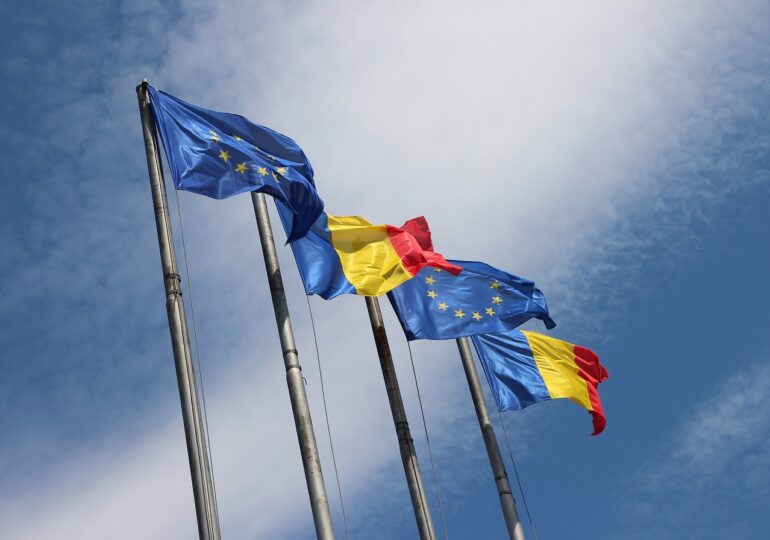
Central and Eastern Europe has nearly 100 million inhabitants and a combined GDP of approximately 2.5 trillion dollars. However, countries in the region continue to present themselves to investors primarily separately, as national markets.
Analyst and strategic communication consultant Radu Magdin proposes a change in perspective: the region could showcase its economic strength together. The reconstruction of Ukraine could give it even greater importance, as he points out in an analysis published by Kyiv Post.
The proposal does not entail a new organization or treaty. The 11 countries that Magdin considers are already EU members and have access to the same single market. In his opinion, they lack a regional economic image that they can convincingly present to the world.
The Example of Southeast Asia
Magdin starts from ASEAN, the organization of Southeast Asian states. In 2025, it adopted an economic plan for the coming years, part of the ambition to become the world's fourth economy by 2045.
The lesson lies not so much in the target but in how ASEAN presents its economies, according to the analyst. Investors are encouraged to look beyond Indonesia, Vietnam, or Thailand and see the opportunities offered by the entire region.
Central and Eastern Europe could do the same. Magdin's calculation includes Poland, the Czech Republic, Slovakia, Hungary, Romania, Bulgaria, Slovenia, Croatia, and the three Baltic states. Together, they had a nominal GDP of around 2.5 trillion dollars in 2024. Poland contributed approximately 860 billion, Romania nearly 390 billion, and the Czech Republic around 383 billion dollars.
For 2030, Magdin proposes that the region presents itself as an economic space of over 3 trillion dollars, with a significant role in industry, technology, logistics, energy, and defense. It is a target that Magdin suggests the countries in the region should aim for, not an estimation that they will surely reach.
Poland Can Lead the Way
Poland would be the natural starting point, given the size of its economy. For Magdin, Warsaw's next opportunity is to become a support for a region that is beginning to matter as a whole.
Bucharest, Prague, or other capitals would also benefit if an investor interested in one of the countries could simultaneously see its connections with the rest of the region. Production chains already cross borders, companies invest in neighboring countries, and Romania can bring its technological sector and access to the Black Sea into this picture.
Poland could play a leading role, says Magdin, but the project should be built together with the other countries so that each has something to gain.
The analyst also mentions a risk: regional initiatives supported from outside have aroused suspicions in Brussels in the past. China treated Central and Eastern Europe as a whole through the 16+1 format, while the Three Seas Initiative was initially viewed with skepticism due to American support. Therefore, Magdin says a joint presentation of the region must be firmly anchored in the EU.
Why the Old Growth Model Is No Longer Enough
Countries in Central and Eastern Europe have made significant progress in closing the gap with the West after the fall of communism. However, the model based on low costs, foreign investment, and imported technology is starting to reach its limits: wages are rising, the working population is decreasing, and the competition is changing.
The next stage should rely more on innovation, domestic capital, and companies from the region capable of expanding abroad, argues Magdin. At the same time, the geographic position becomes increasingly valuable: Central and Eastern Europe connect the Baltic Sea, the Adriatic Sea, and the Black Sea and are situated between Western Europe and Ukraine.
How Ukraine Changes the Calculations
According to Magdin's analysis, the reconstruction of Ukraine is a reason for the countries in the region to start preparations now. The ongoing war continues to cause huge losses, the reconstruction will take years, and Ukraine's closeness to the EU will depend on reforms. However, future investments in production, energy, transport, and logistics will not stop at Ukraine's borders.
Poland could become a more important logistics and industrial center. For Romania, Magdin points to the ports on the Black Sea, the infrastructure on the Danube, and the proximity to southern Ukraine. Slovakia and Hungary are located on important transport corridors, while the Baltic states would gain weight in northeastern Europe.
The relationship would work in both directions: the countries of the region can offer Ukraine access to the EU market, ports, capital, and production networks, and Ukraine's reconstruction can increase their economic importance. Over time, Magdin believes this evolution could shift the economic center of gravity of Europe towards the east.
Five Concrete Steps
For the idea not to remain just a presentation method, Magdin proposes five measures.
The first is the annual publication of an economic overview that gathers the region's data on production, exports, investments, technology, and infrastructure.
The second: joint trade missions in the US, Asia, and the Gulf states, even though the countries will continue to compete for investments.
Magdin also suggests support for companies in the region that can grow in international markets, especially in software, cybersecurity, advanced manufacturing, energy, and defense technology.
The other two measures concern investments in connections between the three seas – railways, roads, ports, energy networks, and digital infrastructure – and relationships between firms in the region, so that they invest and expand more frequently across borders.
G.P.