
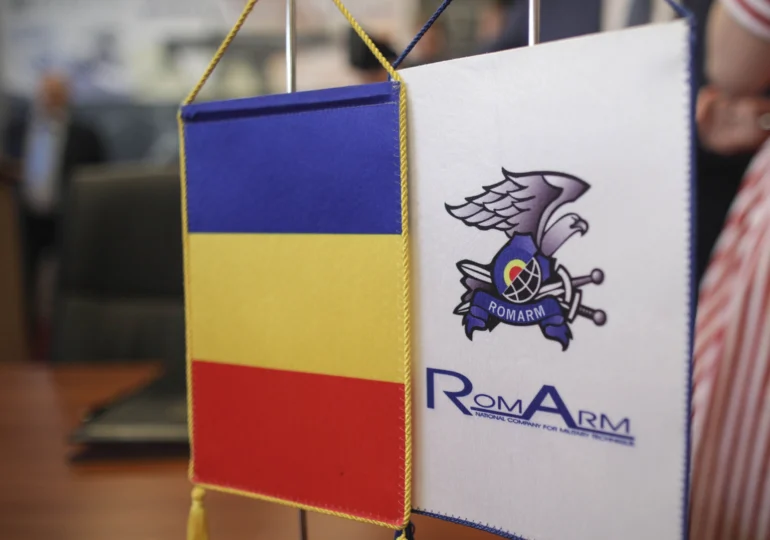
Romarm, the state company in the defense industry, is set to be reorganized into an integrated industrial holding, bringing together its 15 subsidiaries. The interim Minister of Economy, Irineu Darău, says that the current system is inefficient, and some factories are losing competitiveness due to the commissions charged by the parent company.
A decision on the reorganization should be made by the end of this year, announced the USR minister on Wednesday, who is still halfway out the door.
How the new holding would operate
The ministry's plan involves replacing the current structure, with 15 separate subsidiaries, with a holding organized by areas of activity, such as armament production, shipbuilding, and research.
The new company would have two separate management structures: a directorate responsible for managing the activity, and a supervisory board to oversee management decisions. According to the minister, this organization should reduce political influence over the company.
"We are convinced that the solution here is to create an integrated industrial holding that no longer has 15 separate subsidiaries, operating in a dualistic system, because it should not be politicized, meaning it should have a supervisory board and a directorate and be organized into clusters by domains," said Irineu Darău.
The ministry will publish a document in the coming days presenting the reorganization options for Romarm, announced Irineu Darău.
The minister specified that the proposal will also reach the Supreme Council of National Defense (CSAT), and a decision must be made in the next two months. The actual transformation of the company into a holding is expected to take place in the coming years.
"We believe that, and we will also go to CSAT, a decision must be made by the end of the year, so that in the coming years, that integrated industrial holding, competitive in the private market, can be achieved, because otherwise Romarm and its subsidiaries will not be able to survive for very long," warned the minister.
Romarm criticized for lack of orders and commissions
Irineu Darău expressed dissatisfaction with the current functioning of Romarm, stating that it plays more of a role as a commercial intermediary rather than an integrated industrial structure.
The minister explained that although Romarm has 15 subsidiaries, it holds less than 20% of shares in most of them. The rest are directly owned by the Ministry of Economy. In other words, the Ministry is the main shareholder of these factories, not Romarm, even though they operate within the company's structure.
In addition, some subsidiaries complain that the fees charged by the parent company for mediating contracts increase the final price of products, making them harder to sell on the market.
"Regarding Romarm, let's say it very frankly, today Romarm is a commercial intermediary. It holds around 20% participation in most subsidiaries, the rest of the participation belongs to the ministry, and what Romarm does is mediate some contracts," explained Darău.
"If the subsidiaries do not have orders, it means that Romarm is not doing its job very well either, and there are even subsidiaries complaining that due to the commissions, Romarm's final price is non-competitive," added the minister.